From Elvish Yadav To Prajakta Koli: The Unstoppable Rise Of Indian YouTubers
From Elvish Yadav to Bhuvan Bam and Prajakta Koli, here’s how Indian YouTubers became major players in films, OTT, reality TV, podcasts and brand campaigns.

IST
Last Updated On
IST
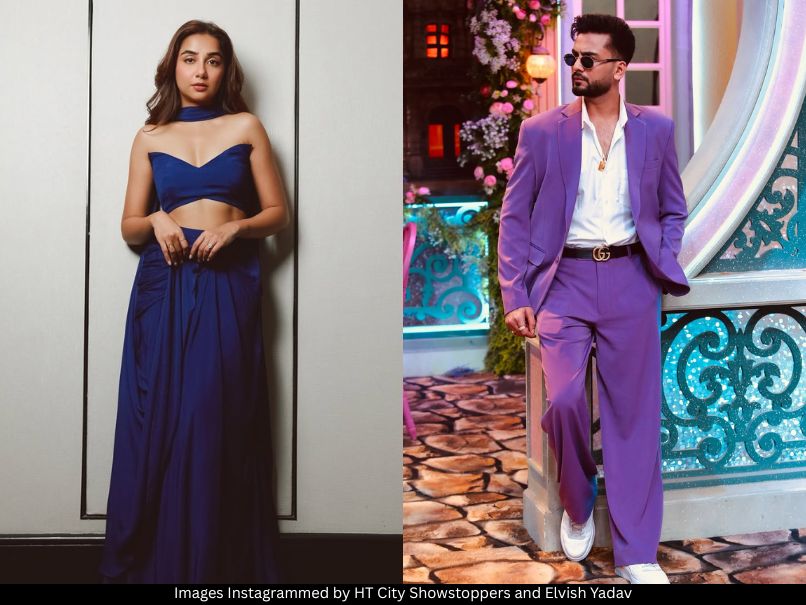
There was a time when becoming famous in India meant entering films, television, music or cricket. Stardom came through production houses, casting directors, TV channels, radio stations and newspaper interviews. But over the last decade, that hierarchy has been completely disrupted. YouTubers and social media creators are no longer just making bite-sized comedy sketches in their bedrooms – they are fronting massive OTT shows, starring in mainstream Bollywood films, dominating reality television, and commanding more cultural pull than many second-generation film stars, and Bollywood knows it.
When the biggest names in cinema have a film to sell, they no longer stop at TV interviews; they sit across from podcasters, shoot reels with creators, and queue up for YouTube collaborations, because that is where the audience actually lives.
The numbers explain why. As of early 2026, India is YouTube’s largest market in the world with over 491 million users – roughly a third of the platform’s entire global audience. And the proof of the power shift is anecdotal as much as statistical: Elvish Yadav, a Haryanvi YouTuber, today generates more headlines, brand interest, and audience conversation than several mid-tier Bollywood actors. The creator is no longer knocking on entertainment’s door. The creator is the entertainment.
ALSO READ | From Social Media To Films: Influencers Who Made Their Acting Debut
This shift is not accidental. YouTubers grew because they understood the internet better than legacy stars. They spoke in the language of young India, built loyal communities, stayed consistent, and turned relatability into power.
Here is how India’s biggest YouTubers built that power – one breakthrough at a time.
1. Elvish Yadav
Born Siddharth Yadav in Haryana in 1997, Elvish started his YouTube channel in April 2016 while studying at Delhi’s Hansraj College, initially calling it The Social Factory before rebranding under his own name. His Haryanvi-flavoured comedy sketches built him a loyal base, but his career detonated in 2023 when he entered ‘Bigg Boss OTT 2’ as a wildcard – and became the first wildcard contestant in ‘Bigg Boss’ history to win the trophy, beating fellow YouTuber Abhishek Malhan in the finale. His “systumm” catchphrase became a national meme, and his Instagram live broke Indian viewership records.
What followed cemented him as reality television’s most bankable creator: he led the Haryanvi Hunters to victory in the inaugural Entertainers Cricket League, won as a gang leader on ‘MTV Roadies XX: Double Cross’, and lifted the ‘Laughter Chefs Season 2’ trophy on Colors TV with partner Karan Kundrra in July 2025. His run hasn’t been controversy-free – he spent time in judicial custody in 2024 in the snake venom rave party case (he is out on bail), and faced a legal tangle with YouTuber Maxtern that ended with the FIR being quashed. Yet his fanbase has only hardened. The comparison practically writes itself: right now, Elvish Yadav moves the needle in ways an Arjun Kapoor release simply doesn’t.
2. Prajakta Koli
If one name proves the ceiling has disappeared, it is Prajakta Koli. The Thane creator started MostlySane in 2015 with relatable and observational comedy. Her videos often revolved around family, friendships, everyday awkwardness and middle-class experiences. She then landed the lead in Netflix’s ‘Mismatched’ (2020) opposite Rohit Saraf – a series that has run three seasons with a fourth and final one on the way. She entered Bollywood with Dharma’s ‘Jugjugg Jeeyo’ (2022), led Netflix’s ‘Single Papa’ (2025), and published her debut novel ‘Too Good To Be True’ in January 2025 – which Netflix is now adapting into a series she will both star in and produce. She is also part of ‘Operation Safed Sagar’, Netflix’s ambitious Kargil War series.
3. Bhuvan Bam
Every creator on this list walks a road Bhuvan Bam paved. The Delhi boy’s journey began in 2015 with a satirical video mocking an insensitive news reporter, which went viral. From there, BB Ki Vines – where Bhuvan Bam played an entire fictional family himself, from Bancho to Titu Mama to Angry Masterji – became a phenomenon, making him the first Indian individual creator to cross 10 million subscribers. He featured in Forbes 30 Under 30, attended the World Economic Forum at Davos, and turned his characters into the web series ‘Dhindora’ (2021), which racked up over 500 million views.
Then came the real validation: ‘Taaza Khabar’ (2023) on Disney+ Hotstar, where his performance as sanitation worker Vasant Gawde drew genuine critical praise and earned a second season in 2024. Now the leap is complete – ‘Dhindora 2’ is being backed by Netflix, he is part of Nikkhil Advani’s ambitious series ‘The Revolutionaries’, and his Bollywood film debut, ‘Kuku Ki Kundali’ opposite Wamiqa Gabbi, comes from Dharma Productions. A YouTuber headlining a Dharma film was unthinkable a decade ago. Bhuvan Bam made it inevitable.
4. Ajey Nagar
Ajey Nagar, better known as CarryMinati, began uploading at age 10. And the Faridabad-based YouTuber has been on his main channel since 2014, evolving from gaming uploads (as AddictedA1, then CarryDeol, mimicking Sunny Deol over Counter-Strike footage) into India’s undisputed roast king. His May 2020 video “YouTube vs TikTok: The End” became the most-liked Indian video on the platform before YouTube took it down – a removal that only amplified his legend. His diss track ‘Yalgaar’ was a smash hit, Time magazine had already named him among its 10 Next Generation Leaders in 2019, and his subscriber count now exceeds 45 million, with over 21 million Instagram followers.
Mainstream entertainment has repeatedly come calling: his song ‘Yalgaar’ was used in the film ‘The Big Bull’, and he appeared as himself in Ajay Devgn’s ‘Runway 34’ (2022). He has also invested in esports, buying a 10 per cent stake in Big Bang Esports. His edge still cuts both ways – in February 2026, a Mumbai court restrained him from posting defamatory content about Karan Johar after the filmmaker sued over a roast video – but the episode itself proves the point: Bollywood’s most powerful producer now treats a YouTuber as a peer-level threat, not a fringe annoyance.
5. Ashish Chanchlani
Ashish Chanchlani Vines launched in 2014 and grew into one of India’s most-subscribed comedy channels, at around 30 million subscribers. His exaggerated, high-energy sketches about college, parents, and everyday Indian chaos made him a youth favourite, and his expressive, performance-driven style always looked built for the screen. He became a favourite for mainstream Bollywood and Hollywood collaborations – even teaming up with Marvel stars to promote ‘Avengers: Endgame’ in India. Ashish tested cinematic waters with the short film ‘Aakhri Safar’ (2020) and pushed further with ‘Ekaki’ (2025), signalling a deliberate pivot towards mature, character-driven storytelling. His recent dramatic weight-loss transformation made headlines of its own, and he is increasingly being viewed through an actor’s lens rather than a creator’s. He was among those summoned during the India’s Got Latent fallout in 2025 as a panelist on the show, but emerged with his career trajectory intact.
6. Nischay Malhan
Nischay Malhan, aka Triggered Insaan, is proof that roasting didn’t have to be abrasive to be massive. An engineering graduate from Delhi who quit his corporate job for YouTube, Nischay built a 25 million-plus subscriber base on commentary, rants, and reaction videos around Bollywood and internet culture – all famously family-friendly. His gaming channel Live Insaan runs parallel, and he has mentored on the reality series ‘Playground’. The Malhans are arguably India’s first family of YouTube: brother Abhishek (Fukra Insaan), sister Prerna, and even their mother (Dimple’s Kitchen) all run successful channels. His June 2025 wedding to influencer Ruchika Rathore at a Himachal resort was treated by the internet like a celebrity wedding – because, by every functional measure, it was one.
7. Harsh Beniwal
Delhi’s Harsh Beniwal launched his channel in May 2015 with short vines, crossed a million subscribers by 2018 and five million by January 2019, and turned his sketches into cinematic mini-series that helped define India’s modern sketch-comedy template. His Bollywood break came early relative to peers: a role in Dharma Productions’ ‘Student of the Year ‘2 (2019) alongside Tiger Shroff, Tara Sutaria, and Ananya Panday. He has since appeared in projects like ‘Campus Diaries’ and ‘Who Killed Jessica?’, and remains a touchstone for the generation that followed – Elvish Yadav has cited him as a direct inspiration for starting YouTube.
ALSO READ | From Alia Bhatt To Rashmika Mandanna: Indian Celebs Who Started Their Own YouTube Channels
8. Kusha Kapila
A NIFT graduate who began as a copywriter in 2014, Kusha Kapila became a sensation through iDiva videos, where her “South Delhi Girls” series (with Dolly Singh) and her iconic Billi Masi character made her one of social media’s sharpest comic voices. The screen followed quickly: Netflix’s ‘Ghost Stories’ (2020), the platform’s ‘Behensplaining’ show, Amazon’s ‘LOL: Hasse Toh Phasse’ (2021), a judging seat on ‘Comicstaan’, and film roles in ‘Sukhee’ and ‘Thank You for Coming’ (2023). She has also featured in ‘Masaba Masaba’, ‘Plan A Plan B’, ‘Selfiee’ and ‘Ishq Vishk Rebound’. Her trajectory – content desk to film posters in under a decade – is the cleanest case study of how the influencer-to-actor pipeline now works.
9. Mallika Dua
Mallika Dua’s “Shit People Say: Sarojini Nagar Edition” – which she wrote, styled, and performed – remains one of Indian internet comedy’s foundational viral hits. She moved to Mumbai in 2016 to perform full-time and converted internet fame into a genuine acting career: ‘Hindi Medium’ (2017), ‘Zero’ and ‘Namaste England’ (2018), and ‘Indoo Ki Jawani’ (2020), along with web series like ‘The Trip’ and ‘Girliyapa’ appearances. Beyond acting, Mallika has been a fixture on television as a judge on ‘The Great Indian Laughter Challenge’ and an outspoken voice on social issues, using her comedy as a vehicle for real-world commentary. The daughter of late journalist Vinod Dua, she represents the first wave of creators whom Bollywood took seriously as performers rather than novelty castings.
10. Ranveer Allahbadia
BeerBiceps began as a fitness channel around 2015, but Ranveer Allahbadia’s real empire is conversational. The Ranveer Show became one of India’s biggest podcasts, hosting film stars, billionaires, spiritual leaders, and union ministers – and turning the podcast appearance into a standard stop on every Bollywood promotional tour. He was honoured at the government’s first National Creators Award in 2024, presented by Prime Minister Narendra Modi himself.
Then came February 2025, when a crude “would you rather” remark involving parents on Samay Raina’s ‘India’s Got Latent’ triggered nationwide outrage, FIRs in multiple states, NCW summons, and a Supreme Court battle. Cricketers reportedly unfollowed him; sponsors paused. That he survived it at all – apologising, weathering the legal process, and relaunching his podcast as a “new chapter” – speaks to how deep podcast culture’s roots now run.
11. Raj Shamani
Raj Shamani is another key name in India’s podcast boom. The Indore-born YouTuber delivered international speeches as a teenager, built the marketing agency House of X, and authored the bestseller Build, Don’t Talk – but his cultural weight comes from Figuring Out, the podcast that has become a near-mandatory stop for film stars, thought leaders, athletes, CEOs, and politicians. His sit-down with fugitive businessman Vijay Mallya in 2025 was one of the year’s most-discussed pieces of Indian media – a creator landing an interview every traditional newsroom wanted. Industry estimates peg his branded podcast appearances at around Rs 40 lakh each, a rate that rivals what television once paid established anchors. When Bollywood’s biggest names promote films today, a Rah Shamani episode often delivers more measurable reach than a primetime TV slot.
12. Dolly Singh
Nainital-born Dolly Singh started with the fashion blog Spill the Sass and later became popular through iDiva videos, appearing in South Delhi-style comedy sketches. She broke out on her own with deeply relatable characters like Raju Ki Mummy, tapping into the heart of middle-class Indian households. Her acting debut came with Netflix’s ‘Bhaag Beanie Bhaag’ (2020) as Swara Bhasker’s best friend Kapi, followed by ‘Double XL’ (2022), ‘Modern Love Mumbai’ (2022), and ‘Thank You for Coming’ (2023). She is among the clearest examples of writers-performers from the internet sliding naturally into character roles.
13. Samay Raina
Samay Raina co-won ‘Comicstaan Season 2’ in 2019, then invented a genre during lockdown by fusing chess streaming with stand-up comedy, becoming the unlikely bridge between grandmasters and meme culture. His unfiltered YouTube talent show ‘India’s Got Latent’ became a 2024 sensation – until the Allahbadia remark in early 2025 brought the whole edifice down: episodes deleted, FIRs filed, tours cancelled, and Samay Raina summoned by the Maharashtra Cyber Cell.
The comeback was even bigger than the fall. In April 2026, his special “Still Alive” dropped on YouTube and crossed 20 million views within 24 hours, with Samay revealing that the infamous question had been asked eight times during the shoot and addressing the toll the saga took on his mental health. He has openly teased the show’s return. Recently, he promoted Varun Dhawan’s ‘Hai Jawani Toh Ishq Hona Hai’ by roasting him in a video.
14. Abhishek Malhan
Abhishek Malhan, the younger Malhan brother, launched Fukra Insaan in 2019, building MrBeast-and-KSI-inspired challenge content into one of India’s fastest-growing channels – with over a billion total views. National fame came via ‘Bigg Boss OTT 2’ in 2023, where he finished runner-up to Elvish Yadav after one of the most-discussed fan rivalries in the show’s history. He parlayed that into guest-hosting ‘Temptation Island India’, hosting for Netflix India’s YouTube channel, and releasing music including the hit ‘Judaiyaan’. A college entrepreneur who built an FMCG business before YouTube, Abhishek Malhan represents the new creator archetype: businessman first, entertainer always.
15. Tanmay Bhat
Tanmay Bhat began his career as a stand-up comedian and co-founder of AIB, pioneering sketch comedy and roast culture in India while collaborating frequently with A-list Bollywood stars. Following the disbandment of AIB in 2018, Tanmay reinvented himself entirely on YouTube through raw, unscripted vlogging, reaction videos, and gaming live streams – becoming the elder statesman of Indian YouTube. Reports in 2025, citing Tech Informer, claimed he had become India’s richest YouTuber with a net worth of Rs 665 crore, though other trackers estimate far lower figures, and the number remains unverified. What is documented: industry sources peg his branded reel rate at Rs 25–30 lakh, and his fingerprints – as advisor, investor, and writer – are on a large share of India’s creator economy. His arc from cancellation-adjacent exile to industry kingmaker may be the most remarkable reinvention in Indian comedy.
Beyond these fifteen, the ecosystem keeps producing mainstream-scale stars: Technical Guruji (Gaurav Chaudhary) turned gadget reviews into one of India’s most lucrative channels; Sourav Joshi made daily family vlogging a mass phenomenon, and Dhruv Rathee’s explainer videos command an audience most news channels would envy.
A decade ago, a film cameo legitimised a YouTuber. Today, a YouTuber’s podcast legitimises a film’s promotional campaign. Stars shoot reels with creators because creators own the distribution; reality shows cast YouTubers because YouTubers bring votes; OTT platforms greenlight creator-led shows because the audience arrives pre-built. Add India’s YouTube users, a maturing brand economy paying creators Rs 20–50 lakh per integration, and a government actively championing the sector through its platform WAVES, the conclusion is unavoidable: the line between “YouTuber” and “celebrity” hasn’t just blurred in India. For the generation that grew up watching BB Ki Vines instead of Sunday-night television, it never existed at all.
Bollywood has understood this shift. That is why stars now appear on creator podcasts, collaborate on reels, promote films with YouTubers, and seek access to the audiences these creators command. For film marketing, creators offer something traditional media often cannot: targeted youth attention, shareable clips and the feeling of an organic conversation. Indian entertainment is no longer controlled only by film studios, TV channels and celebrity managers. It is now shaped by YouTube channels, podcasts, Instagram reels, fan edits, reaction videos and creator communities.