From Tiny Roles To Rs 100 Cr: The Remarkable Rise Of The ‘Mirzapur’ Cast
As ‘Mirzapur: The Movie’ crossed Rs 100 crore without a conventional superstar, we revisit the modest and sometimes blink-and-miss film beginnings of its celebrated cast.

IST
Last Updated On
IST
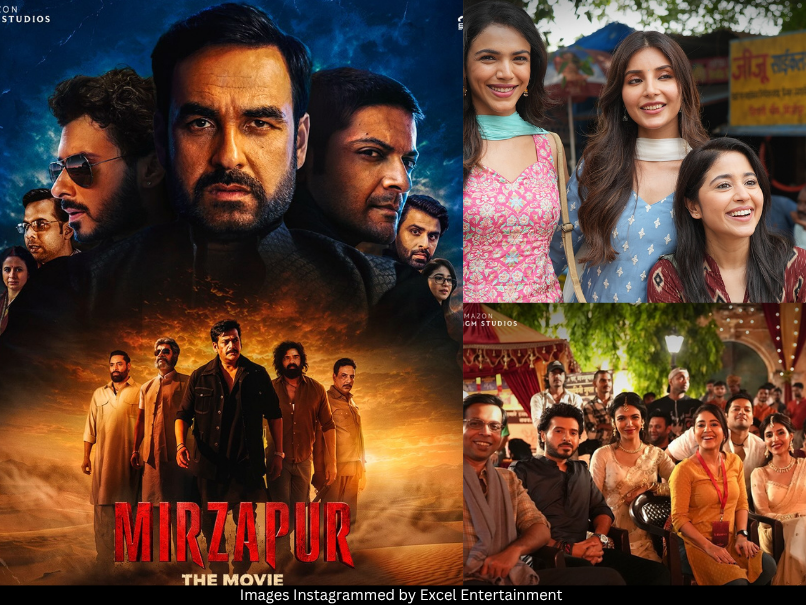
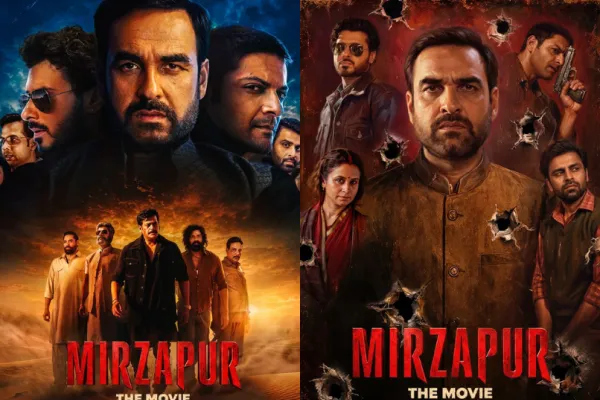
Bollywood has spent decades teaching audiences that the safest route to the Rs 100 crore club begins with a superstar’s face on the poster. ‘Mirzapur: The Movie’ has now offered a deliciously unruly counterargument. Led by actors celebrated more for their characters than carefully manufactured star personas, the crime drama crossed Rs 100 crore net in India on its fourth day in theatres. Released on September 4, 2026, Gurmmeet Singh’s film opened with Rs 25.75 crore net and completed Monday with approximately Rs 109.75 crore net in India.
ALSO READ | ‘Mirzapur: The Movie’ Sets Box Office On Fire, Beats Lifetime Collection Of Alia Bhatt’s ‘Alpha’
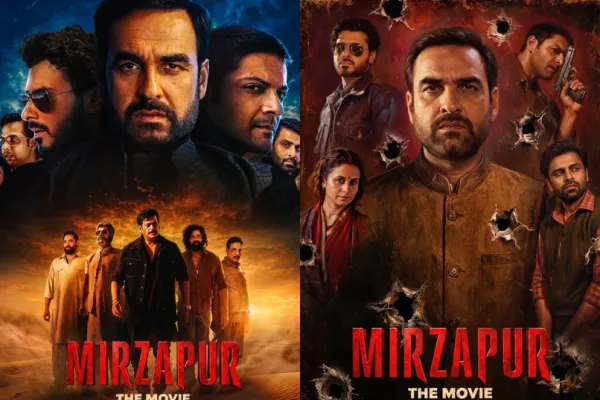
Its India gross stood at Rs 131.55 crore, while its worldwide collection reached approximately Rs 154.05 crore. There is no conventional A-list superstar here whose name ordinarily guarantees a giant opening. Instead, the stars are Kaleen Bhaiya, Guddu Pandit, Munna Bhaiya, Golu, Beena and the ‘Mirzapur’ brand itself. Directed by Gurmmeet Singh, written by creator Puneet Krishna and produced by Ritesh Sidhwani and Farhan Akhtar, the movie brings the streaming phenomenon to cinemas with familiar faces as well as additions including Jitendra Kumar, Ravi Kishan, Sonal Chauhan and Mohit Malik.
The Rs 100 crore milestone becomes even more fascinating when one looks at where these actors began. Some entered films through roles so small that viewers could miss them by blinking; some waited years after television success to face a movie camera; and one began by auditioning inside a film before becoming the man who cast other actors. Here is how the principal members of this thoroughly unconventional blockbuster ensemble started their film careers.
ALSO READ | As ‘Mirzapur: The Movie’ Clocks 3 Hours 17 Minutes, Longest Hindi Films Ever Made
1. Pankaj Tripathi
Before Kaleen Bhaiya controlled Mirzapur with a glance, Pankaj Tripathi could barely claim control over his own voice on screen. His earliest released film appearance was an uncredited part in T S Nagabharana’s Kannada drama ‘Chigurida Kanasu’ in 2003. His Hindi film journey began with Jeeva’s ‘Run’ in 2004, in which he appeared in two tiny scenes opposite Vijay Raaz. Pankaj Tripathi recalled being paid around Rs 4,000 for a day’s work – and because he had returned to Delhi by the time post-production began, somebody else dubbed his lines.
Years of blink-and-miss parts in ‘Bunty Aur Babli’, ‘Apaharan’, ‘Omkara’, ‘Raavan’ and ‘Agneepath’ followed before Sultan Qureshi in ‘Gangs of Wasseypur’ finally made the industry sit up. ‘Newton’, ‘Bareilly Ki Barfi’, ‘Stree’, ‘Ludo’, ‘Mimi’, ‘OMG 2’ and ‘Fukrey’ subsequently turned the scene-stealer into a leading attraction.
2. Ali Fazal
Ali Fazal’s first screen appearance was a small role as Vij in James Dodson’s English-language romantic comedy ‘The Other End of the Line’ in 2008. Hindi film audiences met him more memorably a year later as Joy Lobo, the doomed engineering student in Rajkumar Hirani’s ‘3 Idiots’. It lasted only a few scenes, but ‘Give Me Some Sunshine’ ensured that nobody forgot his face. He received his first mainstream leading-man vehicle in the Shah Rukh Khan-backed ‘Always Kabhi Kabhi’ in 2011, although it was ‘Fukrey’ in 2013 that gave him a durable Hindi film identity.
Ali Fazal then built the sort of resume that refuses to remain in one postcode: ‘Happy Bhag Jayegi’ and the ‘Fukrey’ sequels in India, ‘Furious 7’, ‘Victoria & Abdul’ and ‘Death on the Nile’ internationally, and Guddu Pandit at the centre of ‘Mirzapur’.
3. Divyenndu
No, Pyaar Ka Punchnama was not technically Divyenndu’s first film. He made a fleeting appearance as an unnamed goon in Madhuri Dixit’s 2007 comeback vehicle ‘Aaja Nachle’, then spent several years waiting for the role audiences would actually remember. That arrived in 2011 when Luv Ranjan cast him as Nishant Agarwal – better known as Liquid – in ‘Pyaar Ka Punchnama’. His mixture of romantic innocence, workplace frustration and spectacular exasperation won him the Screen Award for Most Promising Newcomer.
‘Chashme Baddoor’, ‘Toilet: Ek Prem Katha’, ‘Batti Gul Meter Chalu’, ‘The Railway Men’ and ‘Madgaon Express’ displayed his comic and dramatic range, but Munna Tripathi gave him pop-cultural immortality. His return in the film is especially fitting: an actor who entered cinema without even a character name now plays a character so famous that the franchise found a way to turn back time for him.
4. Ravi Kishan
Ravi Kishan’s first film was not a prestige launch or a star-son showcase. He began with Imran’s 1992 Hindi action film ‘Pitambar’, starring Mithun Chakraborty, and then navigated a long stretch of supporting parts and financial struggle. He eventually became a towering star of Bhojpuri cinema, while ‘Tere Naam’ brought him wider Hindi film recognition more than a decade after his debut. Ravi Kishan has said he has worked across hundreds of films and multiple languages.
His later Hindi work includes ‘Luck’, ‘Agent Vinod’, ‘Mukkabaaz’, ‘Mission Raniganj’ and ‘Laapataa Ladies’, with Kiran Rao’s film reminding a new audience how much he can do with wit, stillness and a plate of kalakand.
5. Jitendra Kumar
Jitendra Kumar took the most modern route into this very modern blockbuster. An IIT Kharagpur graduate, he became one of India’s earliest home-grown digital stars through TVF sketches and characters such as Jeetu and Jeetu Bhaiya. His earliest film credit was as Laxman in the 2014 anthology ‘Shuruaat Ka Interval’, but Jitendra Kumar has referred to ‘Gone Kesh’, released in 2019, as the film that gave him the thrill of seeing himself on the silver screen for the first time.
‘Shubh Mangal Zyada Saavdhan’, ‘Chaman Bahaar’, ‘Jaadugar’, ‘Kota Factory’ and, above all, ‘Panchayat’ made his understated sincerity his superpower. Taking over Bablu Pandit from Vikrant Massey could have been an invitation to imitate; instead, Jitendra Kumar brings his own unshowy intelligence to the role.
6. Rasika Dugal
Rasika Dugal did not arrive in films with drum rolls. After studying mathematics at Lady Shri Ram College, completing a media course and training at FTII, she made her screen debut in 2007 with the small role of Deepti in Manish Jha’s ‘Anwar’. She appeared in ‘No Smoking’ the same year, followed by parts in ‘Tahaan’, ‘Agyaat’, ‘Kshay’ and ‘Aurangzeb’. The roles were varied, the films were adventurous, and instant stardom was nowhere in sight.
Her patience eventually produced one of the most quietly formidable careers in the ensemble. ‘Qissa’, ‘Manto’, ‘Hamid’, ‘Lootcase’, ‘Delhi Crime’ and ‘A Suitable Boy’ established her across films and streaming, while Beena Tripathi gave ‘Mirzapur; a masterclass in survival behind a deceptively composed face.
7. Shweta Tripathi Sharma
Shweta Tripathi Sharma first found recognition on television as Zenia in Disney’s ‘Kya Mast Hai Life’ in 2009. Her first film appearance came in Michael Winterbottom’s ‘Trishna’, which premiered in 2011 before receiving a wider release in 2012. It was a small part; her true Hindi cinema breakthrough arrived with Neeraj Ghaywan’s ‘Masaan’ in 2015. As Shaalu, she turned a teasing declaration about caste into one of the film’s sweetest moments and its tragedy into something audiences carried home.
She followed it with fearless choices including ‘Haraamkhor’, ‘Gone Kesh’, ‘Cargo’ and ‘Yeh Kaali Kaali Ankhein’. Gajgamini “Golu” Gupta in ‘Mirzapur’ charts an even more dramatic transformation – from bookish college student to a hardened player in the city’s blood-soaked power game.
8. Shriya Pilgaonkar
Shriya Pilgaonkar’s film debut was a genuine family production – but not a free pass. She starred with parents Sachin and Supriya Pilgaonkar in the 2013 Marathi film ‘Ekulti Ek’, written, directed and produced by her father. Her performance earned the Maharashtra State Film Award for Best Debut Actress. She then appeared in Claude Lelouch’s French film ‘Un plus une’ before making her Hindi film debut opposite Shah Rukh Khan in ‘Fan’ in 2016, having reportedly been chosen after an extensive audition process.
Yet Shriya Pilgaonkar has herself said that ‘Mirzapur’, not ‘Fan’, became the real turning point: viewers knew her as the outspoken Sweety Gupta. ‘Guilty Minds’, ‘The Broken News’, ‘Taaza Khabar’ and ‘Crackdown’ later made her an OTT regular.
9. Abhishek Banerjee
Abhishek Banerjee’s first film role was almost comically prophetic. In Rakeysh Omprakash Mehra’s ‘Rang De Basanti’ in 2006, he appeared briefly as a student auditioning for Sue’s documentary. He later moved to Mumbai and became a casting director, working on films including ‘No One Killed Jessica’, ‘The Dirty Picture’, ‘Secret Superstar’ and ‘Toilet: Ek Prem Katha’. For years, he helped other actors get through the door while taking scattered parts on the other side of it.
Amar Kaushik’s ‘Stree’ finally made his bewildered Jana impossible to overlook, while Hathoda Tyagi in ‘Paatal Lok’ revealed frightening dramatic range. ‘Dream Girl’, ‘Bhediya’, ‘Apurva’, ‘Vedaa’, ‘Stree 2’ and ‘Stolen’ followed. His return as Compounder in ‘Mirzapur: The Movie’ completes a lovely circle: the anonymous movie auditioner is now one of the most recognisable character actors.
10. Sonal Chauhan
Some actors spend years waiting for a breakthrough; Sonal Chauhan’s first film arrived with a hit soundtrack, a successful theatrical run and a character audiences still associate with her. After modelling and winning the Miss World Tourism title in 2005, she made her acting debut opposite Emraan Hashmi in Kunal Deshmukh’s ‘Jannat’ in 2008. Her Zoya was the moral counterweight to a hero addicted to the thrill of match-fixing, and the film made her instantly recognisable.
Sonal Chauhan entered Telugu cinema with ‘Rainbow’ later that year and built a multilingual filmography through ‘Legend’, ‘Pandaga Chesko’, ‘Size Zero’, ‘Dictator’, ‘The Ghost’ and ‘Adipurush’.
11. Mohit Malik
Mohit Malik had already spent roughly two decades on television before his first Hindi film reached cinemas. Viewers knew him from shows such as ‘Miilee’, ‘Doli Armaano Ki’ and ‘Kullfi Kumarr Bajewala’, but his Bollywood debut came as the cruel zamindar Tej Bahadur in Abhishek Kapoor’s ‘Azaad’, released in January 2025. The film did not work commercially, yet Mohit Malik later said it directly helped him secure ‘Mirzapur: The Movie’.
Mohit Malik had also explored streaming with projects including ‘Cyber Vaar’ and ‘Chamak’, as well as reality television through ‘Jhalak Dikhhla Jaa’ and ‘Khatron Ke Khiladi’.
12. Harshita Gaur
Harshita Gaur became a television lead with ‘Sadda Haq’ in 2013, playing engineering student Sanyukta Aggarwal before streaming opened a new chapter. Her first film was the 2018 short ‘Aman’, followed by her feature-film debut in Vishwak Sen’s Telugu crime drama ‘Falaknuma Das’ in 2019. She played Sakhi and had to learn the rhythm and meaning of Telugu dialogue rather than simply memorising sounds.
‘Kanpuriye’, ‘Sacred Games’, ‘Puncch Beat’, ‘Jehanabad’ and ‘Agra Affair’ followed, but Dimpy Pandit remains her most widely recognised character.
13. Sushant Singh
Sushant Singh began his Hindi film career with a small role as Pakiya in Ram Gopal Varma’s ‘Satya’ in 1998. The glamour level was approximately zero: the actor has recalled not even being offered a chair on set and sitting on bricks while waiting for his shot. Ram Gopal Varma nevertheless brought him back for ‘Kaun?’ and then ‘Jungle’, where his performance as bandit Durga Narayan Chaudhary won major awards and established him as a formidable screen antagonist.
Sushant Singh went on to deliver strong turns in ‘The Legend of Bhagat Singh’, ‘16 December’, ‘Matrubhoomi’, ‘Lakshya’, ‘Sehar’ and ‘Baby’, while years of hosting ‘Savdhaan India’ made his voice familiar in millions of homes.
14. Rajesh Tailang
Rajesh Tailang’s screen journey began on Doordarshan, most significantly with the landmark daily soap ‘Shanti’ in the 1990s. His early filmography requires one small clarification: he appeared in Hansal Mehta’s 1997 television film ‘Jayate’, while Govind Nihalani’s ‘Hazaar Chaurasi Ki Maa’ in 1998 became his first theatrical feature. Shanti helped him land the latter, in which he appeared amid a heavyweight ensemble led by Jaya Bachchan.
His acclaimed lead performance in Richie Mehta’s ‘Siddharth’ earned a Canadian Screen Award nomination, but streaming gave his quiet authority a much larger audience. ‘Selection Day’, ‘Delhi Crime’, ‘Bandish Bandits’, ‘Trial by Fire’ and ‘Mirzapur’, in which he plays upright lawyer Ramakant Pandit, made him one of OTT’s most dependable fathers and authority figures.
15. Sheeba Chaddha
Sheeba Chaddha came from Delhi theatre and made her first film appearance in Mani Ratnam’s ‘Dil Se’ in 1998. The role was so tiny that she has joked she barely remembers it; she also stood in for Manisha Koirala for a distant snow sequence when the leading lady was unavailable. A more noticeable part followed as Aishwarya Rai’s sister Anupama in Sanjay Leela Bhansali’s ‘Hum Dil De Chuke Sanam’ in 1999.
What followed was a masterclass in making supporting characters feel fully inhabited: ‘Parzania’, ‘Luck by Chance’, ‘Talaash’, ‘Dum Laga Ke Haisha’, ‘Badhaai Do’, ‘Pagglait’ and ‘Doctor G’, alongside series such as ‘Bandish Bandits’. As Vasudha Pandit in ‘Mirzapur’, she supplies the bruised moral centre of a family repeatedly punished for standing up to power.
‘Mirzapur: The Movie’ has not made Rs 100 crore in spite of lacking a conventional superstar; it has reached the mark because years of storytelling turned its actors and characters into the attraction. This is an ensemble built from uncredited walk-ons, television veterans, theatre actors, regional stars, casting professionals and early digital pioneers. Kulbhushan Kharbanda, Anjumm Shharma, Priyanshu Painyuli, Anangsha Biswas, Shaji Choudhary and Pramod Pathak add still more lived-in talent to that larger world.
Their journeys did not begin with vanity vans waiting outside launch events. They began with two-scene roles, shorts, television films, auditions, theatre rehearsals and years in which recognition stubbornly refused to arrive. The box-office result therefore feels bigger than a franchise milestone.
It is proof that audiences will turn characters into stars – and when that happens, even Mirzapur’s famously contested throne may not be large enough for the entire cast.