
‘The Vvaan’ To ‘Kantara’: 15 Indian Films Caught In Music Copyright Battles
From ‘The Vvaan’ and ‘Kantara’ to ‘Krazzy 4’, these 15 Indian films became embroiled in major disputes over copied compositions, recreated classics and unauthorised recordings.

IST
Last Updated On
IST
A film song can be over in four minutes; the argument over who owns it can run for years. Indian cinema has repeatedly discovered that a familiar tune carries more than nostalgia. Lyrics, composition, sound recording, adaptation and synchronization can all have different owners – and one cleared right does not necessarily unlock the rest. That is why the cases below are not 15 versions of the same scandal. One concerns 25 seconds of an independent musician’s master recording, another an 11-second extract from a 1971 classic, and several turn on labels and producers reading old contracts very differently.
ALSO READ | Shot, Sung, Deleted! Bollywood Songs That Never Made The Final Film
Some matters ended in settlements, some produced interim court orders, and others remain contested. Amid ‘The Vvaan’ landing in trouble over one of its songs, we decided to revisit Indian films that became embroiled in major disputes.
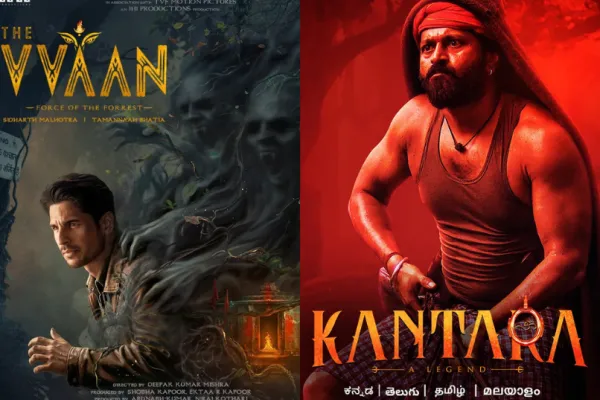
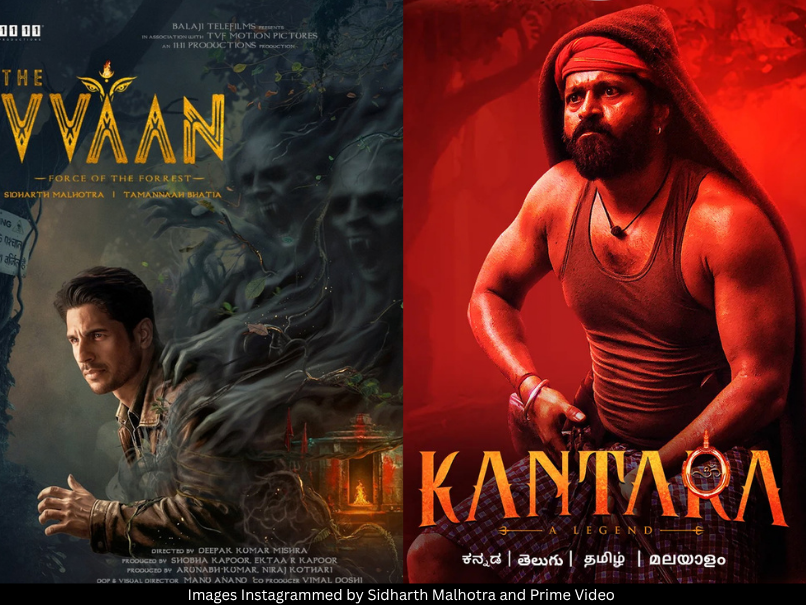
1. The Vvaan: Force of the Forrest - ‘Aigiri Nandini’
The newest dispute on this list also delivered its resolution at trailer speed. Musician Sargam Vaish alleged that roughly 25 seconds of his distinctive rendition of the devotional hymn ‘Aigiri Nandini’ – including his vocals, production and master recording – had been placed in ‘The Vvaan’ trailer without permission or credit. After posting the master as evidence, he warned that he would take legal action if the material was not removed or regularised.
The story then took a less combative turn. Sargam Vaish said someone from his team had earlier sent test music, including this version, to Balaji Telefilms as part of the industry’s pitching process and that it appeared to have been used accidentally. Representatives of Sargam Vaish, rights holder BLive Music, Balaji and TVF met; the makers agreed to credit the IP and, in the latest reported development, acquired synchronization rights to the recording. Vaish nevertheless said the route by which the master reached the trailer remained unclear. Directed by Deepak Kumar Mishra, the fantasy-folklore film stars Sidharth Malhotra, Tamannaah Bhatia, Sunil Grover, Maniesh Paul, Shweta Tiwari and Anup Soni. It is due in theatres on September 25, 2026.
ALSO READ | Games, Comics And Animation: 12 Indian Films That Became Much More Than Movies
2. Mirzapur: The Movie - ‘Shoorveer’
With ‘Mirzapur: The Movie’, the same song generated two overlapping but legally different arguments. Rapperiya Baalam, the stage name of Ashok Manda, alleged that ‘Shoorveer’ – his 2020 independent tribute to Maharana Pratap – was used without his permission or proper credit in the film’s violent climax. Trouper Records answered that it had officially licensed the song to Excel Entertainment and identified Baalam as its singer and composer. Baalam’s side disputed the label’s authority to do so, claimed that the copyright documents stand in Manda’s name and said no NOC had been granted. He then sent Excel a legal notice seeking removal of the track and an apology.
A separate public-interest case reached the Delhi High Court over the context in which the Maharana Pratap tribute was used, rather than a final adjudication of the competing copyright claims. After questioning its placement behind a fight sequence, the court asked the CBFC to decide on the producers’ proposal to replace the song with background music and listed the matter for September 24. Directed by Gurmmeet Singh, the September 4, 2026 release brought back Pankaj Tripathi, Ali Fazal, Divyenndu and Rasika Dugal, alongside Ravi Kishan and Jitendra Kumar. Sacnilk put its worldwide gross at Rs 315.34 crore as of September 22.
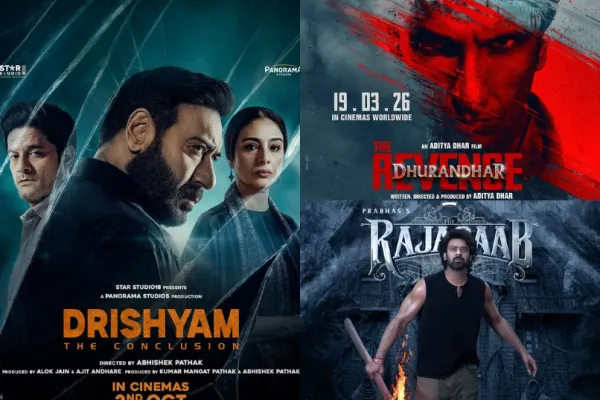
3. Dhurandhar: The Revenge - ‘Rang De Lal (Oye Oye)’ and ‘Tirchi Topiwale’
The ‘Oye Oye’ hook has outlived several generations of dance floors, but its contract history is now playing out in court. Trimurti Films, producer of Rajiv Rai’s 1989 film ‘Tridev’, sued B62 Studios, Jio Studios and Super Cassettes/T-Series over ‘Rang De Lal (Oye Oye)’ in ‘Dhurandhar: The Revenge’. Trimurti alleged that the new track – and the film’s use of material from ‘Tirchi Topiwale’, composed by Kalyanji-Anandji with lyrics by Anand Bakshi – went beyond the rights granted under a 1988 agreement. Its case is that T-Series received limited audio rights, not permission to synchronize the work into another film. The defendants contested the claim and raised their own objections about the plaintiff’s disclosures and past enforcement.
Court-ordered mediation failed. On May 14, the Delhi High Court declined to block the film’s OTT release, reasoning that damages could compensate Trimurti if it ultimately proves its rights, but directed T-Series to deposit Rs 50 lakh in an interest-bearing fixed deposit for whichever side succeeds at trial. In other words, the streaming decision was not a verdict that no infringement occurred; the core ownership question remains to be tried. Aditya Dhar’s spy-action sequel, starring Ranveer Singh, Sanjay Dutt, R Madhavan, Arjun Rampal, Sara Arjun and Rakesh Bedi, released on March 19, 2026. Sacnilk recorded an extraordinary Rs 1,813.39 crore worldwide gross.
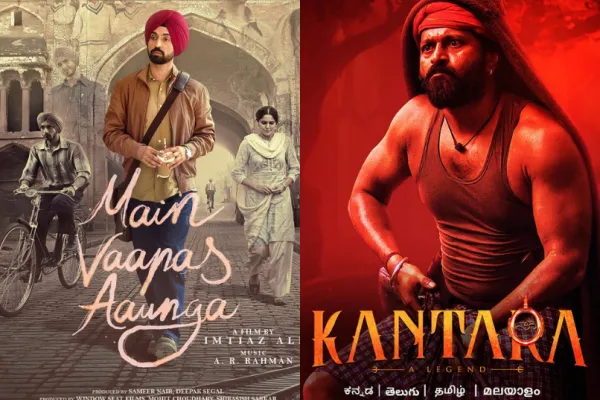
4. Kantara - ‘Varaha Roopam’ versus ‘Navarasam’
Few recent film music disputes became as culturally charged as the battle over ‘Varaha Roopam’, B Ajaneesh Loknath’s climactic composition for ‘Kantara’. Kerala rock band Thaikkudam Bridge alleged that the track infringed ‘Navarasam’, its 2015 song and album title track; Mathrubhumi Printing and Publishing, which held copyright in ‘Navarasam’, was also central to the litigation. This went far beyond social media side-by-side comparisons. District courts in Kerala issued temporary restraints affecting the song’s use in theatres and on streaming platforms, and the first Prime Video version of ‘Kantara’ arrived with a musically altered replacement. Subsequent proceedings examined jurisdiction as well as infringement, and different interim orders were challenged or stayed.
The endpoint is just as important as the uproar. In October 2023, after a private settlement, the Kerala High Court quashed the criminal proceedings under the Copyright Act against producer Vijay Kiragandur, director-star Rishab Shetty, Kerala distributor Prithviraj Sukumaran and Loknath. The quashing followed the complainant’s no-objection to ending the criminal case; it was not a merits judgment declaring one composition copied or wholly original. Released in Kannada on September 30, 2022, Shetty’s film stars him with Sapthami Gowda, Kishore, Achyuth Kumar and Pramod Shetty. Its pan-Indian surge produced a Rs 407.82 crore worldwide gross, according to Sacnilk.
5. Krazzy 4 - ‘Break Free’, the title track and ‘The Thump’
This is the Bollywood case that made an advertising jingle more powerful than a release calendar. Composer Ram Sampath argued that ‘Break Free’, the Krazzy 4 title track and their remixes reproduced the hook of ‘The Thump’, music he had created for a Sony Ericsson commercial. On April 10, 2008 – one day before the film was scheduled to open – the Bombay High Court found that Sampath had made out a prima facie case and restrained the Roshans from releasing the film with the disputed songs. With prints already in circulation and the release hours away, the timing could hardly have been more dramatic.
The parties settled out of court that evening. Contemporary reports said producer Rakesh Roshan agreed to pay Sampath Rs 2 crore for the rights, clearing the film to arrive with the songs intact on April 11. Directed by Jaideep Sen, ‘Krazzy 4’ stars Juhi Chawla, Arshad Warsi, Irrfan Khan, Rajpal Yadav and Suresh Menon; Shah Rukh Khan and Hrithik Roshan appeared in separate star-powered promotional song videos. Sacnilk listed its worldwide gross at Rs 31.97 crore.
6. Rockstar - 11-second ‘Dum Maaro Dum’ extract
Not every copyright fight needs a full remake. In ‘Rockstar’, approximately 11 seconds of ‘Dum Maaro Dum’ from Dev Anand’s 1971 film ‘Hare Rama Hare Krishna’ were enough to trigger Saregama’s suit against distributor Eros. The original – composed by RD Burman, written by Anand Bakshi, sung by Asha Bhosle and immortalised on screen by Zeenat Aman – briefly appeared in Imtiaz Ali’s film. Licence talks reportedly began around the theatrical release but did not succeed.
By the time Saregama moved the Calcutta High Court in 2012, ‘Rockstar’ had already completed its cinema run; the immediate concern was television broadcast and the film’s release on DVD and other formats. The court granted an interim injunction directing Eros to delete the 11-second portion for those uses while permitting the rest of the film to be exploited. Released on November 11, 2011, ‘Rockstar’ stars Ranbir Kapoor, Nargis Fakhri and Shammi Kapoor and is driven by AR Rahman’s celebrated original score. Sacnilk reported a worldwide gross of Rs 108.71 crore.
7. Made in China - ‘Odhani’
The ‘Odhani’ dispute is a neat lesson in why asking for a licence does not guarantee that the deal – or the ownership question – will be simple. Sachin-Jigar’s recreated number for ‘Made in China’, picturised on Rajkummar Rao and Mouni Roy, drew from ‘Ke Odhni Odhu Odhu Ne Udi Jaye’, sung by Alka Yagnik and Praful Dave in the 1985 Gujarati film ‘Meru Malan’. Saregama approached the Delhi High Court claiming rights in the older song and seeking to restrain Maddock Films from exploiting the new version.
The court record shows that the parties had negotiated a licence and that Saregama quoted Rs 8 lakh, but they disagreed over what that payment would cover and who could commercially exploit the underlying work. Maddock challenged the breadth of Saregama’s rights; Sony Music argued that the lyrics were folk material in the public domain and that the new composition and recording had been assigned to it. The court initially refused an urgent injunction because Sony was not yet a defendant, although it required Maddock to furnish Rs 25 lakh as security. The appeal was later disposed of after a settlement in which Maddock acknowledged Saregama’s rights and both sides agreed to be bound by confidential terms. Directed by Mikhil Musale and also featuring Boman Irani, Gajraj Rao and Paresh Rawal, ‘Made in China’ released on October 25, 2019 and grossed Rs 16.20 crore worldwide, per Sacnilk.
8. Housefull - ‘Aapka Kya Hoga (Dhanno)’ and ‘Apni Toh Jaise Taise’
The disputed ‘Housefull’ song is commonly remembered by the older hook it borrows, but the recreation was titled ‘Aapka Kya Hoga (Dhanno)’. It folded lines from ‘Apni Toh Jaise Taise’, the Kishore Kumar number composed by Kalyanji-Anandji for Prakash Mehra’s 1981 Amitabh Bachchan film ‘Laawaris’, into a new Shankar-Ehsaan-Loy track sung by Mika Singh. Saregama licensed the material to Nadiadwala Grandson Entertainment and Super Cassettes on the strength of a 1981 assignment. Prakash Mehra’s heirs and Anandji with Kalyanji’s heirs challenged the use, asserting literary, musical and special rights that they said had not been lawfully cleared.
The courtroom history was suitably ‘Housefull’: overlapping suits, a single-judge restraint and an appellate stay subject to bank guarantees. In October 2010, a Calcutta High Court division bench read the 1981 agreement as an assignment of the entire bundle of rights in the song, held that Saregama was entitled to grant the licence and found no prima facie infringement. The episode remains a textbook example of how catalogues can produce rival claims among a film producer’s heirs, composers and a music label decades later. Sajid Khan’s comedy, starring Akshay Kumar, Riteish Deshmukh, Deepika Padukone, Lara Dutta, Arjun Rampal and Jiah Khan, released on April 30, 2010. Sacnilk put its worldwide gross at Rs 119 crore.
9. Bala - ‘Don’t Be Shy Again’
Dr Zeus did not mince words when ‘Bala’ unveiled ‘Don’t Be Shy Again’. The British-Indian producer accused the team of riding on – and damaging – his hits without properly involving or crediting him. The new Sachin-Jigar version, sung by Badshah, Shalmali Kholgade and Gurdeep Mehendi, reworked ‘Don’t Be Shy’, the 2004 single by girl group Rouge produced by Dr Zeus. Badshah responded that he had joined the recreation only after satisfying himself that the necessary rights were in place.
Maddock Films then produced the critical twist: it said UK company Karman Entertainment owned worldwide copyright in the original and had issued Maddock a legitimate licence to create the ‘Bala’ version. Credits were subsequently expanded online to identify the source material and Dr Zeus. There was a very public authorship and permission dispute, but no reported court finding that the filmmakers infringed copyright – precisely why the case should be described as a claim, not a conviction. Directed by Amar Kaushik and starring Ayushmann Khurrana, Bhumi Pednekar and Yami Gautam, ‘Bala’ released on November 8, 2019 and grossed Rs 162 crore worldwide, according to Sacnilk.
10. Ponniyin Selvan: II – ‘Veera Raja Veera’ versus ‘Shiva Stuti’
A centuries-old musical tradition met modern copyright law when Ustad Faiyaz Wasifuddin Dagar challenged AR Rahman’s ‘Veera Raja Veera’. Dagar alleged that protectable portions of ‘Shiva Stuti’, a Dhrupad composition associated with his father Ustad Nasir Faiyazuddin Dagar and uncle Ustad Nasir Zahiruddin Dagar – the Junior Dagar Brothers – had been used without authorisation. A Delhi High Court single judge initially found the two compositions prima facie identical with certain alterations, ordered expanded credits, directed the defendants to deposit Rs 2 crore and awarded Dagar Rs 2 lakh in costs. In September 2025, however, a division bench set that interim order aside without deciding whether infringement had occurred.
The dispute then reached the Supreme Court. In February 2026, Rahman and the filmmakers agreed, without prejudice to their defence in the pending suit, to identify the composition as inspired by the Dagarwani Dhrupad tradition and acknowledge the Junior Dagar Brothers’ recording of ‘Shiva Stuti’. The Supreme Court made clear that the underlying infringement case must proceed uninfluenced by the interim observations – so the additional credit was not a final admission that Rahman had infringed copyright. Directed by Mani Ratnam, ‘Ponniyin Selvan: II’ stars Vikram, Aishwarya Rai Bachchan, Jayam Ravi, Karthi, Trisha, Jayaram, Aishwarya Lekshmi and Sobhita Dhulipala. It released on April 28, 2023 and grossed Rs 344.63 crore worldwide, according to Sacnilk.
11. Bachelor Party - ‘Nyaya Ellide’ and ‘Omme Ninnanu’
Can seven seconds be too short to infringe copyright? Not when those seconds have been consciously selected to serve the story, the Delhi High Court held in the dispute surrounding Kannada comedy Bachelor Party. MRT Music accused Paramvah Studios and producer Rakshit Shetty of using seven seconds of ‘Nyaya Ellide’, from the 1982 film of the same name, and 31 seconds of ‘Omme Ninnanu’ from the 1981 film ‘Gaali Maathu’, without a licence. The filmmakers invoked fair use and the de-minimis principle, arguing that the excerpts were brief and incidental.
The court was not persuaded. It observed that ‘Nyaya Ellide’ – meaning “where is justice?” – had been deliberately selected to reflect the protagonist’s plight, while ‘Omme Ninnanu’ accompanied a purposeful childhood flashback. In its March 28, 2026 interim judgment, the court held that MRT possessed the relevant exclusive rights and that the uses were neither fair nor de minimis. It ordered the release of the filmmakers’ Rs 20 lakh deposit to MRT, subject to the suit’s final outcome, in lieu of an injunction. A separate Rs 5 lakh exemplary cost was imposed for wilful disobedience of the earlier deposit order; it should not be confused with final damages. Written and directed by Abhijit Mahesh, the film stars Diganth, Yogesh, Achyuth Kumar and Siri Ravikumar. It opened on January 26, 2024 and grossed Rs 1.87 crore worldwide, per Sacnilk.
12. Aghathiyaa - ‘En Iniya Pon Nilave’
The battle over ‘Aghathiyaa’ was not simply about whether Ilaiyaraaja composed ‘En Iniya Pon Nilave’ – nobody seriously disputed that. The harder question was which parts of the celebrated song he could license four decades after it first appeared in Balu Mahendra’s 1980 film ‘Moodu Pani’. Ilaiyaraaja entered into a 2023 agreement permitting Vels Film International to use the song in Aghathiyaa. Saregama objected, arguing that it owned copyright in the original sound recording through an agreement with Moodu Pani producer Raja Cine Arts.
The Delhi High Court’s May 2026 appellate ruling drew a fine but important distinction. It held that Ilaiyaraaja, as composer, was the first owner of the underlying musical work and could authorise an adaptation of that music. His rights did not, however, extend to the original sound recording or the lyrics. Because the agreement with Vels purported to cover more than the musical composition and the filmmakers recreated or adapted the protected sound recording, the court held that Saregama’s copyright had been infringed and upheld the interim injunction. Written and directed by Pa Vijay, ‘Aghathiyaa’ stars Jiiva, Arjun Sarja, Raashii Khanna and Yogi Babu. The fantasy adventure released on February 28, 2025 and grossed Rs 3.65 crore worldwide, according to Sacnilk.
13. Baadshaho - ‘Socha Hai’ and ‘Keh Doon Tumhe’
Classic did not mean available for reuse when ‘Baadshaho’ attempted to revive ‘Keh Doon Tumhe’. The RD Burman-Sahir Ludhianvi number, originally sung by Kishore Kumar and Asha Bhosle for the 1975 film ‘Deewaar’ and picturised on Shashi Kapoor and Neetu Singh, was recreated as ‘Socha Hai’. Tanishk Bagchi’s new version, sung by Jubin Nautiyal and Neeti Mohan and filmed on Emraan Hashmi and Esha Gupta, had already been released for promotion when ‘Deewaar’ producer Trimurti Films approached the Bombay High Court.
The argument turned on a 1974 agreement with Polydor, which later became Universal Music. Universal and T-Series maintained that the relevant rights had been licensed for the recreation, while Trimurti argued that the old agreement covered exploitation of the original recording – not the right to transplant its lyrics and composition into a fresh film. The court found that Trimurti had established a serious prima facie case, restrained the release of ‘Baadshaho’ with the song and allowed the movie to open only after its removal. A division bench declined to interfere with that injunction days before release. Directed by Milan Luthria, the September 1, 2017 release stars Ajay Devgn, Emraan Hashmi, Vidyut Jammwal, Ileana D’Cruz, Esha Gupta and Sanjay Mishra. Sacnilk placed its worldwide gross at Rs 123.50 crore.
14. Dream Girl - ‘Dhagala Lagli’ and ‘Var Dhagala Lagli Kal’
The Ganpati celebration ‘Dhagala Lagli’ looked like a colourful promotional bonus for ‘Dream Girl’, complete with a Riteish Deshmukh guest appearance alongside Ayushmann Khurrana and Nushrratt Bharuccha. Legally, however, its most valuable attraction was the instantly recognisable hook from ‘Var Dhagala Lagli Kal’, the song associated with Dada Kondke’s 1979 Marathi comedy ‘Bot Lavin Tithe Gudgulya’. Saregama claimed that its agreement with the film’s producer gave it rights in the sound recording and underlying literary and musical works.
The Delhi High Court record noted that 59 seconds of the 129-second recreation drew on the older song. Although the defendants questioned Saregama’s title and had initially described the material as Marathi folk music, they did not ultimately contest the act of copying during the interim hearing. The court restrained Balaji Motion Pictures, ALT Entertainment and Zee from exploiting the disputed material while the suit remained pending. ‘Dhagala Lagli’ was subsequently taken off digital platforms; because it was essentially promotional rather than part of the film’s main narrative, the running theatrical version did not require a major recut. Directed by Raaj Shaandilyaa, ‘Dream Girl’ also stars Annu Kapoor, Vijay Raaz, Manjot Singh and Abhishek Banerjee. It released on September 13, 2019 and grossed Rs 195 crore worldwide, according to Sacnilk.
15. Special 26 - four words from ‘Mere Sapno Ki Rani’
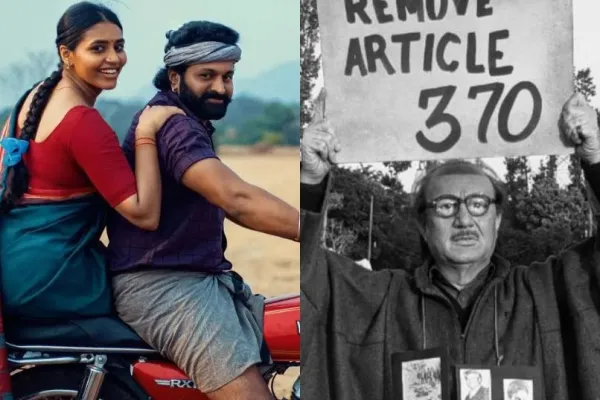
If ‘Rockstar’ demonstrated how an 11-second extract could attract an injunction, ‘Special 26’ showed why duration alone never decides a copyright case. In one scene, Anupam Kher walks into a room while uttering four or five words – ‘Mere Sapno Ki Rani’ – over no more than seven seconds. Saregama, which claimed rights in the music and lyrics of the famous Kishore Kumar song from Shakti Samanta’s 1969 film ‘Aradhana’, sued Viacom18 and sought an injunction.
The Calcutta High Court accepted, at that stage, the presumption that Saregama possessed the relevant rights. It nevertheless refused relief on the facts. The judge found that Anupam Kher spoke the words in a tone rather than singing them to SD Burman’s original tune; the resemblance to the melody was remote, while the short phrase itself was commonplace. Even assuming some lyrical copying, the court held that the use was trifling and therefore covered by the de-minimis principle. It is an especially useful ending for this list: ‘Krazzy 4’ was restrained over a six-second musical hook and Rockstar over an 11-second recording, yet ‘Special 26’ survived a seven-second claim because context, recognisability and creative substance mattered more than a stopwatch. Directed by Neeraj Pandey, the February 8, 2013 heist thriller stars Akshay Kumar, Anupam Kher, Manoj Bajpayee, Kajal Aggarwal, Jimmy Sheirgill and Divya Dutta. Sacnilk reported a Rs 103.04 crore worldwide gross.
Taken together, these cases reveal the question a catchy recreation can conceal: permission from whom? The composer, performer, lyricist, producer, label and present-day assignee may not be the same person – and an old contract can mean something very different when a song moves from vinyl to cinema, streaming and social media. The tune may be instantly recognisable; the chain of title rarely is.