
AI Magic Or Human Talent? How Ranbir Kapoor's 'Ramayana' Is Changing The Rules Of Film Dubbing
Ramayana’s makers say humans recorded the voices while AI adjusted lip movements – here’s how Brahma AI works and what sparked the dubbing debate.

IST
Last Updated On
IST
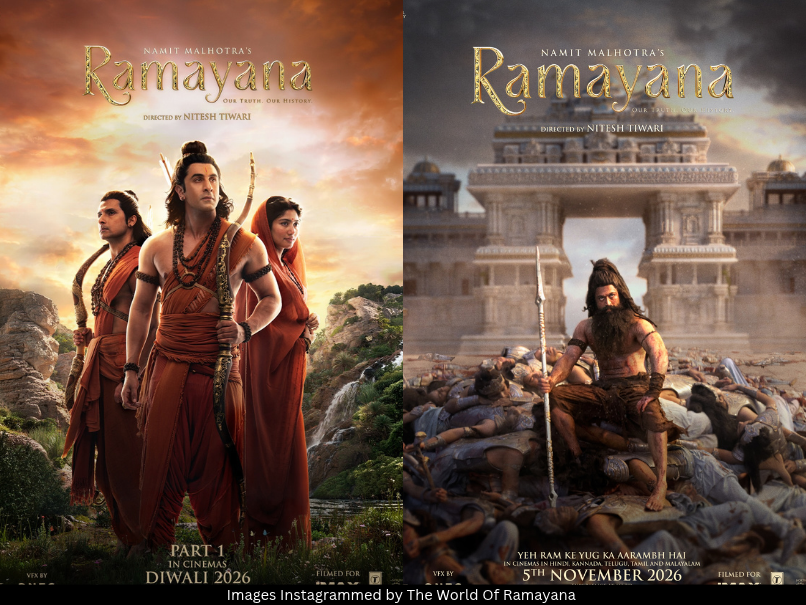
A familiar face speaking a different language is nothing new in Indian cinema. But when the mouth movements fit the translated dialogue unusually closely, the questions begin. Did the actor perform the scene twice? Record another version? Or did artificial intelligence supply the voice? Ramayana’s English trailer brought that debate into focus, with its digitally synchronised dialogues becoming a talking point ahead of the film’s release. The filmmakers’ answer draws a crucial distinction: human artists recorded the voices, while AI helped modify the on-screen lip movements.
ALSO READ | ‘Ramayana’ On OTT Comes With A Catch! JioHotstar’s Pay-Per-View Plan Explained
Understanding those two jobs explains much of the controversy surrounding Ranbir Kapoor and Yash’s upcoming epic.
What Sparked The AI-Dubbing Controversy?
The English trailer appeared in August, inviting attention to how closely the actors’ mouths matched the English dialogues. By the film’s October 27 world premiere in Los Angeles, questions about AI had become part of the conversation around its international presentation.
The Hollywood Reporter India reported that reviewer Parth Chaturvedi had claimed some critics abandoned plans to attend because they believed the voices were AI-generated. That account should be understood as a reported claim, rather than evidence of an organised boycott.
At the premiere, director Nitesh Tiwari clarified that dubbing artists had performed the dialogues. “All the voices are dubbed by the artists,” he said, explaining that AI was used to get the lip movements right for audiences watching in their own languages. His clarification concerned the localisation process; it should not be stretched into a claim that the entire film was made without AI.
ALSO READ | ‘Ramayana’ Trailer: Ranbir Kapoor Shines As Lord Rama, Yash Promises Chilling Performance As Ravana
What Exactly Is Brahma AI?
Brahma AI is a company and technology platform whose work extends beyond this film. Its September 2026 announcement identifies Prabhu Narasimhan as founder and CEO, and describes its foundations as technologies developed across DNEG, Metaphysic and Prime Focus Technologies. Prime Focus is an investor. Calling it simply a voice filter misses the scope of the business.
The Indian Express identifies VAANI as the component used for Ramayana’s multilingual lip synchronisation. Brahma’s official VAANI page describes tools for voice transformation, dubbing and adapting lip movements to newly dubbed dialogue.
This is where the distinction matters: a platform can offer synthetic-voice capabilities without every production using those capabilities. Brahma’s wider product range does not establish that Ramayana’s dialogues were machine-generated. For this film, the director and producer describe human voice performances combined with AI-assisted visual changes.
How Does The Lip-Sync Process Work?
Conventional dubbing involves considerable craft. Translators adapt dialogues, performers interpret it, and editors synchronise the recording with the picture. The new language has to work around visible mouth movements, pauses and the original performance’s rhythm. Netflix’s professional dubbing guidelines, for example, stress both synchronisation and preserving the original dialogue’s meaning. They acknowledge that perfect lip-sync should not come at the expense of intent.
‘Ramayana’ adds a visual stage. Explaining the workflow to ET Now, producer Namit Malhotra said voice actors recorded performances first. People he calls “human drivers” then provided the foundation for lip movements matching those recordings. A bespoke AI tool integrated those movements into the on-screen actors’ faces.
Imagine a scene originally performed in Hindi. A human performer records its English adaptation. Rather than leaving the Hindi-shaped mouth movements untouched, the visual process adjusts them to fit the English recording. That is a simplified illustration of the approach described by the producer – not evidence that the actor filmed the scene again in English.
The aim is to make the translated performance feel visually convincing. Whether every shot achieves that is a question of the finished result, rather than something the technology’s name can guarantee.
Who Actually Recorded The English Voices?
Early reporting was inconsistent. An August 5 Indian Express report said the principal cast had dubbed their own English dialogues. In an August 6 interview with NDTV, however, Namit Malhotra emphasised that the production hired voice actors to capture the nuances of the performances.
His explanation reported by Variety India on October 24 allowed for both: professional voice performers were involved, and some original actors recorded dialogues where their command of the language and performance suited the task.
The supported conclusion is that humans performed the voices. Those statements do not provide a complete, verified character-by-character English voice cast. Hearing something that resembles a star’s voice, or seeing convincing mouth movements, is not enough to assign a dubbing credit.
Why Use This Technology For Ramayana?
Namit Malhotra has described the objective as making the film feel natural to international audiences, reducing the distraction he associates with mismatched dubbing or following subtitles. That is the production’s creative ambition, rather than proof that subtitles or conventional dubbing cannot deliver an immersive experience.
The potential appeal is understandable. An audience unfamiliar with Hindi could follow an English performance while watching facial movements designed to fit it. For a project seeking viewers across languages, that offers another way of presenting the same filmed material.
Still, synchronised lips address only one part of localisation. The dialogue must retain its meaning, the voices must carry emotion, and the adaptation must respect character and context. A convincing mouth movement cannot rescue an awkwardly translated line. Netflix’s dubbing guidance similarly prioritises authentic performances and creative intent alongside technical matching.
Does This Mean Dubbing Artists Are Being Replaced?
The production’s account says human dubbing artists were employed. It also describes human involvement in creating the visual reference performances. That directly challenges the assumption that this particular workflow consisted of software generating every spoken line.
It does not, however, establish that AI localisation can never reduce employment. Nor do the statements provide a staffing comparison showing how many people this production employed against a conventional approach.
The wider questions concern consent, payment, credit and future reuse. What changes to a performer’s face have been authorised? Can recorded material be reused for another language or project? How are the contributing performers recognised? These are questions the technology brings into the conversation, not allegations of wrongdoing by Ramayana’s team.
Such concerns are already part of the industry’s labour debate. SAG-AFTRA’s 2026 contract material specifically discusses protections involving digital replicas and foreign-language dubbing. The fact that human artists participated in one production does not settle those broader issues.
When Is Ramayana Releasing, And Who Stars In It?
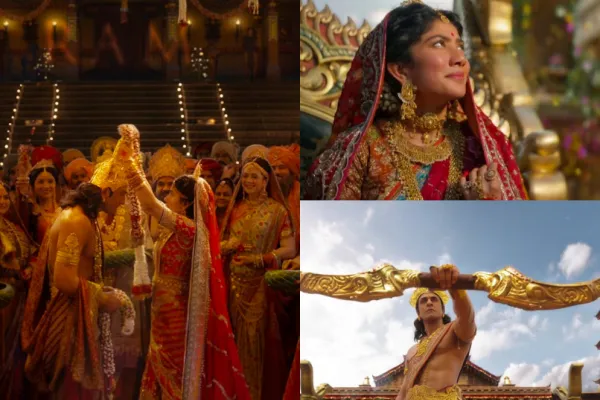
Directed by Nitesh Tiwari, the two-part adaptation stars Ranbir Kapoor as Lord Ram, Sai Pallavi as Goddess Sita and Yash as Ravana. Sunny Deol plays Lord Hanuman, while Ravie Dubey portrays Lord Lakshman. Prime Focus Studios and Yash’s Monster Mind Creations are behind the production, with Hans Zimmer and A. R. Rahman collaborating on the music.
The latest official announcement schedules ‘Ramayana: Part One’ for a worldwide theatrical release on November 5, 2026, in Hindi, Tamil, Telugu, Kannada, Malayalam and English. Part Two is planned for 2027.
What Could This Change For Indian Cinema?
If the approach works convincingly at feature-film scale, more directors could explore visually adapting performances for different languages. The opportunity is to help stories travel while preserving their emotional pull. The challenge is deciding how much a performance can change before something distinctive is lost.
‘Ramayana’ therefore offers a useful example of why “AI dubbing” needs a more precise explanation. According to its makers, people supplied the spoken performances and technology helped the faces match. Viewers can assess the result, but the discussion becomes more meaningful when voice acting, digital alteration and the people behind both are recognised separately.