
37 Performers At Once, 4,500 VFX Shots & More: Indian Cinema’s Wildest Record-Breaking Feats
As Allu Arjun and Deepika Padukone’s ‘Raaka’ enters Guinness World Records, here are several other Indian films that achieved astonishing feats.

IST
Last Updated On
IST
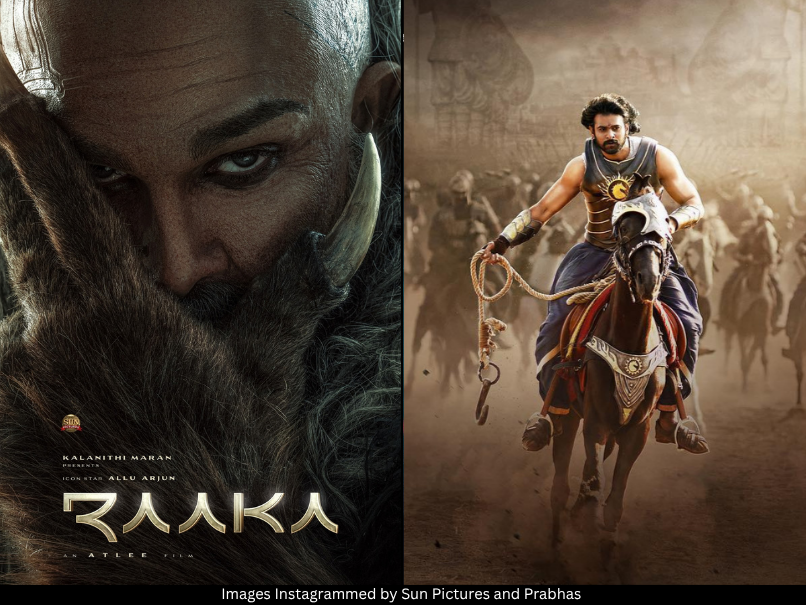
Indian cinema has never been shy about the word “big”. But sometimes, the superlative is not publicity copy – it comes with measurements, witnesses and a Guinness World Records certificate. Atlee’s ‘Raaka’ has joined that club before selling a single ticket, thanks to a motion-capture operation that sounds closer to a high-end video-game laboratory than a conventional film set. The road to that milestone is crowded with one-take thrillers, filmmaking sprints, famously troubled productions and a full-blown battle of gigantic movie posters.
ALSO READ | From ‘Jawan’ To ‘Baahubali’: 20 Interval Twists That Changed Everything
As ‘Raaka’ enters the conversation, we decided to take a closer look at its incredible record followed by several other Indian movies that achieved astonishing feats.
1. Raaka
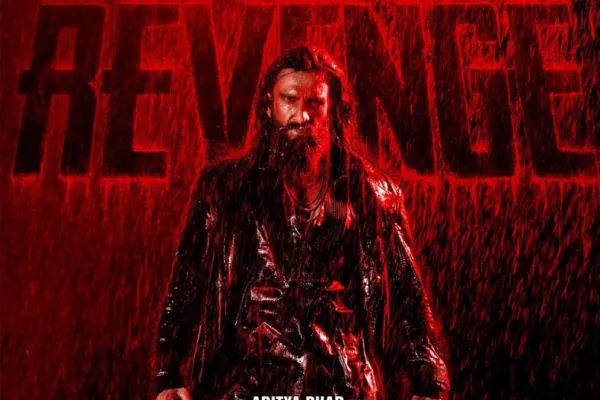
Atlee’s upcoming science-fiction spectacle, led by Allu Arjun and Deepika Padukone, has already secured the Guinness title for the most people motion-captured in real time. During a session in February 2026, the production captured 37 performers simultaneously inside a single capture volume. The group ranged from a four-year-old child to a 70-year-old performer, while 92 optical cameras, facial capture, synchronised feeds and real-time Unreal Engine visualisation worked together to stop all that human movement from turning into digital chaos. Guinness officially certified the feat on September 15, 2026, presenting the certificate to Allu Arjun and Atlee.
Produced by Sun Pictures, ‘Raaka’ is scheduled to arrive in 2027, although an exact release date has not been officially announced as of now. Allu Arjun and Deepika are the only cast members formally announced by the makers so far.
ALSO READ | Games, Comics And Animation: 12 Indian Films That Became Much More Than Movies
2. One Shot: Fear Without Cut
Director Haroon Rashid’s horror thriller stars Triyug Mantri, Shyam Thombre and Veerta, but its most unforgiving character is the camera. Guinness lists the film’s unbroken running time as 3 hours, 28 minutes and 4 seconds, excluding the opening and closing credits, making it the official longest uncut film. The record take was filmed in Mumbai on September 30, 2010, and the film later received a general release in 2014; film databases list its Indian theatrical date as August 1, 2014.
There is a cataloguing wrinkle worth flagging: several commercial listings describe a shorter 140-minute version, while Guinness measures the record version at 3:28:04. The record itself is not ambiguous – Guinness’s current page names Rashid and the longer duration – but the circulating runtimes appear to refer to different cuts.
3. Agadam
Mohamad Issack’s Tamil horror film, starring Tamizh, Srini Iyer, Sri Priyanka and Baskar, was filmed in one continuous 2-hour, 3-minute and 30-second take at a Chennai bungalow on December 7, 2012. It was publicised and reviewed as a Guinness-certified longest uncut film when it reached theatres on January 3, 2014. Issack and cinematographer E.J. Nauzad had just one camera, eight actors and no safety net; the team reportedly rehearsed the film dozens of times before committing the final take.
Its funniest postscript came in theatres: a Times of India review noted that an operator stopped the supposedly unbroken movie midway for an interval. The certification also creates an unusual timeline beside ‘One Shot’: ‘Agadam’ was shot in 2012 and promoted as the record holder, while Guinness’s current database credits Rashid’s longer film, whose record take had actually been captured back in 2010. Therefore, ‘Agadam’ was a Guinness-certified holder at the time of its release, not the current holder.
4. Suyamvaram
Calling ‘Suyamvaram’ a multi-starrer feels comically inadequate. The Tamil comedy-drama assembled more than 25 prominent performers – including Sathyaraj, Prabhu, Karthik, Arjun, Prabhu Deva, Abbas, Roja, Rambha, Khushbu, Urvashi, Vijayakumar and Manjula – along with 14 directors, 19 cinematographers, 45 assistant directors, four editors and four composers. Its directing roster comprised J. Paneer, A.R. Ramesh, Keyaar, E. Ramdoss, Arjun, Guru Dhanapal, Liaquat Ali Khan, R. Sundarrajan, Selvaa, K. Subash, Sundar C, Siraj, K.S. Ravikumar and P. Vasu.
Producer Giridharilal Nagpal’s operation began at 7 am on April 5, 1999, and wrapped its shoot-to-finish challenge in a reported 23 hours and 58 minutes, earning Guinness recognition as the fastest-made feature with the most stars. Different units worked at multiple Chennai locations at the same time, turning filmmaking into a relay race with songs, fights and five weddings. It was not a same-day theatrical release: the finished feature opened on July 16, 1999.
5. Vishwaguru
If ‘Suyamvaram’ was a production sprint, ‘Vishwaguru’ widened the course. Vijeesh Mani’s Malayalam biographical film about social reformer Sree Narayana Guru went from the start of scripting to public screening in 51 hours and 2 minutes, a feat Guinness certified as the fastest film produced from script to screen. The clock covered writing, title registration, filming, editing, dubbing, mixing, publicity material, censorship and the eventual screening at Nila Theatre in Thiruvananthapuram on December 29, 2017. The script had begun only on December 27.
Produced by A.V. Anoop, the film stars theatre performers Purushothaman Kainakkara as Narayana Guru, with Gandhiyan Chacha Sivaraman, Kaladharan and Kalanilayam Ramachandran among the principal cast. Much of it was shot around Sivagiri Math, and writing, filming and on-the-spot editing overlapped. It is the rare production where “we will fix it in post” was not merely discouraged; there was barely time for post to exist.
6. Love and God
K. Asif began his colour adaptation of the Laila-Majnu legend in 1963, initially casting Guru Dutt as Qais opposite Nimmi’s Laila. Dutt’s death in 1964 stopped the production. Asif revived it with Sanjeev Kumar in the lead, only to die himself in 1971 before completing the film. Years later, Asif’s widow Akhtar Asif and filmmaker K.C. Bokadia assembled a releasable version from surviving footage. By the time ‘Love and God’ finally opened on May 27, 1986, Sanjeev Kumar had died too. The cast also included Pran, Simi Garewal, Amjad Khan, Jayant and Lalita Pawar.
Guinness recognises ‘Love and God’, also called ‘Qais Aur Laila’, for the longest production of a Bollywood film, stating that it took more than 20 years to reach the screen. Counting from the 1963 start to the 1986 release gives the film its often-cited 23-year journey. Unlike the cheerful engineering behind many records on this list, this one feels haunted: the movie was released incomplete, carrying the work of artists who never lived to see it in a cinema.
7. Enthiran
Before the sequel raised the ceiling, Shankar’s ‘Enthiran’ – released on October 1, 2010 – held Guinness’s production-cost record for an Indian film. The organisation’s record page estimates its cost at USD 1.9 billion, then equivalent to about USD 42 million. Rajinikanth plays both scientist Vaseegaran and his increasingly dangerous android Chitti, with Aishwarya Rai Bachchan as Sana and Danny Denzongpa as the rival scientist Bohra.
The record is now historical rather than current, but the money was visible on screen: animatronics, elaborate visual effects and a robot army that could rearrange itself into spheres, snakes and weapons.
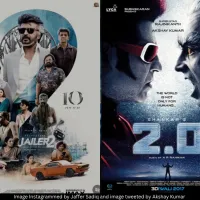
8. 2.0
Shankar returned with Rajinikanth, Akshay Kumar and Amy Jackson for ‘2.0’, and Guinness’s entry dated January 2017 put the reported production cost at USD 3 billion, or USD 44.1 million, overtaking ‘Enthiran’ as the most expensive film produced in India at that point. Rajinikanth reprised Vaseegaran and Chitti, Akshay played the antagonist Pakshi Rajan, and Amy appeared as the humanoid assistant Nila. The film released on November 29, 2018.
That distinction needs a 2026 label attached to it. Guinness’s page is a time-stamped 2017 record entry; it should not be republished as proof that ‘2.0’ remains India’s costliest film today, especially after several later productions arrived with higher reported budgets. What remains indisputable is the franchise handover recorded by Guinness: ‘Enthiran’ held the crown, and ‘2.0’ took it.
9. Boss
For Anthony D’Souza’s action comedy ‘Boss’, the record-breaking was done by the fan club. Team Akshay commissioned a poster measuring 3,234.31 square metres – 58.87 metres wide and 54.94 metres high – and unveiled it at Little Gransden Airfield in the UK on October 3, 2013. It became the world’s largest poster at the time, breaking the mark set by the giant artwork for Michael Jackson’s posthumous album ‘Michael’. Macro Art, which had produced the earlier poster too, manufactured the new giant.
The movie, starring Akshay Kumar, Mithun Chakraborty, Shiv Panditt, Ronit Roy, Aditi Rao Hydari and Danny Denzongpa, opened on October 16, 2013. Its poster record did not last, but that is almost beside the point: a fan club turned pre-release enthusiasm into a 1.3-tonne, airfield-sized love letter.
10. Baahubali: The Beginning
S.S. Rajamouli’s Baahubali: The Beginning already looked monumental on a regular hoarding. Kerala distributor Global United Media decided that “regular” would not do. On June 27, 2015, it laid out a 4,793.65-square-metre poster at Sacred Hearts Ground in Kochi – 51,598.21 square feet, or roughly the area of 18 tennis courts. Guinness approved it as the world’s largest poster on July 22. At that moment, it surpassed a 4,709.30-square-metre Turkish poster that had briefly become the current holder; it did not directly take the live title from ‘Boss’, as some retrospective lists claim.
That was not the epic’s only Guinness-recognised feat. The organisation also lists ‘Baahubali: The Beginning’ for the most visual-effects shots in a movie, with approximately 4,500 separate VFX shots created by more than 600 professionals working across 16 studios in five countries. Starring Prabhas, Rana Daggubati, Tamannaah Bhatia, Anushka Shetty, Ramya Krishnan, Sathyaraj and Nassar, the film released on July 10, 2015. Its poster was therefore unveiled before its theatrical arrival but received official confirmation after the film was already in cinemas – a fittingly gigantic double achievement for the movie that made “Why did Kattappa kill Baahubali?” a national conversation.
11. MSG-2: The Messenger
Less than three months after ‘Baahubali’ created its giant, ‘MSG-2: The Messenger’ made an even larger one. Guinness measured its promotional poster at 5,969.61 square metres, or 64,256.34 square feet, at the Shah Satnam Ji Cricket Stadium in Sirsa on September 9, 2015. That made it the new largest poster at the time, taking the title from ‘Baahubali’.
The faith-based action film was co-directed by Gurmeet Ram Rahim Singh and Jeetu Arora and starred Singh with Arpit Ranka, Honeypreet Insan, Rohit Khurana and Charanpreet Insan. It released on September 18, 2015, nine days after the record was set.
12. Pulimurugan
Vysakh’s Malayalam action spectacle ‘Pulimurugan’, starring Mohanlal, Jagapathi Babu, Kamalinee Mukherjee and Lal, was already a phenomenon after its October 7, 2016 theatrical release. Six months later, it generated a different kind of mass scene. On April 12, 2017, 12,526 people attended a 3D screening at the Adlux International Convention Centre in Angamaly, Kerala, setting the Guinness record for the largest attendance at a 3D film screening.
The event was organised by Mulakuppadam Films, Mohanlal, Rays3D and Flowers TV to promote the tiger-hunting blockbuster. Imagine the logistics: more than twelve thousand seats, twelve thousand pairs of glasses and an audience large enough to make even a Mohanlal opening-day crowd look like a rehearsal.
13. Yaadein
Sunil Dutt wrote, produced, directed and starred in ‘Yaadein’, released in 1964, as the only actor physically present through almost the entire film. Guinness lists it under fewest actors in a narrative film, alongside later single-performer features La Dernière Lettre and Shanthi. Dutt’s wife Nargis appears only as a silhouette at the end; elsewhere, drawings, voices and objects stand in for the absent family tormenting his character’s imagination.
The Times of India catalogue dates its Indian release to July 1, 1964. More importantly, this was not a photographed stage monologue masquerading as cinema: Sunil Dutt used sound, animation, shadows and an increasingly agitated performance to turn an empty home into a psychological landscape. Long before “contained thriller” became a marketing category, he made loneliness the whole cast.
14. Daaera
Kamal Amrohi’s black-and-white drama ‘Daaera’, released in 1953, starred Meena Kumari as Sheetal opposite Nasir Khan, with Nana Palsikar, Pratima Devi and Jankidas in supporting roles. Its world-record moment was not a gigantic set or a crowd scene, but the opposite: Guinness credited the film with the longest close-up on film, holding on Meena Kumari for six and a half minutes.
In an age when an edit can arrive every second, six and a half minutes on one face feels almost radical. Kamal Amrohi trusted expression, stillness and Meena Kumari’s ability to make silence cinematic.
The lesson running through all these films is that there is no single route into the record books. One production spent more than two decades getting to a theatre; another finished the entire script-to-screen race in barely two days. Some records were built from cutting-edge cameras, others from refusing to cut at all. And sometimes, all it took was one actor, one face – or one poster large enough to make a blockbuster look physically small.