
15 Bollywood Movies From 2000s That Became Cult Classics Over Time
From ‘Hera Pheri’ and ‘Swades’ to ‘Awarapan’, these 15 Bollywood films transcended their original box-office runs to become enduring cult classics.

IST
Last Updated On
IST
A big opening can give a film bragging rights, but it cannot guarantee immortality. Some movies earn hundreds of crores, dominate theatres and quietly disappear from public conversation. Others stumble during their original run, only to be rescued by television reruns, scratched DVDs, college-hostel screenings, streaming platforms, memes and viewers who insist, “You simply didn’t understand it back then.” The 2000s delivered several such slow-burning favourites. Some were appreciated initially but grew into generational touchstones; others were rejected because audiences simply were not ready for them.
ALSO READ | From Emraan Hashmi To Sunny Deol: Bollywood Stars Who Reprised Iconic Roles Years Later
From ‘Hera Pheri’ becoming the internet’s unofficial reaction library to ‘Awarapan’ returning as a blockbuster franchise nearly two decades later, these films may not have won their opening weekends, but they won the long game.
Without further ado, check out 15 such films below:
1. Hera Pheri
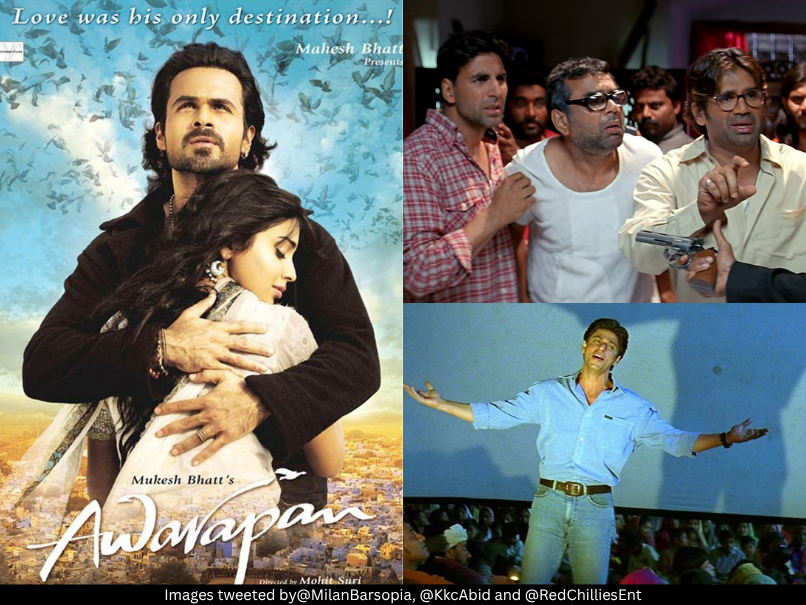
If the Indian internet had an official language, there is a strong chance Baburao Ganpatrao Apte would be teaching it. Priyadarshan’s ‘Hera Pheri’, released on March 31, 2000, starred Akshay Kumar, Suniel Shetty, Paresh Rawal and Tabu. Adapted from the Malayalam film ‘Ramji Rao Speaking’, it followed three cash-strapped people who accidentally became involved in a kidnapping and decided that a dangerously unreliable plan was their quickest route out of poverty. The film earned approximately Rs 21 crore worldwide and was classified as an average performer – not quite the comedy institution its reputation suggests today.
Repeated television broadcasts performed the real magic. Baburao’s glasses, Shyam’s permanent irritation and Raju’s unstoppable scheming became inseparable from Indian pop culture. Wrong numbers, unpaid rent and the immortal “25 din mein paisa double” promise now supply reactions for practically every situation imaginable. The film remains hilarious because the characters are not performing jokes for the audience; they are desperately trying to survive while making catastrophically poor decisions. More than two decades later, people do not merely watch ‘Hera Pheri’ – they communicate through it.
ALSO READ | When Bollywood Heroes Went Bad! Shah Rukh Khan, Saif Ali Khan, Akshay Kumar And More
2. Dil Chahta Hai
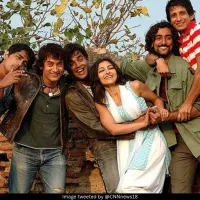
‘Dil Chahta Hai’ did not simply inspire people to visit Goa; it convinced an entire generation that a road trip with friends could solve almost anything. Farhan Akhtar’s directorial debut, released on August 10, 2001, starred Aamir Khan, Saif Ali Khan, Akshaye Khanna and Preity Zinta. The film earned approximately Rs 38 crore worldwide and was an average commercial performer, with its strongest response coming from urban audiences.
Its real revolution was quieter. Akash, Sameer and Sid joked, argued, drifted apart and found their way back without behaving like conventional filmi friends. Its dialogues, contemporary styling and mature treatment of Sid’s feelings for an older woman made young adulthood look recognisable rather than carefully choreographed. Preity reportedly predicted during production that the film would become a cult classic, prompting Farhan to laugh. Two decades later, he had to admit she was right. The film redefined friendship on screen – and gave countless friend groups a Goa plan that remains permanently under discussion.
3. Nayak: The Real Hero
Every time Indian politics becomes particularly exhausting, someone inevitably asks why Anil Kapoor cannot simply become chief minister for a day. That is the enduring power of ‘Nayak: The Real Hero’. Directed by S Shankar and released on September 7, 2001, the political action drama starred Anil, Rani Mukerji, Amrish Puri and Paresh Rawal. A remake of Shankar’s Tamil hit ‘Mudhalvan’, it followed television reporter Shivaji Rao, who accepts a corrupt chief minister’s challenge to run the state for 24 hours. Despite its irresistible premise, AR Rahman soundtrack and gloriously excessive action, the film grossed only around Rs 19 crore worldwide and was declared a flop.
Television reruns gave Shivaji Rao the electoral victory that theatres had denied him. His fiery interview with Amrish Puri became a fan favourite, while the fantasy of an ordinary citizen cleaning up an entire political system in one day remained relevant through every fresh scandal. The politics may be delightfully simplistic – real governance rarely comes with slow-motion mud fights – but the anger beneath it still lands. Television transformed ‘Nayak’ into a dorm-room favourite and eventually a full-fledged cult classic.
4. Rehnaa Hai Terre Dil Mein
‘Rehnaa Hai Terre Dil Mein’ had three powerful weapons: R Madhavan’s smile, Dia Mirza’s screen presence and a soundtrack seemingly engineered to survive every romantic playlist ever created. Gautham Vasudev Menon’s Hindi remake of his Tamil film ‘Minnale’ was released on October 19, 2001 and also starred Saif Ali Khan. Its theatrical romance ended unhappily, with the film earning only around Rs 10 crore worldwide.
Television and music gave it the love story it had been waiting for. ‘Zara Zara’, ‘Sach Keh Raha Hai Deewana’ and the title track kept playing long after the film left theatres, while Maddy became one of the decade’s most enduring romantic heroes. The director has credited repeated television viewing for its cult status. Modern audiences also view its impersonation, aggression and stalking far more critically – and rightly so – but even that debate has become part of the film’s afterlife. Its successful 2024 re-release showed how thoroughly nostalgia had transformed a flop into a generational romance. Maddy may have collected several red flags, but viewers kept the soundtrack safely stored in their hearts.
5. Kaante
Before Bollywood gangsters began appearing in meticulously coordinated black outfits every other Friday, ‘Kaante’ had already assembled an entire wardrobe of criminal swagger. Directed by Sanjay Gupta and released on December 20, 2002, the thriller starred Amitabh Bachchan, Sanjay Dutt, Suniel Shetty, Kumar Gaurav, Lucky Ali and Mahesh Manjrekar as six men whose bank robbery ends in suspicion and betrayal. Shot in Los Angeles and influenced by titles such as ‘Reservoir Dogs’, ‘City on Fire’ and ‘The Usual Suspects’, it grossed approximately Rs 40 crore worldwide.
What survived was its unapologetic cool: leather jackets, smoke-filled rooms, wounded masculinity, and sharp insults. Its music, including ‘Maahi Ve’, ‘Ishq Samundar’ and ‘Rama Re’, proved equally durable. Once dismissed mainly as a cocktail of Hollywood influences, ‘Kaante’ is now remembered as one of Hindi cinema’s defining exercises in early-2000s noir swagger.
6. Lakshya
Karan Shergill began ‘Lakshya’ without a clue about what he wanted from life – making him instantly relatable to practically every confused twenty-something. Farhan Akhtar’s coming-of-age war drama, released on June 18, 2004, starred Hrithik Roshan, Preity Zinta and Amitabh Bachchan. Set partly against the Kargil conflict, it followed Karan as he travelled from a comfortable, directionless existence to the discipline and danger of the Indian Army. The film grossed approximately Rs 40.02 crore worldwide but was classified as a theatrical flop.
Time allowed audiences to see that ‘Lakshya’ was not merely a war film. It was a patient story about finding purpose, failing, returning and finally committing to something larger than oneself. Hrithik’s restrained performance, the brilliantly odd ‘Main Aisa Kyun Hoon’, the stirring title track and the film’s relatively unsensational treatment of military life all aged gracefully.
7. Swades
‘Swades’ proved that patriotism did not always require a roaring speech, a waving flag or Shah Rukh Khan extending his arms in a mustard field. Ashutosh Gowariker’s drama, released on December 17, 2004, starred SRK, Gayatri Joshi and Kishori Ballal. SRK played Mohan Bhargava, a NASA project manager who returns to India in search of the woman who raised him and gradually confronts the inequalities shaping rural life. Despite critical appreciation, the film earned approximately Rs 33.61 crore worldwide and failed commercially.
Its reputation has since undergone one of Hindi cinema’s most satisfying reversals. Viewers discovered a beautifully restrained Shah Rukh performance and a film that treated change as difficult, patient and frequently unglamorous work. The train sequence in which Mohan buys water from a child remains devastating. His effort to generate electricity for the village similarly turns development into something tangible rather than a slogan. Today, ‘Swades’ is routinely ranked among SRK’s finest films – apparently, audiences simply needed a few extra years to board Mohan’s train.
8. Khosla Ka Ghosla
‘Khosla Ka Ghosla!’ understood that for a middle-class Delhi family, a missing property plot could be more terrifying than any conventional villain. Dibakar Banerjee’s directorial debut, released on September 22, 2006, starred Anupam Kher, Boman Irani, Parvin Dabas, Ranvir Shorey and Vinay Pathak. It followed the Khoslas as they attempted to reclaim their illegally occupied land from the shamelessly confident property dealer Khurana. The film’s estimated worldwide gross was a modest Rs 6.70 crore.
Its cult following grew because every detail felt suspiciously familiar: the cramped family equations, Delhi accents, bureaucratic helplessness and Khurana’s confidence that money could rearrange both reality and paperwork. The humour emerged from behaviour, awkward silences and wounded middle-class pride rather than elaborate comic set pieces. It later won the National Film Award for Best Feature Film in Hindi. It also gave Indian families the perfect line for every unwanted intrusion: “Yeh jo tumhara ghar hai, yeh tumhara nahin hai.”
9. Black Friday
‘Black Friday’ had to fight for the right to reach audiences before it could even begin building a legacy. Anurag Kashyap’s crime drama was completed and screened at festivals in 2004, but legal proceedings delayed its Indian theatrical release until February 9, 2007. Based on S Hussain Zaidi’s book about the 1993 Bombay bombings, it starred Kay Kay Menon, Pavan Malhotra and Aditya Srivastava. The film grossed approximately Rs 6.78 crore worldwide.
The delay could easily have buried it. Instead, its raw locations, documentary-like interrogations and refusal to package terrorism as convenient entertainment made it a landmark. Indian Ocean’s haunting music gave its images an identity of their own, while the prolonged chase through Mumbai demonstrated how tension could be built without polished stunts or heroic background music. Once controversial and temporarily blocked from release, ‘Black Friday’ is now central to every serious conversation about the rise of independent Hindi cinema.
10. Awarapan
Some flops eventually become cult classics. ‘Awarapan’ went several steps further and returned nearly two decades later as a blockbuster franchise. Mohit Suri’s original film, released on June 29, 2007, starred Emraan Hashmi, Shriya Saran and Ashutosh Rana. Emraan played Shivam Pandit, a guilt-ridden gangster whose assignment to watch his employer’s mistress unexpectedly became an opportunity for redemption. It grossed approximately Rs 12.18 crore worldwide and was declared a flop.
Shivam’s loneliness, Emraan’s unusually subdued performance and songs such as ‘Toh Phir Aao’ and ‘Tera Mera Rishta’ refused to disappear. Fans gradually elevated the film from an unsuccessful gangster drama into one of the actor’s most beloved works. The ultimate vindication arrived 19 years later, when nostalgia surrounding the original helped turn ‘Awarapan 2’ into a theatrical event. The sequel crossed Rs 100 crore net in India within six days in August 2026.
11. Johnny Gaddaar
Most actors prefer to debut as charming heroes. Neil Nitin Mukesh entered Hindi cinema as a nervous traitor steadily destroying everyone around him. Sriram Raghavan’s ‘Johnny Gaddaar’, released on September 28, 2007, also starred Dharmendra, Vinay Pathak, Zakir Hussain and Rimi Sen. The neo-noir thriller followed the youngest member of a criminal gang as greed and romance pushed him into an increasingly disastrous series of betrayals. It earned only approximately Rs 5.68 crore worldwide.
Its cult following grew among viewers who appreciated how ruthlessly it rejected the conventional heroic arc. Drawing from French crime films and classic noir, Sriram Raghavan used retro references, carefully planted clues and stretches of minimal background music instead of explaining every twist twice. Neil’s cold but increasingly panicked antihero was an unusually daring debut, while Dharmendra received a memorable late-career role. Today, ‘Johnny Gaddaar’ is regarded as one of the decade’s sharpest Hindi thrillers.
12. No Smoking
‘No Smoking’ warned audiences exactly what they were walking into: rules, punishment and absolutely no concern for making them comfortable. Released on October 26, 2007, Anurag Kashyap’s psychological thriller starred John Abraham, Ayesha Takia, Paresh Rawal and Ranvir Shorey. John played K, an arrogant chain-smoker who entered a sinister rehabilitation programme run by Paresh Rawal’s Baba Bengali. The film grossed only around Rs 3.49 crore worldwide and became a commercial disaster.
Viewers expecting a dark comedy about quitting cigarettes instead received an aggressive puzzle about addiction, free will, punishment and authoritarian control. Its dream logic and ambiguous ending frustrated audiences in 2007, but those same qualities later made it irresistible to cult-film enthusiasts. Every rewatch seemed to create a new interpretation: was K fighting nicotine, censorship, religion, the filmmaker or simply his own enormous ego? ‘No Smoking’ never became easier to understand; audiences merely became more willing to argue about it. For a film about giving up an addiction, it has proved remarkably difficult for admirers to quit.
13. Oye Lucky! Lucky Oye!
Lucky Singh could steal televisions, cars, furniture and even a greeting card, but he could never steal the respectability he actually wanted. Dibakar Banerjee’s ‘Oye Lucky! Lucky Oye!’ was released on November 28, 2008, barely two days after the Mumbai terror attacks. Abhay Deol played the charismatic Delhi thief, while Paresh Rawal appeared in three different roles alongside Neetu Chandra and Manu Rishi Chadha. Understandably overwhelmed by the national mood surrounding its release, the film finished with an approximate worldwide gross of Rs 9.97 crore.
Its later popularity came from the sharp class satire hiding beneath the entertaining caper. Lucky did not merely steal expensive possessions; he kept chasing entry into a wealthy world that enjoyed his charm but refused to consider him an equal. Manu Rishi’s dialogues, Sneha Khanwalkar’s music, the precise West Delhi details and Paresh Rawal’s triple casting made it endlessly rewatchable. Dibakar Banerjee had admitted that some viewers were initially disappointed because it was so different from ‘Khosla Ka Ghosla’. Time corrected the misunderstanding: it won the National Award for Best Popular Film Providing Wholesome Entertainment.
14. Dev D
Bollywood had already adapted ‘Devdas’ several times, so Anurag Kashyap responded by dragging Dev into contemporary Punjab and Paharganj, surrounding him with drugs, brass bands, cheap hotel rooms and spectacularly bad life choices. Released on February 6, 2009, ‘Dev D’ starred Abhay Deol, Mahie Gill and Kalki Koechlin as Dev, Paro and Chanda. The film earned approximately Rs 19 crore worldwide and was classified as an average commercial performer.
Its cult status came from the thrilling sense that Hindi cinema’s rulebook had been torn up and used as confetti. Paro and Chanda possessed far more agency than women in traditional versions, while Dev was portrayed as entitled and toxic rather than romantically tragic. Amit Trivedi’s sprawling soundtrack leapt fearlessly between rock, folk, emotional ballads and the glorious brass-band chaos of ‘Emosanal Attyachar’. The film cemented Abhay’s reputation as the face of unconventional Hindi cinema. This Devdas did not require sympathy; he needed therapy, accountability and perhaps significantly less alcohol.
15. Rocket Singh: Salesman Of The Year
‘Rocket Singh: Salesman Of The Year’ is the rare cult film equally likely to be recommended by a movie buff, a start-up founder and someone preparing a PowerPoint presentation on customer service. Directed by Shimit Amin and released on December 11, 2009, it starred Ranbir Kapoor, Gauahar Khan, Shazahn Padamsee and Prem Chopra. Ranbir played Harpreet Singh Bedi, a graduate with unimpressive marks who secretly began building an ethical sales company inside his dishonest employer’s office. It grossed approximately Rs 33 crore worldwide.
Its quiet storytelling and complete lack of conventional glamour limited the initial excitement, but the rise of Indian start-up culture gave it the perfect second audience. Harpreet’s belief that trust, customer service and fair treatment could be competitive advantages became more relevant with every passing year. Ranbir’s understated performance also improved in reputation as viewers discovered the film outside theatres. ‘Rocket Singh’ turned workplace honesty into a genuinely engaging underdog story – an achievement perhaps even more improbable than secretly running a company from inside your existing office.
Honourable Mentions
The decade produced far too many cult favourites to contain within a list of 15. Vishal Bhardwaj’s ‘Maqbool’, Tigmanshu Dhulia’s ‘Haasil’, Anurag Kashyap’s ‘Gulaal’, Sriram Raghavan’s ‘Ek Hasina Thi’ and Navdeep Singh’s ‘Manorama Six Feet Under’ are now essential entries in any discussion of 2000s Hindi cinema. ‘Iqbal’, ‘Paheli’, ‘Socha Na Tha’, ‘Luck By Chance’, ‘Rock On!!’ and ‘Kaminey’ also found devoted audiences over time, while ‘Chup Chup Ke’, ‘Phir Hera Pheri’, ‘Hungama’ and ‘Bhagam Bhag’ became television and internet comfort watches.
Some were rediscovered through streaming, others remained alive because their songs never left playlists, and several owe their immortality to scenes and dialogues shared endlessly online. Together, they prove that a movie’s most important verdict is not always delivered on its first Monday. Sometimes cinema gets the last laugh – and sometimes that laugh arrives years after the theatres have emptied.