

Birth Date:24 July 1937
About Me
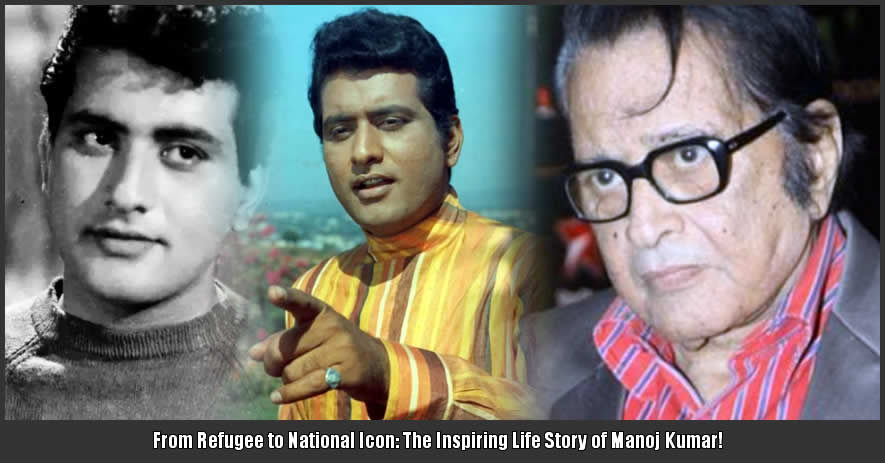
From Refugee to National Icon: The Inspiring Life Story of Manoj Kumar!
In the history of Indian cinema, Manoj Kumar is not just an actor; he is the face of a movement. Known affectionately as "Bharat Kumar," he revolutionized the genre of patriotic cinema, creating a template for nationalist storytelling that filmmakers still follow today.
As of 2026, his legacy has taken on a poignant significance following his passing on April 4, 2025. Today, he is remembered as a visionary who wore many hats—actor, director, screenwriter, and editor—all dedicated to the spirit of India.
The Making of "Bharat": Biography
• Early Roots: Born Harikrishan Giri Goswami on July 24, 1937, in Abbottabad (present-day Pakistan). After the Partition in 1947, his family migrated to Delhi, where he faced the hardships of being a refugee before finding his calling in cinema.
• The Name Change: A massive fan of Dilip Kumar, he adopted the screen name "Manoj Kumar" after Dilip’s character in the 1949 film Shabnam.
• The Academic Foundation: He graduated from Hindu College (University of Delhi) before moving to Mumbai to chase his cinematic dreams.
• Family Life: He shared a lifelong bond with his wife, Shashi Goswami. He is survived by his two sons, Vishal and Kunal Goswami, the latter of whom also ventured into acting.
A Cinematic Icon: Filmography & Directorial Genius
Manoj Kumar's career transitioned from romantic leads to being the definitive voice of the common man and the patriot.
The Breakthrough Years (1962–1965)
Before becoming "Bharat Kumar," he established himself as a versatile star:
• Hariyali Aur Rasta (1962): His first major breakthrough as a lead actor.
• Woh Kaun Thi? (1964): A legendary mystery thriller featuring the haunting song "Lag Jaa Gale."
• Gumnaam (1965): Another suspense masterpiece that remains a cult classic.
The "Bharat" Trilogy & Directorial Landmarks
Inspired by Prime Minister Lal Bahadur Shastri’s slogan "Jai Jawan Jai Kisan," Manoj Kumar turned to directing to showcase the essence of the Indian identity.
• Upkar (1967): His directorial debut where he introduced the iconic song "Mere Desh Ki Dharti." This film officially birthed his persona as "Bharat."
• Purab Aur Paschim (1970): A clash of cultures that championed Indian values over Western materialism.
• Roti Kapada Aur Makaan (1974): A gritty social drama highlighting the basic struggles of the post-independence youth.
• Kranti (1981): A massive historical epic set in the 19th-century freedom struggle, featuring an ensemble cast including his idol, Dilip Kumar.
Awards & National Recognition
Manoj Kumar’s contribution to India’s cultural fabric was recognized with the highest honors:
• Dadasaheb Phalke Award (2015): India’s highest cinematic honor.
• Padma Shri (1992): For his exceptional contribution to the arts.
• National Film Awards: Won for Upkar (Best Feature Film) and Shaheed (Best Script).
• Filmfare Awards: Multiple wins, including Best Actor for Be-Imaan (1972) and a Lifetime Achievement Award (1999).
Manoj Kumar's Legacy in 2026
Even after his passing in 2025, Manoj Kumar remains a trending figure:
1. The Patriotic Blueprint: In the era of modern nationalism in cinema, Manoj Kumar is cited by modern directors as the original pioneer of the "Mission" and "Biopic" genre.
2. Musical Immortality: Songs like "Mere Desh Ki Dharti" and "Main Bharat Ka Rehne Wala Hoon" are still the primary anthems for Republic Day and Independence Day celebrations in 2026.
3. Political Influence: His long-standing support for the BJP (which he joined in 2004) aligned with his on-screen ideals, cementing his status as a cultural-political figurehead.
Manoj Kumar's films' availability: You can watch Manoj Kumar's films on B4U Movies Channels of India, UK, USA, Canada, and UAE. You can check country-specific schedule pages here.
- B4U Movies India
- B4U Kadak India
- B4U Movies UK
- B4U Movies USA
- B4U Movies Canada
- B4U Plus UAE


