Their Faces, Their Consent! Indian Stars Who Challenged AI Identity Misuse
From Sunainaa’s takedown demand to Arijit Singh’s voice-cloning case, Indian stars are challenging AI misuse through public warnings, police complaints and court action.

IST
Last Updated On
IST
Artificial intelligence can make creative work faster, help people experiment with ideas and open up new ways to tell stories. Its promise is considerable. But the same ability to generate convincing images, speech and video can also be used to manufacture something a person never said, did or agreed to. When a recognisable face is placed in a fabricated situation, the consequences extend well beyond a misleading post: privacy, reputation, consent and public trust can all be put at risk.
ALSO READ | From ‘Udta Teer’ To ‘Dhurandhar’: Why Indian Films Were Banned Or Blocked Abroad
For Indian stars, that danger has become painfully tangible. The latest example involves Sunainaa, who on October 27, condemned an obscene AI-manipulated video using her likeness and threatened action against those creating or circulating it. Her response follows a series of cases involving se**alised fabrications, political impersonation and deceptive endorsements.
The responses have differed too: some actors have spoken publicly, others have approached police, and several have sought court protection. These cases show both the damage and the attempts to push back.
1. Sunainaa
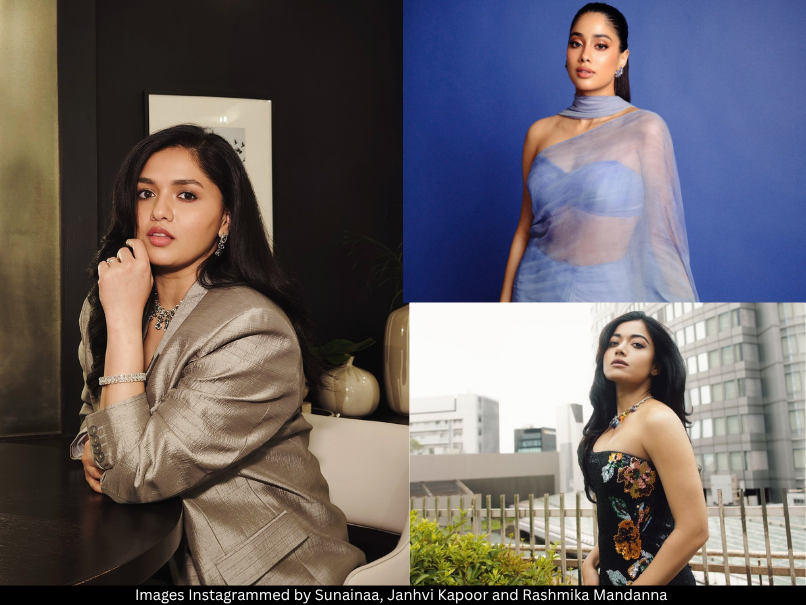
Sunainaa’s recent statement addressed an explicit video in which, she said, her face had been digitally superimposed onto obscene content without her permission. She rejected any suggestion that she was associated with it and described the material as a violation of her dignity, privacy and identity. Her response placed consent at the centre: resemblance does not establish participation, and a fabricated image does not become authentic because people keep sharing it.
She demanded that people stop creating, uploading, forwarding and reposting the material, and remove copies under their control. She also announced her intention to initiate criminal and civil proceedings, extending her warning to those circulating it. She further asked the public and media to report the content instead of amplifying it.
ALSO READ | No Faking It! Stars Who Learned Incredible Real-Life Skills For Their Films
2. Janhvi Kapoor
In early October 2026, se**ally explicit manipulated material using footage associated with ‘Chuttamalle’, her song with Jr NTR from ‘Devara: Part 1’, prompted Janhvi Kapoor to speak about a much wider problem. In a statement reported on October 4, she called non-consensual, fictionalised se**al content “deeply violating” and “bordering on se**al assault”.
Janhvi argued that a woman’s clothing, past choices or public visibility never erase her right to set boundaries. She also thanked Jr NTR, Chiranjeevi, Vijay Deverakonda and Khushbu Sundar for their support. Jr NTR condemned the manipulation and called for legal action. Her intervention moved the discussion beyond whether viewers could spot an altered video: the underlying issue was the entitlement to create it in the first place.
3. Mrunal Thakur
Mrunal Thakur issued a warning in August 2026, reported on August 4, against the unauthorised creation and sharing of deepfake content using her likeness. “Consider this your formal notice to stop immediately,” she wrote, warning that further misuse would result in legal action.
There is an important limit to what can be said about this case: Mrunal did not identify the particular photograph or video that triggered her statement. What is documented is her explicit opposition to identity misuse and her stated readiness to pursue legal remedies. Her response addressed the people making the material and those helping it travel, rather than treating the problem as an unavoidable side effect of fame.
4. Rashmika Mandanna
Rashmika’s case became a major flashpoint in November 2023, after a video replaced another woman’s face with hers. On November 6, she described the manipulation as “extremely scary”, explaining that the danger affected anyone vulnerable to technological misuse. She also reflected on how much harder it might have been to cope had this happened while she was at school or college. Her point reached beyond celebrity: support and influence can help someone respond, but not everyone has access to either.
Delhi Police registered an FIR on November 10, 2023, and announced an arrest on January 20, 2024, in connection with the creation of the video. Rashmika thanked the police and encouraged people whose images had been manipulated without consent to seek support. Her response helped turn a viral incident into a conversation about accountability rather than simply the technical novelty of face-swapping.
5. Aamir Khan
In April 2024, a manipulated video appeared to show Aamir Khan endorsing a political position. The clip drew on material associated with his television programme ‘Satyamev Jayate’, making an invented message look connected to a familiar, credible public persona.
His spokesperson rejected the video and said Aamir had not endorsed any political party during his career, distinguishing such endorsement from his participation in Election Commission voter-awareness campaigns. Following a complaint from his office, an FIR was registered at Mumbai’s Khar police station on April 17, 2024, as reported by PTI the following day. His team also urged citizens to vote.
6. Ranveer Singh
Ranveer Singh’s case demonstrated why convincing deception does not require inventing every frame. In April 2024, footage from an interview during his Varanasi visit was circulated with altered audio that appeared to make him criticise the Prime Minister and support Congress. Police reporting described a video that retained original visuals while using AI-generated speech to change the message.
Ranveer publicly warned followers to beware of deepfakes. His team confirmed that a police complaint had been made, and an FIR followed. This was political impersonation, rather than non-consensual se**al imagery, but the mechanism exploited the same trust: viewers recognised a real person in apparently genuine footage and were encouraged to accept words he had not spoken. His response combined a public correction with a documented move towards investigation.
7. Akshay Kumar
In February 2024, reports described an AI-generated video falsely presenting Akshay Kumar as promoting a gaming application. Sources close to him said he was upset by the misuse, denied the association and reported that a cyber complaint had been filed. This reaction was attributed to his representatives or sources close to him; it should not be presented as a direct quotation from Akshay himself.
His subsequent legal action addressed a broader pattern. On October 15, 2025, the Bombay High Court granted ad-interim protection in a suit involving unauthorised exploitation of his identity, including deepfake videos, deceptive advertisements and voice cloning. The court expressed concern about how realistic such material could appear. This was a separate, wider personality-rights proceeding, rather than a reported final verdict in the earlier gaming-ad complaint. The shift illustrates how the response can grow from disputing one false association to seeking protection against repeated misuse.
8. Anil Kapoor
Anil Kapoor obtained an interim Delhi High Court injunction on September 20, 2023, in a lawsuit addressing unauthorised exploitation of his name, image, voice and other recognisable attributes. The material raised in the proceedings included fabricated explicit videos and other manipulated depictions. The court’s directions expressly addressed misuse through technologies including AI, deepfakes and face-morphing.
In an interview published on September 22, Anil explained that he wanted to prevent technology from misrepresenting him both in the present and in the future. He also spoke about actors whose work and identities could be exploited without their knowing how to respond. His approach was broader than denying a single clip: he sought a way to protect the identity built through decades of performances.
9. Aishwarya Rai Bachchan
Aishwarya’s pushback took the form of Delhi High Court proceedings in September 2025. Her lawsuit addressed multiple kinds of alleged exploitation, including AI-generated videos depicting her in false or inappropriate situations, misleading online content and a chatbot impersonating her. This was a documented legal response, rather than a public statement about one isolated viral post.
In its September 9, 2025 order, the court granted interim protection against specified defendants’ unauthorised use of her identity and directed action on identified online material. The order recognised how fabricated depictions could mislead audiences and damage dignity, reputation and commercial goodwill. Her case expanded the discussion beyond a copied face: a system that generates messages while pretending to be a celebrity can also fabricate a relationship or conversation that never existed.
10. Jackie Shroff
Jackie Shroff approached the Delhi High Court in May 2024, challenging unauthorised exploitation of his identity across merchandise, online content and AI services, including a chatbot. Interim relief followed. In a statement that month, he welcomed the protection and stressed the importance of controlling misuse of his name, image, voice and other personality attributes. His case, like Anil’s and Aishwarya’s, extended beyond deepfake video alone.
There is a significant follow-up: on May 21, 2026, the court decreed the suit in his favour against specified defendants, with a permanent injunction, as reported by The Indian Express. That development distinguishes his case from a legal warning or an initial interim order. It also shows why the story should not stop at the first headline: some efforts to protect a recognisable identity continue through years of litigation.
11. Neha Sharma
On October 17, 2026, Neha Sharma issued a strongly worded statement demanding that people stop creating and circulating AI-generated images and videos using her face or likeness without consent. She asked for existing material to be removed and rejected its use to misrepresent her or damage her reputation. Her message was explicit: public visibility did not amount to permission to digitally recreate her.
Neha also warned that she would take legal action against those responsible for creating, posting or circulating such content. She challenged the assumption that fake accounts or AI tools could shield people from accountability. The statement did not identify one specific video or establish that proceedings had already begun; it documented her demand for removal and her intention to act against further misuse.
12. Keerthy Suresh
While promoting ‘Revolver Rita’ in November 2025, Keerthy Suresh spoke about encountering AI-manipulated images of herself that looked so convincing they briefly made her question whether she had actually posed that way. Reports of her remarks appeared from November 20. She described the experience as hurtful and irritating, highlighting the distress of seeing a seemingly believable image of something that never happened.
Keerthy connected her experience to wider concerns about women’s safety and the misuse of technology. Her response was a public objection, rather than an announcement of a police complaint or court order. It adds an important perspective to the debate: even the person whose identity has been copied can be unsettled by the realism of the fabrication. For audiences encountering it without context, that uncertainty becomes an even greater problem.
13. Arijit Singh
A deepfake does not need a face to exploit someone’s identity. Arijit Singh’s 2024 lawsuit challenged unauthorised uses of his persona, including AI tools capable of generating content that imitated his voice. His case addressed voice-conversion services, synthetic voices and other forms of exploitation involving the qualities audiences associate with his singing. The concern extended beyond copying an existing recording to manufacturing a new performance that appeared to be his.
On July 26, 2024, the Bombay High Court granted ad-interim protection, restraining specified defendants from unauthorised exploitation of his personality attributes, including through AI voice models and related technologies. His pushback was documented through the lawsuit, rather than a public response to one viral clip. The case brought a distinct question into focus: who controls the use of a recognisable voice when technology allows others to reproduce it without the singer entering a studio?
Other Stars Who Sought Legal Protection
Several other prominent names have challenged AI-driven identity misuse through the courts. Abhishek Bachchan obtained interim protection from the Delhi High Court on September 10, 2025, in proceedings involving unauthorised AI-generated videos and other exploitation of his persona. Suniel Shetty secured ad-interim relief from the Bombay High Court on October 10, 2025, against misuse including deepfakes and false endorsements. Hrithik Roshan’s October 15, 2025 Delhi High Court order addressed impersonation and misleading or degrading manipulated content, including material created using AI. Asha Bhosle also obtained ad-interim protection in 2025 after challenging platforms allegedly offering tools that cloned her voice. These were broader personality-rights proceedings, with interim safeguards -- not criminal convictions over individual videos.