From Kriti Sanon To Alia Bhatt: Indian Celebrity Ads That Sparked Major Controversies
From festive traditions and gender roles to colourism, workers’ rights and surrogate advertising, these celebrity advertisements triggered debates far bigger than the products they were selling.

IST
Last Updated On
IST
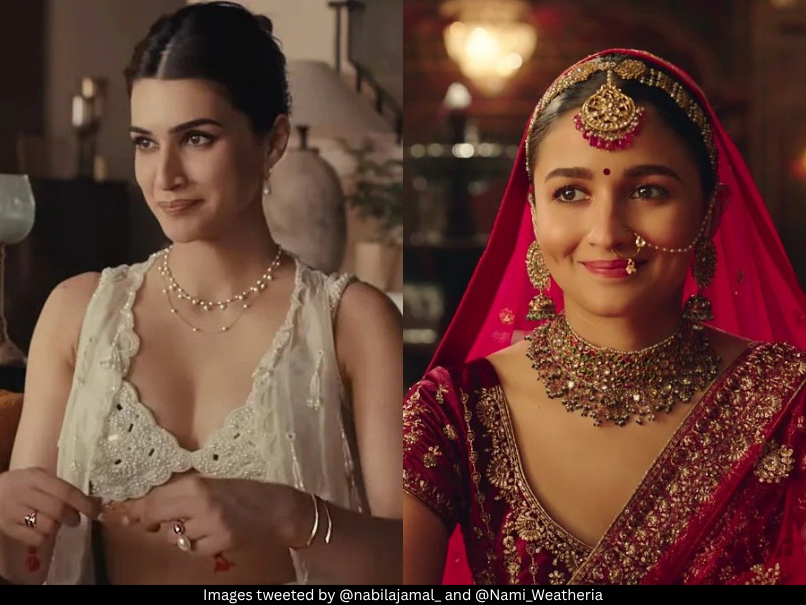
A famous face can make viewers stop scrolling, remember a slogan and occasionally buy a product. What it cannot do is control the conversation once an advertisement reaches the public. In India, a 30-second commercial can quickly become a national argument about religion, gender, colourism, class, workers’ rights or the responsibility celebrities carry when they lend their credibility to a brand. That conversation is especially relevant in August 2026. GIVA has withdrawn its Raksha Bandhan ad featuring Kriti Sanon after a fierce debate over her clothes and the inclusion of a pet dog in the ritual.
ALSO READ | Kriti Sanon’s Raksha Bandhan Ad Pulled Down: What Happened And Why Kangana Ranaut, Rahul Gandhi Got Involved
Separately, Shah Rukh Khan, Ajay Devgn and Tiger Shroff are facing notices from the Maharashtra Food and Drug Administration over their Vimal Elaichi advertisement. One dispute began with a festive fashion choice; the other has raised regulatory questions about alleged surrogate advertising. Together, they have once again proved that celebrity endorsements rarely remain just ads.
We decided to take a look at Indian celebrity ads that landed into trouble. Without further ado, here’s the list:
1. Kriti Sanon - GIVA’s Raksha Bandhan Campaign
GIVA launched its Furever Sibling: The Pawfect Bond, Crafted in Silver campaign in August 2026, ahead of Raksha Bandhan. The ad showed Kriti Sanon tying a rakhi to her brother before including the family dog in the celebration, a playful way of promoting the jewellery company’s pet collection. Instead, the internet largely ignored the jewellery and zoomed in on two other details: Kriti’s off-white bralette-style blouse, cape and draped skirt, and the decision to place a rakhi on the dog’s paw. Critics called the clothes unsuitable for a family festival and argued that the pet sequence trivialised the ritual. Supporters saw an Indo-Western outfit and a harmless acknowledgement that pets are family.
The debate soon became much bigger. Kangana Ranaut, without naming Kriti, called the campaign “intentionally creepy”, while Kriti replied that culture lives in a person’s heart rather than her neckline and explained that Raksha Bandhan’s promise of protection extends to her sister and pets. Nupur Sanon defended her, and Rahul Gandhi backed a woman’s right to choose her clothes. On August 26, GIVA withdrew the ad, saying it respected Indian traditions and had never intended to hurt sentiments.
2. Shah Rukh Khan, Ajay Devgn And Tiger Shroff - Vimal Elaichi
Shah Rukh Khan, Ajay Devgn and Tiger Shroff came together for Vimal Elaichi’s Kesari Holi commercial in April 2024, with Tiger replacing Akshay Kumar in the brand’s starry line-up. The brightly staged ad treated the trio’s arrival like a mini cinematic universe, but its afterlife has become far more serious. In August 2026, the Maharashtra FDA issued show-cause notices alleging that the Vimal Elaichi campaign prima facie amounted to indirect or surrogate promotion of Vimal Pan Masala, a prohibited product in the state.
The regulator directed the actors to stop participating in the campaign, remove promotional material under their control and supply contracts, payment details, campaign briefs and evidence showing whether Vimal Elaichi is a genuinely independent product. The three were given 15 days to explain why action should not be initiated. As of August 27, the FDA said it was still awaiting their responses; none of the actors had publicly answered the notices.
3. Alia Bhatt - Mohey’s ‘Kanyamaan’ Advertisement
Mohey’s bridal-wear commercial featuring Alia Bhatt was released in September 2021 and walked straight into one of advertising’s most sensitive rooms: the Indian wedding. Playing a bride at the mandap, Alia questioned why daughters are repeatedly described as paraya dhan and eventually “given away” through kanyadaan. The commercial proposed kanyamaan – respecting a daughter instead of treating her as something to be donated – and ended with both the bride’s and groom’s parents joining the couple’s hands.
Many viewers applauded the campaign for challenging language that can make a daughter sound like temporary property. Others accused it of misunderstanding the spiritual meaning of daan, presenting a Hindu ritual as inherently regressive and using religion to sell clothes. #BoycottManyavar trended, protests were reported and Kangana Ranaut urged brands not to manipulate customers through religious themes. Mohey stood by the idea, describing it as an attempt to create a more equal and inclusive space within marriage.
4. Aamir Khan And Kiara Advani - AU Small Finance Bank’s ‘Badlaav Humse Hai’ Ad
AU Small Finance Bank released the Aamir Khan-Kiara Advani wedding commercial in October 2022 as part of its Badlaav Humse Hai platform. At first, the newlyweds appeared to be discussing an unusually tear-free bidaai. The twist was that Aamir’s groom – not Kiara’s bride – was leaving his home and moving in with her so that they could support her father. The gender reversal was then connected to the bank’s claim that it too questioned old practices.
The commercial drew boycott calls and accusations that a bank had appointed itself the reformer of Hindu marriage rituals. Filmmaker Vivek Agnihotri asked why a financial institution was trying to change social and religious traditions, while other viewers defended the depiction as a gentle challenge to the assumption that only a bride must leave her family. Advertising critics found a different flaw: the emotional wedding story did not clearly explain what banking convention AU was actually changing. The company removed the film from Twitter after the backlash.
5. Akshay Kumar - Vimal Elaichi
When Akshay Kumar joined Shah Rukh Khan and Ajay Devgn in a Vimal Elaichi commercial in April 2022, the casting produced exactly the kind of blockbuster reaction the brand probably wanted –
except much of it was angry. Viewers contrasted the endorsement with Akshay’s health-conscious image and circulated an older video in which he had said he would not promote tobacco products. Although the advertised product was elaichi rather than tobacco, critics argued that the common branding made it a surrogate promotion for a pan-masala name.
Akshay responded within days with a public apology. He said he had not endorsed tobacco, but respected the feelings triggered by his association with Vimal Elaichi, was stepping back and would donate his entire endorsement fee to a worthy cause. He also warned that the existing advertisements could continue for the legally binding duration of the contract. That last detail explains why old footage could reappear even after his apology, but it did little to stop “Zubaan Kesari” from following him around the internet.
6. Amitabh Bachchan And Ranveer Singh - Kamla Pasand
Released in mid-September 2021, Kamla Pasand’s “silver-coated elaichi” commercial featured Amitabh Bachchan and Ranveer Singh as a stylish father-son pair. The sparkle vanished quickly. Social media users and the National Organisation for Tobacco Eradication questioned Big B’s association with a pan-masala-linked brand, arguing that a star of his stature – and a former face of the government’s pulse-polio campaign – should not lend respectability to a product promoted through alleged surrogate advertising.
On his 79th birthday, October 11, Amitabh announced that he had terminated the contract and returned the fee. His office said he had not realised when signing the deal that the campaign fell under surrogate advertising. When the commercials allegedly continued to air, his team later sent the company a legal notice demanding that they stop. Ranveer, who also appeared in the ad, did not announce a comparable withdrawal.
7. Hrithik Roshan - Zomato’s ‘Mahakal’ Advertisement
Zomato’s hyperlocal advertisement featuring Hrithik Roshan aired in August 2022 and was designed to change according to the viewer’s city. The Ujjain version had Hrithik say that he wanted a thali and had therefore ordered from “Mahakal”. In a city dominated by the revered Mahakaleshwar Temple, that one word was enough to set off an alarm. Priests objected that the temple’s prasad is not a commercial meal available for delivery and demanded an apology and withdrawal.
Zomato clarified that “Mahakal” referred not to the temple but to Mahakal Restaurant, a real local eatery whose thali was a recommended menu item on its platform. The company nevertheless apologised and stopped running the Ujjain version, acknowledging that the wording could be interpreted differently.
8. Hrithik Roshan And Katrina Kaif - Zomato’s ‘Har Customer Hai Star’ Campaign
A year before the Mahakal row, Zomato found itself in trouble for a completely different reason. The Har Customer Hai Star films, launched in August 2021, showed a delivery partner reaching Hrithik Roshan’s and Katrina Kaif’s homes. Hrithik offered a selfie and Katrina offered birthday cake, but in both versions the rider received another order and rushed away before he could enjoy the moment. The intended message was that every customer – not only a celebrity – deserved prompt service.
Viewers read the same scenes very differently. To them, a delivery worker who could not pause for a photograph or one slice of cake was not being celebrated; he was being shown as permanently hurried by an app. The ads were criticised as tone-deaf amid debates about gig-worker pay, deadlines and working conditions, and users asked why Zomato was spending on two A-listers instead of improving rider compensation. The company said its purpose was to make delivery partners the heroes, encourage customers to treat them respectfully and raise the dignity associated with the job.
9. Aishwarya Rai Bachchan - Kalyan Jewellers’ Print Campaign
Kalyan Jewellers’ print advertisement featuring Aishwarya Rai Bachchan appeared in a national newspaper on April 17, 2015. Styled like European aristocratic portraiture, it placed a heavily jewelled Aishwarya on a throne while a thin, dark-skinned child held a large parasol above her. An open letter from activists and child-rights campaigners criticised the imagery as racist and evocative of slavery and child servitude. The contrast between the fair, richly dressed star and the dark child in a subservient pose made the intended “royal” aesthetic impossible to separate from its colonial baggage.
Aishwarya’s representatives said the final layout had been altered after the shoot and released the original photograph, in which she had posed alone against a plain background. They stressed that she had no control over the elements later added to the frame. Kalyan Jewellers apologised, said its intention had been to convey royalty and timeless elegance, and withdrew the creative.
10. Hema Malini And Esha Deol - Kent Atta & Bread Maker
During the first months of the COVID-19 pandemic, Kent RO promoted its Atta & Bread Maker in May 2020 with brand ambassadors Hema Malini and Esha Deol. The copy asked consumers whether they were allowing a maid to knead dough by hand, warned that “her hands may be infected” and urged families not to compromise on health and purity. At a time when domestic workers were already facing job losses, suspicion and restricted entry into housing societies, the advertisement landed with all the delicacy of a pressure cooker hitting the floor.
Critics called it classist, discriminatory and misogynistic because it singled out a domestic worker as the infection risk while treating the employer’s hands as automatically pure. Kent withdrew the ad and chairman Mahesh Gupta apologised, calling it badly communicated and wrong. Hema also distanced herself from the message, saying it did not reflect her values and that she respected every section of society.
11. Ranveer Singh - Jack & Jones’ ‘Take Your Work Home’ Billboard
In November 2016, a Jack & Jones billboard showed Ranveer Singh in office wear carrying a miniskirt-clad woman over his shoulder beneath the line, “Don’t Hold Back. Take Your Work Home”. The attempted joke reduced a female colleague to office property, and it was called out immediately as s**ist. Actor Siddharth was among the prominent voices condemning it, while social media users questioned how the concept had survived several layers of approval and reached giant outdoor hoardings.
The brand apologised and recalled the campaign, reportedly removing 12 billboards. Ranveer also accepted that the creative was wrong, apologised and said the team had got that particular billboard wrong despite his desire to give brands creative freedom.
12. Neena Gupta, Nimrat Kaur, Sayani Gupta And Alaya F - Tanishq’s Diwali Ad
Tanishq’s November 2020 Diwali ad brought Neena Gupta, Nimrat Kaur, Sayani Gupta and Alaya F together to discuss how they hoped to celebrate the festival. The mood was warm and conversational until Sayani said she would not burst crackers and did not think anyone else should either. That line ignited precisely the sort of fire the advertisement wanted audiences to avoid. A section of social media accused the jewellery label and celebrities of lecturing Hindus about their own festival, and boycott calls followed.
Tanishq removed the ad from key social channels amid the backlash. The timing made the episode even bigger: only weeks earlier, the company had withdrawn a separate advertisement about an interfaith couple after “love jihad” accusations.
13. Aamir Khan - CEAT’s Diwali Road Safety Commercial
CEAT’s October 2021 commercial starred Aamir Khan advising children not to burst firecrackers on the road because streets are meant for traffic. It was a straightforward road-safety message, but in the annual festival-ad battlefield, straightforward rarely stays that way. BJP MP Anantkumar Hegde wrote to the company alleging that the campaign had created unrest among Hindus and asked why advertisements did not similarly address roads blocked for Friday prayers or noise from mosques.
The controversy shifted the subject from road safety to accusations of selective commentary on Hindu customs. Supporters of the ad pointed out that it did not oppose Diwali or even crackers altogether; it specifically asked people not to light them on public roads. Unlike several campaigns on this list, CEAT did not publicly announce a withdrawal.
14. Sunny Leone - Manforce’s Navratri Hoardings
In September 2017, Manforce put up hoardings at several locations in Surat, Gujarat, featuring Sunny Leone with dandiya imagery and a Gujarati line that broadly translated to “This Navratri, play – but with love.” As con**m advertising goes, the wordplay was hardly mysterious. Hindu groups argued that attaching se**al innuendo and a con**m brand to a religious festival insulted Navratri’s sanctity, and protests erupted in Surat.
The Bhartiya Gau Raksha Manch filed a police complaint, while the Surat police commissioner ordered the hoardings removed from locations including Udhna, Athwalines, Varachha and Majura Gate. Others defended the public-health value of safe-s*x messaging and noted that the moral outrage repeatedly focused on Sunny herself.
15. Madhuri Dixit - Maggi’s ‘Health Is Enjoyable’ Campaign
Nestlé India launched its Health Is Enjoyable advertising with Madhuri Dixit in June 2014, later using her to promote Maggi’s Veg Atta and Masala Oats noodles as tasty, convenient family food. The campaign returned to haunt its star during the 2015 Maggi crisis, when regulators reported concerns about lead levels and “no added MSG” labelling in tested samples and the product was temporarily removed from shelves across India. The Haridwar Food and Drug Administration served Madhuri a notice asking her to explain the basis for claims made about the noodles’ nutritional value.
Madhuri said she met Nestlé representatives and had been assured that the company did not compromise on quality. She was not the manufacturer and the notice was not a finding that she had personally tested or knowingly misrepresented the food; the episode was nevertheless a turning point in the discussion around endorser responsibility. The Bombay High Court later ordered fresh testing, and court-mandated laboratory results found lead levels within permissible limits; Maggi returned to shelves in November 2015.
Celebrity advertising works because fame supplies instant trust. These controversies reveal the other half of that bargain: when a campaign misfires, the star also supplies an instantly recognisable person to blame. Sometimes the criticism exposes lazy stereotypes or legitimate public-health concerns; sometimes it punishes a brand for challenging an old custom; and sometimes it begins because a clever line simply did not survive contact with cultural context. Either way, the celebrity may leave the set after one day, but the advertisement – and the argument around it – can follow them for years.