Swara Bhasker Reignites ‘Padmaavat’ Debate: Bollywood Scenes That Sparked Major Controversies
Amid renewed debate over Swara Bhasker’s criticism of Padmaavat’s jauhar sequence, we revisit Bollywood scenes that triggered outrage, censorship battles and boycott calls.

IST
Last Updated On
IST
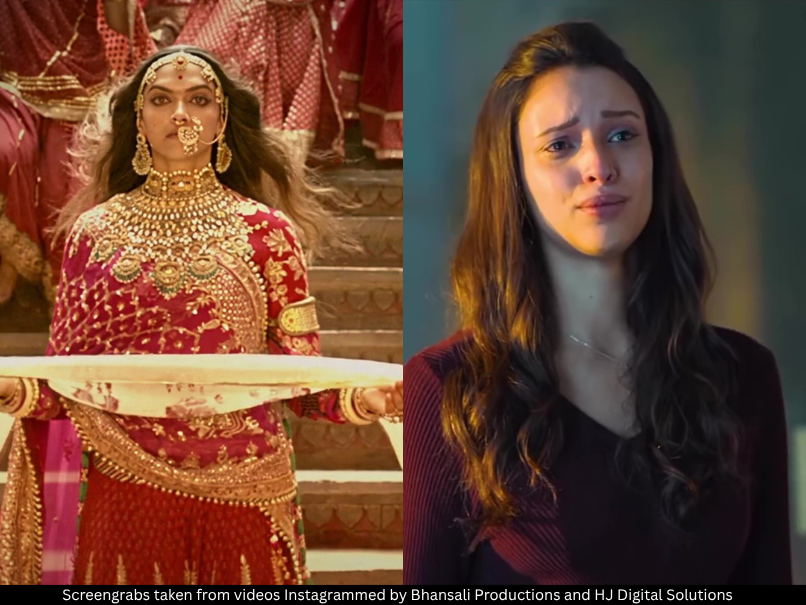
A scene can last five minutes and remain in public debate for five years. That is the peculiar power of cinema: a costume colour, a slap, a line of dialogue or even a pair of shoes can escape the screen and become a national argument involving actors, politicians, religious groups, courts and the censor board. That conversation has returned because of Swara Bhasker. Speaking at the Woman, Life, Freedom talk at Delhi's India International Centre on August 31, 2026, the actress revisited the open letter she wrote to Sanjay Leela Bhansali after watching ‘Padmaavat’ in 2018.
ALSO READ | Akshay Kumar To Karan Johar: 18 Celebrity Apologies That Made Major Headlines
Swara again questioned the film's climactic jauhar sequence and, in particular, its close-up of a pregnant woman's stomach. Her concern was about the message the spectacle could send to survivors of sexual violence: did the staging imply that death was more honourable than surviving an assault?
The remarks produced another storm online. Some viewers agreed that the sequence romanticised self-immolation; others argued that Swara Bhasker was ignoring the historical circumstances in which the women were facing capture. When viral posts claimed she had called Rani Padmavati and the women who performed jauhar “cowards”, Swara issued a clarification on September 2, saying she had done no such thing. She maintained that her criticism was directed at the film’s framing and that rape survivors have a right to live.
The renewed row is a reminder that Bollywood's most explosive controversies have not always been about entire plots. Sometimes, one scene has been enough to invite boycott calls, legal petitions, censorship battles or years of uncomfortable debate. From Animal’s shoe-licking scene to the saffron-swimsuit storm surrounding ‘Pathaan’, here are the moments that became much larger than the films containing them.
ALSO READ | Amid Kangana Ranaut-Taapsee Pannu Row, A Look At Bollywood's Biggest Feuds
1. Padmaavat
Sanjay Leela Bhansali's ‘Padmaavat’ released on January 25, 2018, after months of protests over its depiction of Rani Padmavati. Starring Deepika Padukone, Ranveer Singh, Shahid Kapoor and Jim Sarbh, the historical drama ends with Padmavati and hundreds of women walking into a fire to avoid capture by Alauddin Khilji. SLB stages the jauhar as an enormous, visually majestic act of defiance, with the women dressed in red and moving towards the flames as Khilji races unsuccessfully to reach the queen.
For some viewers, the scene represented resistance in the context of a medieval siege. For Swara and other critics, its grand visual treatment risked turning a brutal practice into an inspirational spectacle. Her 2018 letter argued that women retain the right to live after rape or the death of their husbands; Deepika responded at the time that the sequence needed to be understood within its period and pointed to the film's disclaimer. Eight years later, the disagreement remains unresolved – which is precisely why a single climax can still restart a culture war.
2. Animal
Sandeep Reddy Vanga's ‘Animal’, released on December 1, 2023, starred Ranbir Kapoor, Rashmika Mandanna, Anil Kapoor, Bobby Deol and Triptii Dimri. The scene that became shorthand for the film's gender politics arrives after Ranbir's Rannvijay discovers that Triptii's Zoya entered his life as an enemy's mole. As she pleads that her feelings became genuine, he tells her to prove her love by licking his shoe. She lowers herself towards it, although he ultimately walks away before she does so.
The demand was criticised as a deliberately degrading display of power, with Javed Akhtar later warning about audiences applauding scenes in which a man asks a woman to lick his shoe. Triptii explained that she approached the moment from her character's circumstances and followed the actor's rule of not judging the person she was playing. Sandeep Reddy Vanga defended the scene as Rannvijay testing whether Zoya would go as far for him as he had for her.
3. Kabir Singh
Four years before ‘Animal’, Sandeep Reddy Vanga had already turned an act of violence into one of Bollywood's fiercest debates. ‘Kabir Singh’, released on June 21, 2019, starred Shahid Kapoor and Kiara Advani in the Hindi remake of Vanga's Telugu film ‘Arjun Reddy’. In the controversial scene, Kabir slaps Preeti during an argument over their relationship and her family's opposition to it. Preeti later slaps him too, but critics argued that the film repeatedly presented Kabir's possessiveness and aggression through the grammar of passionate romance.
The controversy intensified when Sandeep Reddy Vanga defended the characters’ physical behaviour in an interview, saying that a relationship without the liberty to slap or touch one another lacked emotion. He subsequently said he had been explaining Kabir's mindset rather than endorsing violence himself. The film became a blockbuster, but its success sharpened the argument instead of settling it: was Kabir Singh depicting a destructive man, or inviting viewers to celebrate him?
4. Pathaan
Before Shah Rukh Khan's Pathaan could begin saving the country, one swimsuit had already sent it into battle. Siddharth Anand's spy thriller, starring SRK, Deepika Padukone and John Abraham, released on January 25, 2023. Its first song, ‘Besharam Rang’, showed Deepika in several beachwear looks, including a saffron-orange swimsuit during a sequence with Shah Rukh.
Several political and religious voices claimed that pairing the colour with a song titled ‘Besharam Rang’ insulted Hindu sentiments. Madhya Pradesh minister Narottam Mishra warned that the film could face restrictions unless the visuals were corrected. Protests and boycott calls followed. The CBFC asked the producers to make changes to the film and its songs, although the much-discussed orange swimsuit remained in the theatrical version with minor edits elsewhere in the number. The controversy eventually looked tiny beside Pathaan's blockbuster reception, but for several weeks, a costume colour had become the film's unofficial antagonist.
5. Adipurush
Om Raut’s ‘Adipurush’ arrived on June 16, 2023, with Prabhas as Raghava, Kriti Sanon as Janaki, Saif Ali Khan as Lankesh, Sunny Singh as Shesh and Devdatta Nage as Bajrang. The mythological film drew criticism for its visual design and characterisation, but the loudest anger centred on dialogue writer Manoj Muntashir's colloquial lines – particularly the scene in which Bajrang is threatened after entering Lanka. “Kapda tere baap ka, tel tere baap ka, aag bhi tere baap ki, aur jalegi bhi tere baap ki,” – caused quite an uproar.
Viewers argued that the street-style phrasing was jarringly disrespectful in an adaptation inspired by the Ramayana. Other lines such as “bua ka bagicha hai kya” also circulated widely. Facing intense backlash, the producers changed the dialogue in theatres: the reference to “your father” was replaced by “your Lanka”. It was the rare case in which a film’s words were rewritten while audiences were already buying tickets.
6. PK
Rajkumar Hirani’s ‘PK’, released on December 19, 2014, starred Aamir Khan, Anushka Sharma, Sushant Singh Rajput, Sanjay Dutt and Boman Irani. Aamir played an alien baffled by organised religion and the contradictory routes humans offer him to reach God. One of the most disputed comic sequences shows PK pursuing an actor dressed as Lord Shiva, refusing to let him go until he helps recover the remote needed to return home. Another scene filmed in Delhi involved the Shiva performer pulling a rickshaw carrying two women in burqas.
Religious organisations said such imagery mocked Hindu deities and rituals, while the film's defenders argued that its target was fraudulent godmen and commercialised faith rather than belief itself. Protests took place outside cinemas, some theatres were vandalised and petitions sought a ban, although courts did not stop its exhibition.
7. OMG 2
Amit Rai's ‘OMG 2’ released on August 11, 2023, starring Pankaj Tripathi, Akshay Kumar and Yami Gautam. The courtroom drama follows a father challenging an education system that punishes his son instead of teaching students responsibly about s*x. Its fusion of school s*x education with religious imagery placed it under unusually close CBFC scrutiny in the aftermath of the ‘Adipurush’ controversy.
The board demanded 27 audio and visual modifications. Akshay's character was changed from Lord Shiva to a messenger of God; scenes showing him bathing, meditating or appearing intoxicated were altered. Frontal-nu*ity images were replaced with approved shots of Naga sadhus, while a schoolboy's se**al-act video and dialogue about mast**bation were toned down. References to the Bhagavad Gita, the Upanishads, Draupadi, Krishna and other religious subjects were also modified. The final irony was that a film advocating age-appropriate s*x education received an adults-only certificate, keeping much of its intended teenage audience outside the theatre.
8. Maharaj
Sidharth P Malhotra's ‘Maharaj’ eventually premiered on Netflix on June 21, 2024, after a one-week legal delay. Based on the 1862 Maharaj Libel Case, the film starred Junaid Khan as journalist and reformer Karsandas Mulji, Jaideep Ahlawat as religious leader Jadunath Maharaj, Shalini Pandey as Kishori and Sharvari in a special role. Its most disturbing sequence depicts Kishori submitting to “charan seva”, which Jadunath turns into se**al exploitation under the cover of religious devotion.
Members of the Vaishnav Pushtimarg sect approached the Gujarat High Court, fearing that the film would misrepresent their beliefs and incite hostility towards the community. The release was temporarily stayed, but the court lifted the order after watching the film and concluded that it did not target the sect as alleged. Shalini later said filming the intimate sequence made her anxious because it forced her to consider how blind faith could be exploited.
9. Udta Punjab
Abhishek Chaubey’s ‘Udta Punjab’, released on June 17, 2016, starred Shahid Kapoor, Alia Bhatt, Kareena Kapoor Khan and Diljit Dosanjh. Its unvarnished depiction of Punjab's drug crisis included injections, cocaine use, se**al violence and an expletive-heavy rock star named Tommy Singh. The CBFC initially sought 89 cuts, including the removal of references to Punjab, prompting producer Anurag Kashyap and his collaborators to take the board to court.
The Bombay High Court rejected nearly all those demands and cleared the film with one principal visual cut and a revised disclaimer. The deleted moment showed Tommy urinating on a crowd during a performance; the court also objected to another graphic vulgar gesture. The judgment became a major freedom-of-expression victory because it recognised that removing the state would destroy the premise of a drama explicitly examining that state's drug problem.
10. Brahmāstra: Part One - Shiva
A few seconds in the trailer were enough to put ‘Brahmāstra’ on the defensive months before its release. Ayan Mukerji's fantasy adventure opened on September 9, 2022, starring Ranbir Kapoor, Alia Bhatt, Amitabh Bachchan, Mouni Roy and Nagarjuna Akkineni. In the shot that triggered complaints, Ranbir's Shiva appeared to be wearing shoes while jumping towards and ringing a bell at what many viewers assumed was a temple.
The image generated boycott calls and accusations of disrespecting Hindu customs. Ayan Mukerji issued a clarification saying Shiva was not entering a temple at all: the location was a Durga Puja pandal, and the character was wearing shoes while approaching the pandal rather than stepping onto the raised platform where the deity stood.
11. Ae Dil Hai Mushkil
Not every cinematic controversy requires violence, religion or a censor certificate. Sometimes, one throwaway joke can do the job. Karan Johar's ‘Ae Dil Hai Mushkil’, starring Ranbir Kapoor, Anushka Sharma, Aishwarya Rai Bachchan and Fawad Khan, released on October 28, 2016. During a conversation about music, Anushka's Alizeh jokes that legendary playback singer Mohammed Rafi sounded as though he cried more than he sang.
Rafi's son Shahid Rafi called the remark insulting and demanded an apology from Karan Johar. Goa police chief Muktesh Chander also urged Rafi admirers to boycott the movie, while fans objected to reducing one of Hindi cinema's most versatile singers to a punchline. The dialogue did nothing to derail the film commercially, but it proved that even a fictional character's opinion can be treated as the filmmaker's personal verdict when the subject is an artist audiences consider untouchable.
12. Lipstick Under My Burkha
Alankrita Shrivastava's ‘Lipstick Under My Burkha’ released in India on July 21, 2017, starring Konkona Sen Sharma, Ratna Pathak Shah, Aahana Kumra and Plabita Borthakur. Its interwoven stories included a widowed older woman exploring desire through romantic novels and phone s*x, a beautician attempting to claim agency inside a restrictive relationship and a married woman navigating s*x, contraception and an abusive husband. None of the intimate moments was unprecedented for Hindi cinema; what was unusual was that the desire belonged unapologetically to women.
The CBFC initially refused the film certification, describing it as “lady oriented” and objecting to its se**al scenes, abusive language and what it called “audio po**ography”. That phrase, along with the suggestion that female fantasy was itself objectionable, produced widespread ridicule and anger. The Film Certification Appellate Tribunal later directed that the film receive an A certificate with limited cuts, observing that there could be no embargo on stories about women's fantasies and inner desires.