

‘Shaitaan’ To ‘Dhadak’: Bollywood Remakes That Changed Much More Than The Language
From ‘Shaitaan’ changing the ending of ‘Vash’ to ‘Deva’ rewriting ‘Mumbai Police’s’ central revelation, these 14 Bollywood remakes took familiar stories in new directions.

IST
Last Updated On
IST
Knowing the original should give you an unfair advantage while watching a remake. You recognise the setup, anticipate the betrayal and wait confidently for the ending you remember. Except, sometimes, the filmmaker has other plans. The lovers do not meet the same fate. The murderer has an entirely different secret. A ghost story suddenly finds a human culprit, while a supporting character becomes the engine of the investigation. Bollywood has often borrowed successful Indian stories, but borrowing the premise does not always mean preserving every turn.
ALSO READ | ‘Ghajini’ To ‘Drishyam’: 15 South Indian Movies Remade In Bollywood, As ‘Haiwaan’ Joins List
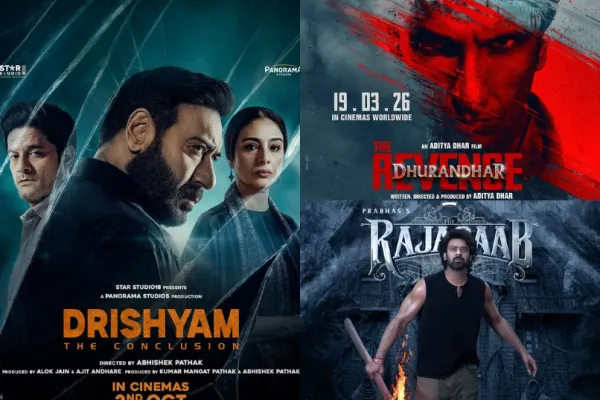
Some adaptations change the destination; others rearrange the journey so thoroughly that familiarity becomes a trap. With ‘Drishyam: The Conclusion’ having reached cinemas on October 2, the relationship between the Hindi and Malayalam franchises is back in focus. This time, however, their third installments follow separate stories and screenplays.
From changed killers to reimagined romances, these Hindi adaptations show how dramatically a familiar Indian film can change in another filmmaker’s hands.
Spoiler alert: The comparisons below reveal major plot developments and endings in both versions.
1. Shaitaan
Director: Vikas Bahl | Released: March 8, 2024 | Original: ‘Vash’ (2023), Gujarati
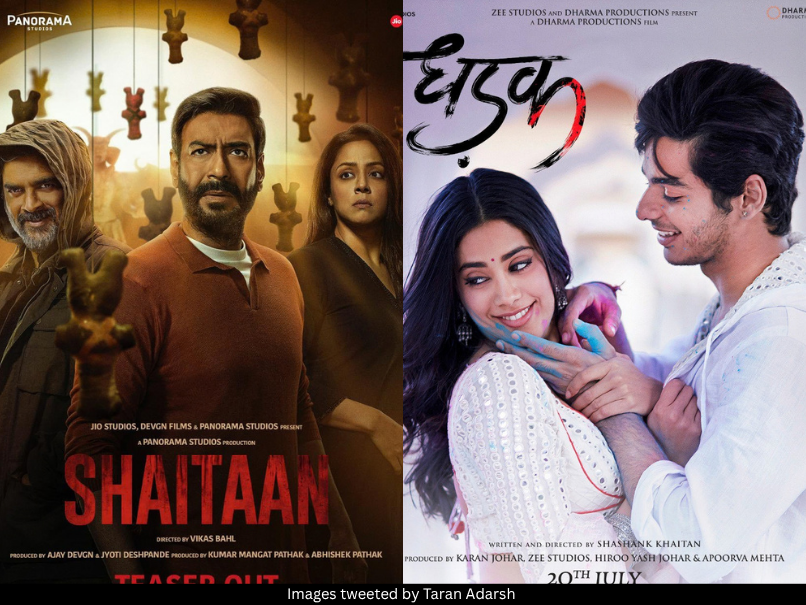
‘Shaitaan’ retains the nightmare at the centre of Krishnadev Yagnik’s ‘Vash’: a stranger takes control of a family’s daughter, making her own home a place of terror. Ajay Devgn and Jyothika play the parents, R. Madhavan the intruder, and Janki Bodiwala the daughter – a role she also played in the Gujarati film – with Anngad Raaj as her younger brother. But the Hindi version changes what the father can ultimately salvage. Where ‘Vash’ leaves its family devastated and the daughter’s condition deeply disturbing, ‘Shaitaan’ allows Ajay’s Kabir to free the girls through a recording of the villain’s commands and save his family.
That difference was deliberate. Vikas Bahl explained that he did not want a hopeless conclusion or the suggestion that black magic could ultimately overpower people’s lives. Writer Aamil Keeyan Khan also identified several additions, including the cylinder sequence, the police visiting the bungalow and the swing scene, alongside the new climax.
ALSO READ | From ‘Drishyam’ To ‘Kahaani’: 15 Indian Movies With Twists We Never Saw Coming
2. Deva
Director: Rosshan Andrrews | Released: January 31, 2025 | Original: ‘Mumbai Police’ (2013), Malayalam
‘Deva’ keeps one of the most intriguing setups in ‘Mumbai Police’: a police officer investigating his friend’s murder loses his memory and has to reconstruct a case he had already solved. Shahid Kapoor plays Dev Ambre, with Pooja Hegde, Pavail Gulati and Pravessh Rana in the principal ensemble. Rosshan Andrrews directed both versions, and both retain the devastating revelation that the investigating officer himself committed the murder. The important difference is the secret that drove him to do it.
In the Prithviraj Sukumaran-led Malayalam film, Antony Moses kills his friend after the latter discovers his concealed se**ality; he fears exposure and the collapse of his carefully maintained public image. In ‘Deva’, the friend discovers the protagonist’s connection to a criminal and his position as a mole within the police force. Fear of exposure remains, but the thing being concealed changes completely. Andrrews acknowledged the departure while defending his decision to reimagine the film.
3. Dhadak
Director: Shashank Khaitan | Released: July 20, 2018 | Original: ‘Sairat’ (2016), Marathi
‘Dhadak’ carries over the central movement of Nagraj Manjule’s ‘Sairat’: young lovers defy a powerful family, flee home and discover that building a life together is considerably harder than running away. Janhvi Kapoor and Ishaan Khatter play Parthavi and Madhu, with Ashutosh Rana as her father. Shashank Khaitan relocates the opening romance to Rajasthan and the couple’s later struggle to Kolkata, giving the story a different social and cultural texture. The most consequential change, however, comes when the apparent possibility of reconciliation turns into catastrophe.
In ‘Sairat’, Archi and Parshya are murdered, leaving their young child to discover the aftermath. In ‘Dhadak’, Madhu and the couple’s child are killed, while Parthavi survives and witnesses their deaths. Neither version offers the comforting ending that an elopement romance might promise. But changing the survivor alters the final image and the grief the audience carries away: an orphaned child in one film, a bereaved mother in the other.
4. Dhadak 2
Director: Shazia Iqbal | Released: August 1, 2025 | Original: ‘Pariyerum Perumal’ (2018), Tamil
Despite its title, ‘Dhadak 2’ does not continue Madhu and Parthavi’s story. It adapts Mari Selvaraj’s ‘Pariyerum Perumal’, retaining the law-college setting, caste discrimination and the violence surrounding a Dalit student’s connection with an upper-caste woman. Siddhant Chaturvedi plays Neelesh opposite Triptii Dimri’s Vidhi, with Vipin Sharma and Zakir Hussain among the supporting cast. Iqbal and co-writer Rahul Badwelkar make the relationship a more explicitly mutual romance, allowing Neelesh to reciprocate love rather than reproducing the original’s more complicated emotional dynamic.
Vidhi also receives a stronger independent arc and a clearer confrontation with her family’s violence. The ending moves away from the original’s quieter conversation towards a public reckoning, with Neelesh speaking against injustice and Vidhi’s scream interrupting the confrontation. The filmmakers explained that they wanted her involved in the discussion of caste and gender, rather than standing outside decisions being made about her. The underlying injustice remains, but the response becomes more openly romantic, political and confrontational.
5. Ghajini
Director: A. R. Murugadoss | Released: December 25, 2008 | Original: ‘Ghajini’ (2005), Tamil
The tattoos, photographs and frantic battle against a failing memory survive the journey from Tamil to Hindi. So does Kalpana, played by Asin in both versions. Aamir Khan takes over the role originally played by Suriya, while Jiah Khan and Pradeep Rawat are key members of the Hindi cast. The premise remains a revenge story about a man whose ability to retain new memories has been shattered. Yet the final confrontation is substantially rebuilt, including the removal of the Tamil film’s complication involving twin villains, both played by Pradeep Rawat.
A. R. Murugadoss confirmed that he changed the climax while correcting elements of the screenplay, and Suriya also acknowledged the different build-up and final stretch. The Hindi version concentrates the revenge on one antagonist, making the showdown a more direct confrontation between Sanjay and the man responsible for his loss. That is a useful example of a remake preserving its best-known ingredients while replacing the machinery around them.
6. Simmba
Director: Rohit Shetty | Released: December 28, 2018 | Original: ‘Temper’ (2015), Telugu, loosely adapted
‘Simmba’ borrows the corrupt-cop-to-avenger trajectory of Puri Jagannadh’s ‘Temper’, but Rohit Shetty was clear that he had bought the rights and built a substantially different film around the idea. Ranveer Singh plays Sangram Bhalerao opposite Sara Ali Khan, with Sonu Sood as the antagonist and Ashutosh Rana as a morally upright colleague. As in the Jr NTR-led original, a brutal crime forces a policeman who profits from wrongdoing to confront what his complicity has enabled. The redemption survives; the route to justice changes.
In ‘Temper’, Daya falsely names himself as an accomplice to the se**al assault to secure death sentences for the perpetrators, risking his own life before the final violent confrontation. ‘Simmba’ instead builds its resolution around a staged encounter and the subsequent consequences, with Ajay Devgn’s Singham becoming integral to the finish. The distinction is not that one film has violence and the other does not. Rohit Shetty replaces the original’s self-incriminating courtroom gambit and folds the story into his larger cop universe.
7. Singham
Director: Rohit Shetty | Released: July 22, 2011 | Original: ‘Singam’ (2010), Tamil
Before ‘Simmba’, Rohit Shetty had already remodelled Hari’s ‘Singam’. Both films centre on an honest small-town police officer whose clash with a powerful criminal follows him into a new posting. Ajay Devgn and Kajal Aggarwal lead the Hindi version, while Prakash Raj plays the antagonist in both adaptations. The hero’s integrity and the escalating battle of wills remain recognisable. But the Hindi screenplay introduces a crucial emotional thread involving an honest officer’s suicide, his widow Megha, played by Sonali Kulkarni, and their son.
That family’s loss helps shape Bajirao Singham’s fight and the film’s resolution. Rather than following the Tamil climax’s pursuit and rescue, the Hindi film ends with the police collectively turning against Jaykant Shikre, killing him and clearing the dead officer’s name. Dialogue writer Sajid Samji specifically credited Rohit Shetty and screenwriter Yunus Sajawal with the widow-and-son track and the changed ending. The remake gives its hero more than a personal opponent: he is also confronting an institution that abandoned one of its own.
8. Bholaa
Director: Ajay Devgn | Released: March 30, 2023 | Original: ‘Kaithi’ (2019), Tamil
‘Bholaa’ retains the wonderfully urgent foundation of Lokesh Kanagaraj’s ‘Kaithi’: a recently released prisoner, desperate to meet his daughter, is pulled into an overnight operation to save endangered police officers. Ajay Devgn takes the role originally played by Karthi, with Tabu, Deepak Dobriyal, Sanjay Mishra and Gajraj Rao in the Hindi ensemble. But Narain’s Inspector Bejoy becomes Tabu’s Diana Joseph, and the protagonist’s past receives a much larger, dramatised treatment involving his gangster life and a romance with Amala Paul’s character.
‘Kaithi’ does provide Dilli with a history; the difference is that ‘Bholaa’ visualises and expands its hero’s past, attaching it to an additional antagonist and a future-facing conflict. Abhishek Bachchan’s appearance supplies a new threat linked to that backstory. The overnight rescue remains the spine, but the Hindi film builds another narrative around it. The changes therefore go beyond bigger fights or more elaborate spectacle: they alter the police partner, deepen the hero’s romantic history and give the ending another direction to point towards.
9. Bachchhan Paandey
Director: Farhad Samji | Released: March 18, 2022 | Original: ‘Jigarthanda’ (2014), Tamil
The dangerous filmmaker-gangster equation in Karthik Subbaraj’s ‘Jigarthanda’ remains, but ‘Bachchhan Paandey’ changes the person stepping into the criminal’s world. Kriti Sanon’s Myra replaces the aspiring male filmmaker played by Siddharth in the Tamil film, while Akshay Kumar takes the feared gangster’s role originally played by Bobby Simha. Arshad Warsi plays Myra’s friend and collaborator, with Jacqueline Fernandez appearing in the gangster’s romantic past. Myra wants to make a film about a man whose reputation would persuade most sensible people to choose another subject.
The film retains the comedy and danger of trying to persuade an intimidating gangster to participate in cinema. What changes is the character balance and the effort to explain the gangster through a tragic love story. The Hindi version gives its leading man a more sympathetic emotional justification than the Tamil film gives Assault Sethu. That shifts the experience from observing an unpredictable criminal towards understanding the hurt behind a star-led antihero.
10. Shubh Mangal Saavdhan
Director: R. S. Prasanna | Released: September 1, 2017 | Original: ‘Kalyana Samayal Saadham’ (2013), Tamil
Some remakes change the last act. ‘Shubh Mangal Saavdhan’ rebuilt much of the life surrounding its central problem. R. S. Prasanna directed both versions, retaining the subject of a groom confronting erectile dysfunction before his wedding. Ayushmann Khurrana and Bhumi Pednekar play Mudit and Sugandha, supported by Seema Pahwa, Brijendra Kala and Neeraj Sood. The embarrassment, impending marriage and strain on the relationship connect it to the Tamil original, but the people, incidents and family interactions were newly developed for the Hindi setting.
Prasanna explained that Mudit from Gurgaon could not simply be the original’s Raghu from Anna Nagar with a different name. He gave Hindi writer Hitesh Kewalya the basic premise and deliberately discouraged the cast and crew from watching the Tamil film. That choice allowed the adaptation to find its own rhythm of family interference, euphemisms and romantic commitment. The medical difficulty remains the trigger, but the film’s larger question becomes how a couple stands by each other when everybody around them insists on turning a private problem into a public discussion.
11. Akira
Director: A. R. Murugadoss | Released: September 2, 2016 | Original: ‘Mouna Guru’ (2011), Tamil
‘Akira’ retains the conspiracy involving a young outsider, corrupt police officers and an attempt to discredit someone who knows too much. Its most visible rewrite is the protagonist: Arulnithi’s character in Santhakumar’s ‘Mouna Guru’ becomes Sonakshi Sinha’s Akira Sharma. Anurag Kashyap plays the threatening ACP Rane, while Konkona Sen Sharma plays the investigating police officer. Murugadoss did more than transfer the original’s scenes to a female star. He built a childhood history involving self-defence training and punishment that establishes how Akira can fight back and why she carries herself as she does.
The director explicitly said that he adapted the script for a woman protagonist and tightened its structure. That alters the emotional pressure around the retained conspiracy: the heroine’s physical resistance, the disbelief she encounters and her vulnerability to powerful men become central to the experience. The corrupt-cop thriller remains, but its lead no longer occupies the same place in the world. A change in gender becomes a reason to rewrite the character’s formation, rather than merely an opportunity to hand the original hero’s action scenes to another actor.
12. U-Turn
Director: Arif Khan | Released: April 28, 2023, on ZEE5 | Original: ‘U Turn’ (2016), Kannada
‘U-Turn’ begins with the same unsettling hook as Pawan Kumar’s Kannada film: a journalist researching dangerous shortcuts on a flyover discovers that the motorists involved are dying mysteriously. Alaya F plays Radhika, with Priyanshu Painyuli, Aashim Gulati, Manu Rishi Chadha and Rajesh Sharma in the principal cast. The traffic violations, investigation and suspicion surrounding the reporter all survive. Then the Hindi version takes the kind of detour that makes knowing the original surprisingly unhelpful: it changes the explanation behind the deaths.
The Kannada film reveals a supernatural force: the spirit of a woman killed with her daughter in an accident. The Hindi version instead reveals a human killer, Amarjeet, who uses a drug to induce frightening hallucinations and make the deaths appear supernatural. The accident and the desire for revenge remain important, but the mechanism is entirely different. A ghost’s vengeance becomes a criminal scheme that can be investigated and exposed. Among these remakes, this is one of the clearest examples of changing the very rules under which a mystery operates.
13. Forensic
Director: Vishal Furia | Released: June 24, 2022, on ZEE5 | Original: ‘Forensic’ (2020), Malayalam
The Hindi ‘Forensic’ keeps the pairing of a police investigator and a forensic specialist hunting a killer targeting young girls. Vikrant Massey and Radhika Apte play Johnny Khanna and Megha Sharma, with Prachi Desai and Rohit Roy in important roles. But where the central investigators in Akhil Paul and Anas Khan’s Malayalam film are connected through a former marriage in the family, the Hindi leads are ex-lovers. That gives their collaboration a romantic history alongside the complicated relationships involving their siblings and a child.
The adaptation also changes the treatment of the therapist character, the culprit’s backstory and the later explanations of the crimes. Furia confirmed that the twists had been modified substantially so that viewers familiar with the Tovino Thomas-led original would encounter fresh developments. The investigative professions and central threat remain the framework, but they no longer guarantee the same sequence of discoveries. This is the remake approach built around wrong-footing an informed viewer: you recognise the case’s outline, then find that the personal histories and revelations do not fit the version you remember.
14. Drishyam 2
Director: Abhishek Pathak | Released: November 18, 2022 | Original: ‘Drishyam 2’ (2021), Malayalam
‘Drishyam 2’ belongs here with a qualification: it preserves Jeethu Joseph’s central plot and crucial final twist. Ajay Devgn returns as Vijay Salgaonkar, alongside Tabu, Shriya Saran, Ishita Dutta and Mrunal Jadhav, while Akshaye Khanna joins as investigator Tarun Ahlawat. The renewed investigation and Vijay’s long-prepared defence remain the story’s backbone. The changes lie mainly in the people driving the pressure around him. Pathak reworked the investigating officer’s character and brought Kamlesh Sawant’s Gaitonde back from the first Hindi film.
Importantly, the Malayalam sequel already has an investigating officer; the Hindi film did not invent that narrative function. Pathak said he rewrote the character to raise the confrontation and also expanded Tabu’s involvement. Writer Aamil Keeyan Khan identified the first half’s pacing and characterisation as areas they changed while retaining the original’s powerful final stretch. This is a more measured rewrite than ‘Deva’ or ‘U-Turn’: the answer remains, but the personalities asking the questions change. For a thriller, a new opponent can make a familiar trap feel dangerous all over again.