



Bollywood’s First-Half Report Card: ‘Dhurandhar 2’, ‘Bhooth Bangla’ And More Power 2026’s Box-Office Revival
From record-breaking blockbusters to word-of-mouth sleepers, Bollywood’s first half of 2026 delivered a theatrical revival marked by diverse genres, returning franchises and crucial lessons in budget control.

IST
Last Updated On
IST

From one record-demolishing blockbuster to a romance that rose from the dead through word of mouth, Bollywood’s first six months of 2026 delivered spectacle, surprises and a much-needed theatrical recovery. The first half of 2026 served exactly what the Indian film industry had been waiting for: stability, massive blockbusters, and the triumphant return of mid-budget cinema. Across Indian languages, films released between January and June reportedly generated Rs 6,300 – 6,350 crore gross and Rs 5,380 – 5,420 crore net from 723 releases. That represented an estimated 10 – 15 per cent improvement over the corresponding period in 2025. Admissions rose by roughly 10 per cent, while box-office revenue grew by around 16 – 17 per cent, according to industry estimates.
Hindi cinema’s 105 releases contributed approximately Rs 2,436 crore net domestically. The catch? Nearly half that amount came from a single film. ‘Dhurandhar: The Revenge’ accounted for almost half of Hindi cinema’s domestic net business. The first half was therefore a win, but also a reminder that Bollywood’s recovery remains dependent on a limited number of event films.
While star-studded tentpoles shattered all-time records, the real victory lies in the diversity of content working at the ticket windows. From patriotic action to horror-comedies and emotional dramas driven purely by word-of-mouth, audiences flocked back to theatres. But there were also expensive misfires, modest earners and films whose worldwide grosses sounded impressive until their budgets entered the conversation.
Here is how the major Hindi releases – and one record-breaking bilingual crossover – performed:
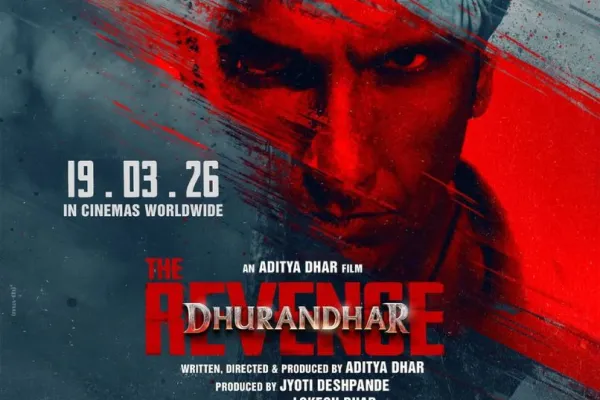
1. Dhurandhar: The Revenge
Report-card verdict: Historic blockbuster
Calling ‘Dhurandhar: The Revenge’ a blockbuster almost feels inadequate. Aditya Dhar’s espionage action thriller did not merely lead the first half – it towered over it. Released on March 19, the sequel followed Ranveer Singh’s undercover operative Jaskirat Singh Rangi as he plunged deeper into enemy territory and pursued the network he had infiltrated. R Madhavan, Arjun Rampal, Sanjay Dutt, Sara Arjun and Rakesh Bedi added weight to the sprawling ensemble. Neither its runtime nor its adult certificate could dampen demand. Made on a budget of Rs 225 crore, the film shattered every conceivable record, becoming the first Hindi film to cross the Rs 1,000 crore net mark in India alone. It minted over Rs 1,149 crore domestically and raked in a staggering Rs 1,813 crore globally, single-handedly accounting for nearly half of Bollywood's total earnings in the first six months.
2. Border 2
Report-card verdict: Super-hit
Before ‘Dhurandhar: The Revenge’ took over the year, ‘Border 2’ gave Bollywood its first genuine blockbuster of 2026. Released on January 23, Anurag Singh’s war drama brought together Sunny Deol, Varun Dhawan, Diljit Dosanjh and Ahan Shetty, with Mona Singh, Sonam Bajwa, Medha Rana and Anya Singh in supporting roles. Set during the 1971 India – Pakistan war, the film connected operations involving the Army, Air Force and Navy. The film’s biggest strength was emotional familiarity. It borrowed the patriotic spirit and legacy appeal of JP Dutta’s 1997 classic while offering a larger, more contemporary spectacle. Made on a reported Rs 275 crore budget, ‘Border 2’ collected approximately Rs 329 crore net in India and Rs 450 crore worldwide.
3. Bhooth Bangla
Report-card verdict: Hit
Akshay Kumar and Priyadarshan had not made a Hindi film together in nearly 16 years. When they finally reunited, audiences were ready. Released on April 17, ‘Bhooth Bangla’ featured Tabu, Wamiqa Gabbi, Paresh Rawal, Rajpal Yadav and Jisshu Sengupta alongside Akshay. It followed Arjun Acharya, who inherits a cursed ancestral palace and decides – somewhat unwisely – to host his sister’s destination wedding there. Ghosts, family secrets and comic chaos inevitably follow. The film opened to mixed reviews, but its familiar performers and old-school comic rhythm found favour with family audiences. Made for a reported Rs 120 crore, it collected approximately Rs 182 crore net in India and Rs 270 crore worldwide.
4. Raja Shivaji
Report-card verdict: Major bilingual crossover success
Primarily a Marathi production but released simultaneously in Hindi, ‘Raja Shivaji’ became too big a theatrical story to exclude from the wider report card. Riteish Deshmukh directed and played Chhatrapati Shivaji Maharaj, supported by Sanjay Dutt, Abhishek Bachchan, Genelia Deshmukh, Vidya Balan, Fardeen Khan and Mahesh Manjrekar. Salman Khan appeared in a much-talked about cameo. Released on May 1, the historical epic explored Shivaji Maharaj’s formative years and rise before his coronation in 1674. Reportedly made for Rs 75–100 crore, it was among the most ambitious Marathi films ever mounted. The gamble paid off. ‘Raja Shivaji’ earned approximately Rs 96.39 crore net in India and Rs 117 crore worldwide. It also became the first Marathi film to cross Rs 100 crore net domestically.
5. Main Vaapas Aaunga
Report-card verdict: Word-of-mouth sleeper hit
Most films that open at Rs 1.28 crore are written off before their first weekend ends. ‘Main Vaapas Aaunga’ had other ideas. Released on June 12, Imtiaz Ali’s Partition-era romantic drama starred Diljit Dosanjh, Sharvari, Vedang Raina and Naseeruddin Shah, with music by AR Rahman and lyrics by Irshad Kamil. The film used love, migration and memory to explore the emotional scars left by Partition. It was intimate rather than spectacular – and initially paid the price. Shows were limited, its opening was dismal and the trade appeared ready to move on. Then word of mouth took over. Screens were added during the second week, while several later weekdays and weekends performed better than their opening-week counterparts. The film did not explode overnight; it grew one recommendation at a time. Against a reported Rs 70 crore budget, it has earned approximately Rs 64.44 crore net in India and Rs 98.43 crore worldwide. Streaming, television and music deals further strengthened its economics.
6. Welcome To The Jungle
Report-card verdict: Commercial success powered by franchise familiarity
With more than 30 actors, six songs, action sequences and a production history that invited speculation, ‘Welcome to the Jungle’ looked like a financial risk. It ultimately proved more controlled than expected. Ahmed Khan’s comedy arrived on June 26 with Akshay Kumar, Suniel Shetty, Paresh Rawal, Arshad Warsi, Disha Patani, Jacqueline Fernandez, Raveena Tandon, Lara Dutta, Jackie Shroff, Johnny Lever, Rajpal Yadav and Shreyas Talpade, among others. The story centred on a fake Rs 2,000 crore film created to trap an international criminal network. The gangsters, relatives and actors involved in the scheme head into a jungle, only to discover that the supposed production has placed them in the middle of a real and dangerous mission. Ahmed Khan rejected reports that the film cost Rs 250–300 crore, stating that it had been completed for approximately Rs 125 crore. The film earned approximately Rs 133 crore net in India and Rs 192.07 crore worldwide. With non-theatrical rights reportedly covering a substantial portion of its cost, it gave Akshay Kumar his second notable success of the year.
7. Cocktail 2
Report-card verdict: Average
Despite receiving mixed-to-negative reviews from critics, ‘Cocktail 2’ proved that the rom-com genre still holds immense commercial sway if packaged well. Released as a spiritual sequel to the hit original, the film centred on a modern, complicated urban love triangle filled with chartbuster music and glamorous international locales. Directed by Homi Adajania, the June 19 release starred Shahid Kapoor, Kriti Sanon and Rashmika Mandanna. The film ended with approximately Rs 95.24 crore net in India and Rs 147.46 crore worldwide. For a romantic drama, those are hardly embarrassing figures. However, its reported landing cost was around Rs 150 crore. The theatrical return therefore fell short of what such a costly project required.
8. Mardaani 3
Report-card verdict: Average
Rani Mukerji returned as police officer Shivani Shivaji Roy in ‘Mardaani 3’, released on January 30. Directed by Abhiraj Minawala, the thriller also featured Janki Bodiwala and Mallika Prasad, who played the franchise’s first female principal antagonist, Amma. The case begins with the disappearance of 93 young girls within three months. Shivani’s investigation leads her towards a trafficking operation sustained by violence, fear and institutional indifference. The film retained the franchise’s dark, socially conscious identity, but its familiar structure prevented it from becoming a breakout success. Against a reported Rs 50–60 crore budget, it collected Rs 51.82 crore net in India and Rs 76.27 crore worldwide.
9. Pati Patni Aur Woh Do
Report-card verdict: Average
Released on May 15, Mudassar Aziz’s ‘Pati Patni Aur Woh Do’ starred Ayushmann Khurrana, Wamiqa Gabbi, Sara Ali Khan and Rakul Preet Singh. The spiritual successor expanded the traditional husband-wife-outsider formula into a more crowded modern relationship farce. Romantic deception, jealousy and misunderstandings drove the comedy, although the humour and treatment received an uneven response. The film opened softly at Rs 4 crore net but grew over its first weekend. Its reported Rs 47 crore budget ultimately worked in its favour. It earned Rs 51.38 crore domestically and Rs 67.96 crore worldwide.
10. Hai Jawani Toh Ishq Hona Hai
Report-card verdict: Average
David Dhawan returned to his favourite territory with ‘Hai Jawani Toh Ishq Hona Hai’, released on June 5. Varun Dhawan led the cast alongside Mrunal Thakur, Pooja Hegde, Maniesh Paul, Jimmy Sheirgill, Chunky Panday and Mouni Roy. The film offered the familiar Dhawan mixture of romantic confusion, mistaken intentions, colourful songs and an overcrowded ensemble. It opened at Rs 7.75 crore net, but the momentum was not strong enough to turn it into a major success. Against a reported Rs 50–55 crore budget, it collected approximately Rs 51.24 crore net in India and Rs 74 crore worldwide.
11. O Romeo
Report-card verdict: Major disappointment
A Vishal Bhardwaj–Shahid Kapoor reunion naturally carried expectations. Unfortunately, ‘O Romeo’ also carried a budget its theatrical audience could not support. Released on February 13, the adult-rated gangster romance also starred Triptii Dimri, Nana Patekar, Avinash Tiwary, Tamannaah Bhatia and Disha Patani. Drawing from Hussain Zaidi’s ‘Mafia Queens of Mumbai’, the film combined an underworld drama with an intense and destructive love story. Its atmosphere and performances attracted admirers, but its violence, length and dark tone restricted its reach. Made on a reported Rs 125–150 crore, ‘O Romeo’ collected approximately Rs 72 crore net in India and Rs 110.81 crore worldwide.
12. Chand Mera Dil
Report-card verdict: Flop
Vivek Soni’s ‘Chand Mera Dil’, released on May 22, paired Ananya Panday with Lakshya in a youthful drama about attraction, ambition and modern relationships. The film had a recognisable banner, a fresh lead pairing and a romantic soundtrack, but it lacked the urgency needed to pull audiences into theatres. Its Rs 3 crore net opening offered little room for recovery. Against a reported budget of approximately Rs 40 crore, the film earned Rs 29.09 crore net in India and Rs 38.11 crore worldwide. Its performance also highlighted the unpredictable state of theatrical romance. Viewers patiently discovered ‘Main Vaapas Aaunga’, yet did not give every love story the same opportunity.
13. Assi
Report-card verdict: Critically appreciated, commercially unsuccessful
Released on February 20, Anubhav Sinha’s ‘Assi’ starred Taapsee Pannu, Kani Kusruti, Revathy, Manoj Pahwa, Kumud Mishra and Mohammed Zeeshan Ayyub. Written by Anubhav Sinha and Gaurav Solanki, the courtroom drama examined sexual violence, the pursuit of justice and the systemic obstacles facing survivors. Its subject and performances earned critical appreciation, but that acclaim did not translate into significant attendance. Made on a reported Rs 30 crore, it collected approximately Rs 11.45 crore net in India and Rs 14.94 crore worldwide. Its failure reflected a continuing industry challenge: socially urgent films can spark conversation, but without exceptional word of mouth or a compelling theatrical hook, they often struggle to convert that discussion into ticket sales.
14. Ikkis
Report-card verdict: Critically appreciated but commercially unsuccessful
Some films are louder at the ticket counters than on screen. ‘Ikkis’ experienced the reverse. Released on January 1, Sriram Raghavan’s biographical war drama marked Agastya Nanda’s theatrical debut and Dharmendra’s final screen appearance. Jaideep Ahlawat, Simar Bhatia, Sikandar Kher, Vivaan Shah, Deepak Dobriyal and Rahul Dev completed the ensemble. The film chronicled the life of Second Lieutenant Arun Khetarpal, who was martyred at 21 during the Battle of Basantar in the 1971 India–Pakistan war and posthumously awarded the Param Vir Chakra.
Moving between the battlefield and its emotional aftermath, Sriram Raghavan treated the story as a restrained, deeply human anti-war drama rather than a chest-thumping spectacle. However, positive reviews could not overcome competition from the still-dominant ‘Dhurandhar’. Against a reported Rs 60 crore budget, the film made Rs 31.85 crore in India and Rs 41.65 crore worldwide.
Bollywood’s first six months of 2026 unquestionably offered reasons to celebrate. ‘Border 2’ proved that legacy franchises can still become events. ‘Bhooth Bangla’ and ‘Welcome to the Jungle’ put Akshay Kumar back in commercially comfortable territory. ‘Raja Shivaji’ expanded the possibilities of regional crossover cinema, while ‘Main Vaapas Aaunga’ delivered the kind of slow-burn theatrical success the industry had almost stopped expecting.
But the biggest lesson came from ‘Dhurandhar: The Revenge’. The film contributed nearly half of Hindi cinema’s domestic net revenue. Remove that one juggernaut, and the recovery begins to look considerably more fragile. The half-year was therefore a win – but not an evenly shared one. Bollywood has its audiences back. Its next challenge is ensuring that they return for more than one or two giant films.