



Burnt For Real, Mortgaged His Home! 10 Extraordinary Stories Behind Nana Patekar’s Films
From serious shooting injuries to military training and unexpected casting changes, revisit the extraordinary stories behind Nana Patekar’s unforgettable films.

IST
Last Updated On
IST
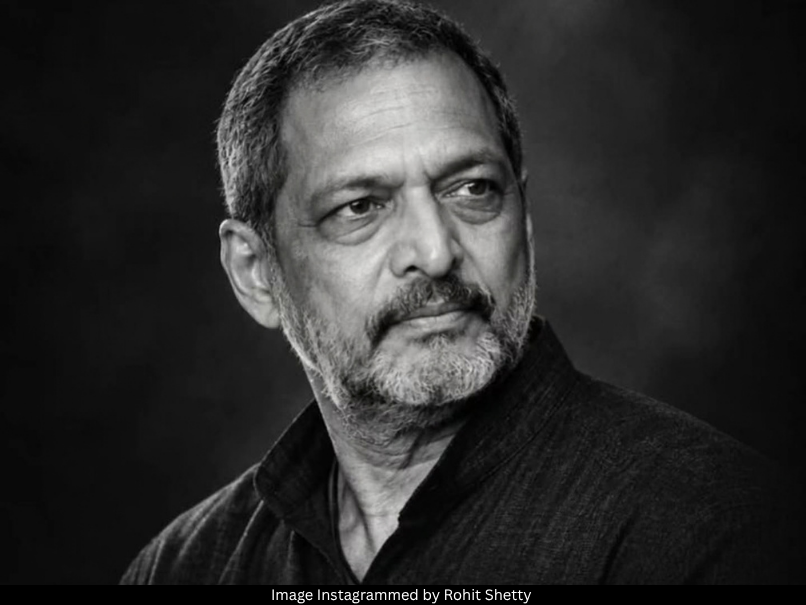
A frightening gangster, a soldier who cannot tolerate injustice, a father struggling to understand his daughter: Nana Patekar could make each of them feel painfully real. But some of the stories behind those performances were as extraordinary as anything in the scripts. A fire sequence left him seriously injured. A screen stabbing became an actual wound. A famous climactic speech was filmed with a doctor accompanying him to the set. Elsewhere, there were years of preparation, arguments over a character’s smallest movement and a home mortgaged to keep a film going.
ALSO READ | From ‘Parinda’ To ‘Natsamrat’: Remembering Nana Patekar Through 15 Unforgettable Performances
Following Nana Patekar’s death at 75 today (October 8, 2026), these accounts offer another way to remember his work: through the difficult circumstances, unexpected decisions and personal commitments that helped shape it.
1. ‘Parinda’: The Fire That Left Him In Hospital
Anna’s terror of fire gives ‘Parinda’ one of its most disturbing images. Nana Patekar played the volatile underworld boss in Vidhu Vinod Chopra’s crime drama, released on November 3, 1989, alongside Jackie Shroff, Anil Kapoor and Madhuri Dixit. His character holds power over two brothers, but carries a vulnerability that eventually becomes central to his downfall. Behind that screen terror was a serious accident. Recalling the shoot in his 2024 interview with The Lallantop, Nana Patekar said the flames actually engulfed him, burning his skin and facial hair. He described approximately two months in hospital and six months of rest.
Vidhu Vinod Chopra had separately recalled that the fire, created using rubber solution and petrol, went out of control, and that Nana Patekar’s injuries took almost a year to heal. When Nana Patekar returned, the director said, he had developed a fear of fire; a set was built at Film City so the sequence could be completed under more controlled conditions.
ALSO READ | Nana Patekar Dies At 75: Akshay Kumar, Riteish Deshmukh And Others Mourn Veteran Actor’s Demise
2. ‘Salaam Bombay!’: When Screen Stabbing Drew Real Blood
Mira Nair’s ‘Salaam Bombay!’, which premiered at Cannes in May 1988 and reached Indian theatres that September, placed Nana Patekar in a very different corner of the city’s underworld. He played Baba, a pimp whose cruelty looms over the lives of vulnerable women and children. The ensemble included Shafiq Syed, Raghubir Yadav, Aneeta Kanwar, Hansa Vithal and Chanda Sharma. In a film built around a child’s struggle to survive, Baba represents the adults who make survival even harder. Nana Patekar gives him a disturbing familiarity: this is an abusive man who treats his authority as entirely ordinary.
The actor later revealed that a stabbing scene had gone wrong despite protection being placed around his waist. In his account to The Lallantop, a tyre had been tied there, but the force of the knife thrust caused an actual wound and he began bleeding. People watching the shot initially admired his acting without realising he had been hurt.
3. ‘Krantiveer’: A Hospital Stay Before Famous Final Speech
Few Nana Patekar performances are as closely associated with his voice as Pratap Narayan Tilak in ‘Krantiveer’. Mehul Kumar’s drama, released on July 22, 1994, starred him with Dimple Kapadia, Paresh Rawal, Atul Agnihotri, Mamta Kulkarni and Danny Denzongpa. Pratap’s journey from an angry, dismissive man to someone who confronts communal hatred culminates in the speech beginning “Aa gaye meri maut ka tamasha dekhne”. Yet shortly before that climax was filmed, Nana Patekar had been admitted to hospital with a heart-related problem. Mehul Kumar recalled offering to postpone the shoot, but the actor insisted on completing it and arrived accompanied by his doctor. Multiple cameras helped capture the performance, and the climax was completed in a day.
Nana Patekar remembered the speech as something he delivered spontaneously, saying he would struggle to reproduce it later. Mehul Kumar’s account described him learning the dialogues and allowing himself to improvise a line or two in the moment. Their recollections differ on how much was prepared, but both describe an exceptional performance delivered immediately after a hospital stay.
4. ‘Parinda’: He Was Originally Meant To Play The Brother
It is difficult to imagine ‘Parinda’ without Nana Patekar as Anna. However, Vidhu Vinod Chopra originally wanted him for Kishen, the elder brother eventually played by Jackie Shroff. In the version released on November 3, 1989, Kishen’s relationship with Anil Kapoor’s Karan supplies the emotional centre of the film, while Nana Patekar’s gangster threatens their world. Madhuri Dixit plays Paro, whose hopes become caught in the violence around them. The original plan would have placed Nana Patekar on the opposite side of that central relationship.
In his book ‘Unscripted’, written with Abhijat Joshi, Vidhu Vinod Chopra recalled spotting Nana Patekar in the Marathi play ‘Purush’ and wanting him for Kishen. The casting subsequently became complicated: according to Vidhu Vinod Chopra, Anil Kapoor expressed discomfort about playing Nana Patekar’s brother, and production stalled. Nana Patekar also spoke in later interviews about initially being offered Jackie Shroff’s part. What finally emerged was a remarkably productive change of direction. His presence as Anna gave the film a danger quite different from the protective elder brother he might have played, and made the eventual casting feel almost impossible to reverse.
5. ‘Prahaar: The Final Attack’: Preparing For The Uniform With The Army
For ‘Prahaar: The Final Attack’, Nana Patekar’s involvement extended well beyond arriving on set to play a soldier. He wrote and directed the film and starred as Major Chauhan, an Army officer confronted with violence and injustice in civilian life. Released on November 29, 1991, it also featured Gautam Joglekar, Madhuri Dixit and Dimple Kapadia. The role demands both a commander’s discipline and the distress of a man who discovers that the society his soldiers protect can fail them terribly.
Nana Patekar said in a 2015 interview that he trained with the Indian Army for “almost three years”, writing the script during that period. His later recollections linked that preparation to the Maratha Light Infantry and a childhood wish to join the Army. The film therefore grew alongside his exposure to military life. Its training sequences have the particular force of an actor trying to understand the habits and demands behind a uniform.
6. ‘Ankush’: He Mortgaged His Home To Help Finish The Film
Before the better-known gangsters and policemen came Ravi, the frustrated young man Nana Patekar played in N. Chandra’s ‘Ankush’. Released on July 21, 1986, the drama also starred Suhas Palshikar, Madan Jain, Arjun Chakraborty and Nisha Singh. Its unemployed young men drift through neighbourhood quarrels and aimlessness before their encounter with a teacher draws them towards a different life. Ravi’s anger is recognisable and immediate, rooted in a sense that the world has little use for him.
The film’s struggle to reach completion involved a considerable personal gamble. Nana Patekar recalled that money ran out midway through production, prompting him to mortgage his house and give his friend Chandra Rs 2 lakh. He said his entire acting fee was Rs 10,000, making the sum he put into the production substantially larger than his own earnings from it. According to Nana Patekar, Chandra returned the money within two months and also gifted him a scooter.
7. ‘Khamoshi: The Musical’: The Argument Over A Deaf Man Turning Around
‘Khamoshi: The Musical’ asked an actor celebrated for his dialogue delivery to communicate without speech. In Sanjay Leela Bhansali’s directorial debut, released on August 9, 1996, Nana Patekar played Joseph, the deaf father of Manisha Koirala’s Annie. Seema Biswas played his wife Flavy, with Salman Khan and Helen also in the cast. Joseph’s love for his daughter exists alongside his fear of losing her, giving Nana Patekar room to express affection, dependence and stubbornness through his face and physical movements.
One movement caused a major disagreement. Nana Patekar recalled a scene in which Joseph was playing cards with his back to Flavy when she suffered a heart attack. Sanjay Leela Bhansali wanted him to turn around, but the actor questioned how a deaf man would know what was happening behind him. The director’s explanation, as Nana Patekar remembered it, was the unspoken connection between husband and wife; Nana Patekar wanted a more concrete cue. He later acknowledged that he might have overstepped during their arguments while still calling SLB a good director.
8. ‘Tirangaa’: Two Formidable Actors, And A Casting Full Of Apprehension
The partnership between Nana Patekar’s Inspector Shivajirao Wagle and Raaj Kumar’s Brigadier Suryadev Singh gives ‘Tirangaa’ much of its force. Mehul Kumar’s patriotic action film, released on January 29, 1993, also featured Varsha Usgaonkar, Mamta Kulkarni and Deepak Shirke. Shivajirao Wagle’s blunt, combative manner sits alongside the brigadier’s measured authority, allowing two distinctive performers to command the film in very different ways. Before shooting began, however, the director had to persuade them that working together would be possible.
Raaj Kumar recalled that Rajinikanth and Naseeruddin Shah had declined the second lead before he approached Nana Patekar. Initially reluctant to do a commercial film, Nana Patekar listened to the story and agreed, but warned that he would leave if Raaj Kumar interfered with his work. The veteran star, Raaj Kumar said, had reservations about Nana Patekar’s reputation too. Despite those apprehensions, the director remembered completing the shoot without a hitch.
9. ‘Kaala’: The Antagonist He Accepted For Rajinikanth
Nana Patekar’s hesitation about ‘Kaala’ was surprising given how effectively he could play a threatening figure. In Pa Ranjith’s film, released in India on June 7, 2018, he portrayed Haridev, known as Hari Dada, a powerful politician whose ambitions clash with Rajinikanth’s leader of Dharavi’s residents. Huma Qureshi, Easwari Rao and Samuthirakani were also part of the ensemble. His controlled manner makes the character’s entitlement particularly chilling: Hari expects the world to yield to him and regards resistance as an affront.
Nevertheless, Nana Patekar said in a 2018 interview that he initially refused because he was unsure about playing the antagonist. His explanation for changing his mind was simple: he did the film for Rajinikanth. He also recalled Rajinikanth praising his performance during dubbing and generously suggesting that audiences would look only at Nana Patekar. The anecdote adds warmth to a film built around their fierce confrontation.
10. ‘Welcome’: An Unusual Promise Before He Became Uday Shetty
Uday Shetty gave Nana Patekar a different way to use the authority he had brought to so many intimidating characters. In Anees Bazmee’s ‘Welcome’, released on December 21, 2007, the gangster is desperate to find a respectable husband for his sister while trying to keep his criminal world from wrecking the arrangement. Akshay Kumar, Anil Kapoor, Katrina Kaif, Paresh Rawal, Feroz Khan and Mallika Sherawat joined him in the cast. Nana Patekar’s seriousness is crucial to Uday: he can be threatening, wounded and hopelessly flustered without appearing to step outside the character.
Nana Patekar was initially uncertain about the kind of comedy Anees Bazmee was offering. Recalling their conversation in a 2023 interview, he said he asked the director to swear on his mother that he should accept the film. Anees Bazmee did so, and Nana Patekar agreed; the director has also recounted the unusual request. It was an intimate test of confidence before a considerable change of register. After performances shaped by violence, anger and grief, a filmmaker’s belief helped Nana Patekar find a character whose attempts to control everything could make audiences laugh. Uday endured because Nana Patekar gave those anxieties the same conviction he brought to his most serious roles.