


From ‘Ramayana’ To ‘Jawan’: Indian Films That Took Their Fight Against Piracy To Court
From Ramayana’s pre-release protection to Jawan’s action against illegal sharing, these Indian films took their fight against piracy to court.

IST
Last Updated On
IST

A film’s journey to audiences involves years of work, substantial investment and carefully negotiated release plans. An unauthorised upload can disrupt that process within hours, circulating through websites, messaging groups and social media accounts. For rights-holders, removing one copy may be only the beginning, as fresh links and mirror sites appear. That is why the response increasingly begins in court. Indian filmmakers and distributors have sought orders before release, pursued takedowns after leaks and, in some cases, secured permanent injunctions and damages.
ALSO READ | Strange Shoes, Secret Exits And Killer Masks! How Indian Stars Went Incognito
With ‘Ramayana’ arriving in cinemas today (November 5), the issue is back in focus. Three days before its release, the Bombay High Court granted protection after its rights-holder reported leaks involving trailers and other material. The case joins a much longer history of Indian films seeking judicial intervention against piracy. Here are 20 documented examples, ranging from early orders covering discs and cable television to action against websites and messaging accounts.
1. Ramayana
Nitesh Tiwari’s ‘Ramayana’, released on November 5, 2026, stars Ranbir Kapoor, Sai Pallavi, Yash, Sunny Deol and Ravie Dubey. Its court action began before the theatrical opening: Godpower Media Private Limited approached the Bombay High Court over existing leaks and the threat of further piracy.
The November 2 order records the company’s allegations that confidential trailer footage and other material had circulated online, with its anti-piracy agency detecting at least 4,500 infringing links relating to the leaks. Justice Madhav J. Jamdar granted temporary protection covering unauthorised copying and circulation, with directions for service providers and platforms to act on identified infringing content and additional notified links.
ALSO READ | Copy Or Coincidence? From ‘King’ To ‘Coolie’, Indian Movie Posters That Sparked Plagiarism Debates
2. Jawan
Atlee’s ‘Jawan’, starring Shah Rukh Khan, Nayanthara and Vijay Sethupathi, with Deepika Padukone in a special appearance, released on September 7, 2023. Red Chillies Entertainments had already approached the Delhi High Court over clips and stills appearing online without permission. On April 25, the court restrained unauthorised circulation and directed platforms to remove identified material.
The dispute continued after release. On September 19, 2023, the court ordered action against specified WhatsApp groups, Telegram channels and infringing social media content, including suspension of an identified WhatsApp account. The progression makes ‘Jawan’ a particularly revealing case: protection had to follow the material from pre-release leaks into the messaging networks through which unauthorised copies could spread.
3. Brahmastra
Ayan Mukerji’s ‘Brahmastra: Part One – Shiva’ released on September 9, 2022, with Ranbir Kapoor, Alia Bhatt, Amitabh Bachchan, Mouni Roy and Nagarjuna in its ensemble. Star India sought protection before release, securing an interim order on September 2, 2022, initially against 18 websites. Further websites and mirrors were subsequently added.
On August 25, 2023, the Delhi High Court granted a permanent injunction covering the defendant piracy websites and awarded Rs 20 lakh in damages, jointly and severally payable by specified mirror websites, alongside actual legal costs. The case therefore progressed beyond temporary blocking into a final judgment.
4. Kannappa
Mukesh Kumar Singh’s ‘Kannappa’, released on June 27, 2025, stars Vishnu Manchu and Preity Mukhundhan, with Mohan Babu and prominent guest performers. Twenty-Four Frames Factory approached the Delhi High Court alleging that unauthorised material, including a full copy, clips and reels, was circulating online.
The producer told the court that its agency had identified 1,776 infringing links on Meta platforms, of which 191 had been removed. On July 21, 2025, Justice Jyoti Singh directed Meta and X to disable specified infringing URLs. The distinction matters: the number described the producer’s reported findings, while the operative takedown directions concerned identified content. The case shows how piracy disputes can involve everyday social feeds alongside dedicated piracy websites.
5. Jailer 2
Nelson Dilipkumar’s ‘Jailer 2’, released on October 15, 2026, features Rajinikanth alongside Ramya Krishnan, Vidya Balan and S.J. Suryah. Sun TV Network sought protection in the Madras High Court before the film reached cinemas, apprehending unauthorised online distribution.
On October 13, 2026, Justice P.B. Balaji granted an interim injunction against unauthorised copying and communication of the film. The directions also covered blocking identified websites and further mirror, redirect and URL variants notified by the producer or its authorised agents. That feature addressed a familiar enforcement problem: blocking an address can be ineffective if the same material simply reappears under a slightly altered one.
6. Radhe
Prabhu Deva’s ‘Radhe: Your Most Wanted Bhai’, featuring Salman Khan, Disha Patani, Randeep Hooda and Jackie Shroff, released on May 13, 2021, with a digital pay-per-view offering. Zee Entertainment subsequently approached the Delhi High Court alleging that copies and clips were being circulated, shared and sold through WhatsApp and other platforms.
On May 20, 2021, Justice Sanjeev Narula restrained unauthorised distribution and directed WhatsApp to suspend identified infringing accounts. The order also provided a route for the rights-holder to report additional accounts for action. Here, the concern extended beyond a downloadable file on a website to individuals allegedly using a messaging service to distribute the film.
7. Prem Ratan Dhan Payo
Sooraj Barjatya’s ‘Prem Ratan Dhan Payo’, starring Salman Khan, Sonam Kapoor, Neil Nitin Mukesh and Swara Bhasker, released on November 12, 2015. Fox Star Studios and Rajshri Productions sought an injunction because they feared that websites already associated with piracy would distribute the new film without permission.
In its October 30, 2015 order, the Delhi High Court directed internet service providers and government authorities to restrict access to 105 identified websites. The producers argued that waiting until after release could allow copies to circulate during the commercially important opening week. It was preventive protection based on an apprehended threat, rather than a finding that all those websites had already uploaded this film.
8. Singham
Rohit Shetty’s ‘Singham’, starring Ajay Devgn, Kajal Aggarwal and Prakash Raj, released on July 22, 2011. Two days earlier, Reliance Big Entertainment obtained a Delhi High Court order over fears that unauthorised copies would be distributed on discs or shown through cable and internet services.
The July 20 order included unidentified defendants under the assumed name “Ashok Kumar”, using the John Doe approach to address infringers whose identities were not yet known. It restrained unauthorised exploitation of the film. The case is an early example of seeking protection before a new release while recognising that the people responsible for future copying could not all be identified in advance.
9. Bodyguard
Siddique’s ‘Bodyguard’, starring Salman Khan and Kareena Kapoor Khan, released on August 31, 2011. Reliance Big Entertainment approached the Delhi High Court apprehending unauthorised copying and distribution ahead of that opening.
On August 26, 2011, the court granted an interim John Doe injunction covering named defendants and unidentified infringers. Its language addressed formats ranging from CDs, DVDs and Blu-ray discs to cable television, DTH and internet services. Read today, the order captures an earlier distribution landscape, when physical copies and unauthorised television exhibition were central concerns alongside online circulation. The purpose was to protect the film’s authorised release across those different routes.
10. 2.0
Shankar’s ‘2.0’, starring Rajinikanth, Akshay Kumar and Amy Jackson, released on November 29, 2018. Lyca Productions approached the Madras High Court before release, arguing that piracy websites could undermine its theatrical exploitation.
On November 28, the court directed 37 internet service providers to block access to more than 12,000 websites identified in the proceedings. Lyca’s counsel submitted a list of 12,564 websites and highlighted how blocked sites could return through mirror addresses. The scale of the application was striking, but its underlying problem was practical: enforcement against one domain could be overtaken by the creation of another carrying the same unauthorised material.
11. Kabali
Pa. Ranjith’s ‘Kabali’, featuring Rajinikanth, Radhika Apte and Dhansika, released on July 22, 2016. Producer Kalaipuli S. Thanu moved the Madras High Court before release, citing concerns about illegal downloads and the losses caused by piracy of earlier films.
The court’s July 15, 2016 interim order restrained 169 licensed internet service providers from facilitating access to infringing websites and also addressed unauthorised cable telecasts. The directions required providers to prevent unauthorised access to the film, bringing the infrastructure used to distribute pirated material into the enforcement process.
12. Chhapaak
Meghna Gulzar’s ‘Chhapaak’, starring Deepika Padukone and Vikrant Massey, released on January 10, 2020. Star India filed its piracy-related suit in 2019, fearing unauthorised online streaming; an initial injunction followed on December 20, 2019.
The proceedings ultimately reached a final judgment on July 11, 2023. The Delhi High Court granted a permanent injunction against the defendant piracy websites and confirmed blocking directions, with the relevant domain names to remain suspended and locked. The plaintiff did not press further claims for damages or accounts. Its trajectory illustrates how a case begun to protect an imminent release can continue long after the film becomes available through authorised streaming platforms.
13. Jolly LLB 3
Subhash Kapoor’s ‘Jolly LLB 3’, featuring Akshay Kumar, Arshad Warsi, Saurabh Shukla, Huma Qureshi and Amrita Rao, released on September 19, 2025. JioStar India sought protection against websites allegedly engaged in distributing copyrighted films without permission.
On September 12, 2025, the Delhi High Court restrained 24 identified websites from unauthorised dissemination and issued blocking and domain-related directions. It also allowed newly discovered infringing websites to be reported for action, while requiring supporting filings to keep the court informed. The mechanism recognised that a fixed list may become outdated quickly, while preserving judicial oversight of the additional blocking sought.
14. Drishyam: The Conclusion
Abhishek Pathak’s ‘Drishyam: The Conclusion’, starring Ajay Devgn, Tabu, Shriya Saran and Jaideep Ahlawat, released on October 2, 2026. Rights-holder Digital18 Media approached the Delhi High Court, citing websites that it said had already pirated films including Jolly LLB 3.
On October 1, 2026, the court restrained nine websites from unauthorised streaming or distribution of the new film and directed action against the relevant domains. The company could also report further infringing websites. The application relied on the defendants’ alleged past conduct to establish an imminent risk to a film that had yet to open, rather than requiring the rights-holder to wait for a new unauthorised upload.
15. Awarapan 2
Nitin Kakkar’s ‘Awarapan 2’, starring Emraan Hashmi and Disha Patani, released on August 14, 2026. Vishesh Pictures approached the Madras High Court apprehending copyright infringement through websites and cable operators.
Justice K. Surender granted an ad-interim injunction on August 14, after the company submitted its CBFC certificate as evidence of its status as producer. The relief addressed unauthorised copying, communication and distribution, including website-blocking directions. It was conditional on the applicant indemnifying respondents against harm to legitimate business interests. The order brought online access and traditional cable distribution within the same protective framework.
16. Batwara 1947
Rajkumar Santoshi’s ‘Batwara 1947’, starring Sunny Deol, Preity Zinta and Shabana Azmi, released on August 14, 2026. Aamir Khan Productions sought Madras High Court protection against apprehended unauthorised online and cable distribution.
In its August 14 order, the court granted interim relief but recognised that broad enforcement could affect respondents’ legitimate business. It therefore required the producer to indemnify them against resulting losses to lawful interests. The condition is a useful reminder that anti-piracy proceedings involve both protection for copyright owners and safeguards against wrongful disruption of legitimate services.
17. Happy Patel: Khatarnak Jasoos
Directed by Vir Das and Kavi Shastri, ‘Happy Patel: Khatarnak Jasoos’ released on January 16, 2026, with Das, Mithila Palkar, Mona Singh and Sharib Hashmi in its cast. Aamir Khan Productions sought preventive relief against apprehended infringement through internet services and cable television.
On January 12, 2026, Justice Senthilkumar Ramamoorthy of the Madras High Court granted ad-interim relief, initially until February 2, subject to an indemnity protecting respondents’ legitimate interests. The application relied on the producer’s copyright claim and the risk of unauthorised circulation. Like several films on this list, its court visit was an attempt to protect the opening release window before the anticipated infringement occurred.
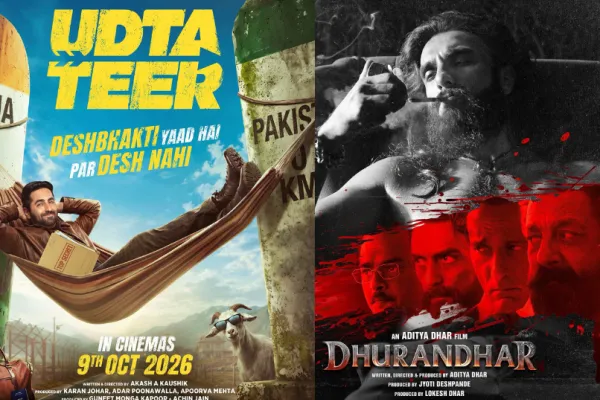
18. Udta Punjab (2016)
Having fought to secure its theatrical release during a highly publicised censorship dispute, ‘Udta Punjab’ faced another threat when an unauthorised copy surfaced online. Directed by Abhishek Chaubey, the drama starred Shahid Kapoor, Alia Bhatt, Kareena Kapoor Khan and Diljit Dosanjh and released on June 17, 2016. A day before its arrival in cinemas, its producers obtained a separate Bombay High Court order targeting illegal downloads.
On June 16, 2016, Justice Gautam Patel directed the removal or disabling of infringing download links and restrained unauthorised cable broadcasts. However, he rejected the request to block more than 800 websites wholesale, noting that the producers had not established that those sites contained only illegal material.
19. Vikram Vedha (2022)
For ‘Vikram Vedha’, the legal response to piracy coincided with its theatrical opening. Directed by Pushkar and Gayatri, the Hindi thriller starred Hrithik Roshan, Saif Ali Khan and Radhika Apte and released on September 30, 2022. Co-producer Reliance Entertainment approached the Madras High Court seeking protection against unauthorised distribution, with its counsel submitting that pirated versions were already surfacing online.
In an order dated September 30, 2022, Justice M. Sundar granted an interim injunction restraining copyright infringement. The application identified 13,445 websites, and the court directed that the listed websites or webpages be blocked where necessary to prevent unauthorised transmission, display or exhibition. The judge observed that waiting to issue notice could defeat the purpose of urgent protection. The initial injunction ran until November 11, 2022; it was an interim measure rather than a permanent judgment.
20. Dishoom (2016)
Before its fictional investigators reached cinema screens, ‘Dishoom’ had already become the subject of a real courtroom effort to prevent illegal distribution. Directed by Rohit Dhawan, the film starred John Abraham, Varun Dhawan, Jacqueline Fernandez and Akshaye Khanna and released on July 29, 2016. In proceedings brought by Eros International and another plaintiff, the Bombay High Court permitted the blocking of a limited number of verified URLs potentially facilitating illicit downloads through an order dated July 26, 2016.
The proceedings also examined what should happen when lawful content was caught in a blocking order. Justice Gautam Patel directed that blocking notices provide information about the legal proceedings and a route for affected parties to seek relief. Subsequent directions addressed how an internet service provider could supply those details through a designated officer.