




Nana Patekar Beyond Bollywood: The Marathi Films That Defined His Other Career
From ‘Sinhasan’ to ‘Natsamrat’, revisit the Marathi films that showcased Nana Patekar’s extraordinary range beyond Bollywood.

IST
Last Updated On
IST
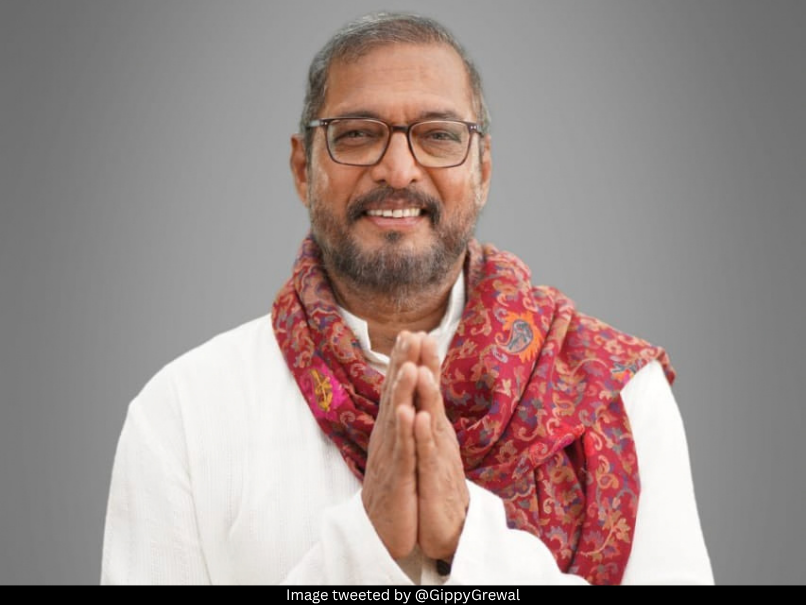
For many viewers, the late actor Nana Patekar’s voice immediately brings back a Hindi film: the fury of ‘Krantiveer’, the menace of ‘Parinda’ or the unexpectedly endearing Uday Shetty of ‘Welcome’. His Marathi films hold another, equally compelling part of that screen legacy. Here, he could be a feared outsider befriended by a child, a politician adjusting his principles, a doctor spending his life in service or a father struggling to be understood. These characters brought his intensity into villages, family homes and the world of Marathi theatre, revealing how much tenderness, uncertainty and grief he could carry alongside it.
ALSO READ | Burnt For Real, Mortgaged His Home! 10 Extraordinary Stories Behind Nana Patekar’s Films
Marathi cinema belonged to his career from its early years. Following that work across the decades means watching an actor find fresh uses for a formidable presence – and, in some of his most affecting performances, allowing that presence to become fragile.
From the political intrigue of ‘Sinhasan’ to the heartbreak of ‘Natsamrat’, here are the Marathi films that reveal the depth and range of Nana Patekar’s career:
1. ‘Sinhasan’
Released in 1979, Jabbar Patel’s ‘Sinhasan’ placed a young Nana Patekar in an ensemble featuring Nilu Phule, Arun Sarnaik, Shriram Lagoo and Mohan Agashe. Adapted from Arun Sadhu’s novels ‘Sinhasan’ and ‘Mumbai Dinank’, with a screenplay by Vijay Tendulkar, the film follows political manoeuvring in Maharashtra and the uneasy connections between power, business and the press. Nana Patekar appears in a small supporting role as a smuggler; the central perspective belongs to Phule’s journalist, Digu Tipnis.
The scale of his part matters when revisiting this film. ‘Sinhasan’ captures him early in his screen career, working within a drama whose force comes from an entire society being placed under scrutiny. His presence in its criminal world fits the film’s wider concern with the people who operate around political authority.
ALSO READ | Nana Patekar's Final Screen Appearances: ‘Eetha’, ‘Shakti Shalini’ And ‘The Confession Of Mary’
2. ‘Maaficha Sakshidar’
Rajdutt’s ‘Maaficha Sakshidar’, released in 1986, gave Nana Patekar a far more substantial and unsettling part as Raghavendra, also called Raghava. The cast includes Mohan Gokhale, Avinash Kharshikar and Usha Naik. Drawing on the Joshi-Abhyankar serial murders that shook Pune in 1976-77, the film follows a group of young men whose crimes escalate into horrifying violence. Nana Patekar’s character occupies the threatening centre of that descent.
There is particular discomfort in seeing that intensity attached to a young man whose ambition becomes destructive. The role offers an early example of Nana Patekar’s ability to make aggression feel volatile and personal. Raghava’s force comes from the danger he brings into relationships with those around him, including his own companions. For audiences who associate Nana Patekar’s most frightening work with Anna Seth in ‘Parinda’, this Marathi crime drama provides an important earlier chapter.
3. ‘Pak Pak Pakaak’
A village believes there is something frightening in the forest. A mischievous boy ventures in anyway, and an unlikely friendship begins. That is the inviting premise of Gautam Joglekar’s ‘Pak Pak Pakaak’, which released on April 15, 2005. Nana Patekar plays Bhutya, the mysterious figure feared as a ghost, opposite Saksham Kulkarni as young Chikhloo. Narayani Shastri, Usha Nadkarni and Jyoti Subhash also feature in the cast. The relationship between the boy and Bhutya becomes the heart of this children’s adventure.
The casting gives the story an immediate advantage: Nana Patekar could make an unfamiliar adult seem genuinely formidable. As the bond develops, that imposing exterior makes the warmth underneath more meaningful. His exchanges with Chikhloo allow room for curiosity, mischief and affection, while the village’s fear gives their friendship a larger purpose. ‘Pak Pak Pakaak’ deserves its place here because it uses his screen presence so differently. A performer capable of making adults uneasy becomes the emotional anchor of a child’s discovery that someone everyone fears may have been misunderstood.
4. ‘Deool’
In Umesh Vinayak Kulkarni’s ‘Deool’, released on November 4, 2011, Nana Patekar plays local political figure Bhau Galande. Girish Kulkarni, who also wrote the film, plays the cowherd Keshya, whose claim of a divine vision sets the village in motion. Sonali Kulkarni and Dilip Prabhavalkar are among the principal cast. As a temple becomes the centre of growing excitement and commercial opportunity, plans for practical development, including a hospital, lose ground. Bhau finds himself navigating ambition, public sentiment and the demands of politics.
This is an especially rewarding role because Bhau’s compromises develop within an ordinary, recognisable social world. Nana Patekar gives weight to a man who understands the village and also understands which way influence is moving. The performance belongs to a larger ensemble, allowing the satire to emerge through competing interests rather than a single commanding speech. ‘Deool’ shared the National Film Award for Best Feature Film with ‘Byari’, and its enduring bite lies in how easily collective belief can become a market. Bhau gives that process a persuasive human face.
5. ‘Dr. Prakash Baba Amte – The Real Hero’
Samruddhi Porey’s ‘Dr. Prakash Baba Amte – The Real Hero’, released on October 10, 2014, cast Nana Patekar as the doctor and social worker whose life gives the film its title. Sonali Kulkarni plays his wife and fellow doctor, Mandakini Amte, while Mohan Agashe portrays Baba Amte. The biopic follows Prakash and Mandakini’s work in Hemalkasa in Maharashtra’s Gadchiroli district, bringing medical care to tribal communities while confronting isolation, scarce resources and daunting practical challenges. Their shared commitment provides the film’s emotional foundation.
Nana Patekar’s authority here comes through patience and purpose. The character’s work requires him to keep returning to people, problems and responsibilities, and the performance makes that persistence central to his dignity. His longstanding association with the Amte family added a personal connection to the portrayal. Yet the most affecting aspect of the role is its everyday quality: a life of service is built through repeated acts of care. Alongside Sonali Kulkarni’s Mandakini, he gives the story the intimacy of a partnership, making its larger humanitarian achievement feel rooted in two people’s decisions.
6. ‘Aapla Manus’
Satish Rajwade’s ‘Aapla Manus’, released on February 9, 2018, brings Nana Patekar into the lives of a married couple played by Sumeet Raghavan and Iravati Harshe. When the husband’s elderly father falls from a balcony, investigating officer Maruti Nagargoje begins examining the tensions within the household. Nana Patekar plays the inspector as well as the father, Aaba, giving him a place on both sides of a story about suspicion, ageing and family obligations. Ajay Devgn was among the producers of the film.
Nagargoje’s questions steadily turn a possible crime into an examination of how people live with those closest to them. Nana Patekar’s measured manner makes the officer difficult to read, while the family story gives his performance another emotional register. Before release, he explained that he had been waiting after ‘Natsamrat’ for a character that stayed with him following the script narration, and found that quality in Nagargoje. His description of the inspector as a man of few words, with a distinctive dialect and mannerisms, captures the appeal of this role: its pressure builds through observation and uncomfortable conversation.
7. ‘Ole Aale’
Released on January 5, 2024, Vipul Mehta’s ‘Ole Aale’ pairs Nana Patekar with Siddharth Chandekar in a father-son story, with Sayali Sanjeev and Makarand Anaspure also in the principal cast. Nana Patekar plays Omkar Lele, whose enthusiasm for living clashes with his son Aditya’s absorption in work. Their journey together gives the film its setting and emotional momentum, creating space for the two men to spend time together and reconsider what they have been postponing.
Omkar allows Nana Patekar to draw on a more open, affectionate energy. There is pleasure in seeing him occupy the screen as a father eager to experience things, with companionship and ordinary enjoyment becoming urgent priorities. The familiar problem at the centre of the film gives that warmth its poignancy: loving someone does not automatically mean giving them enough time. Within this selection, ‘Ole Aale’ broadens the portrait of his later Marathi work. Ageing could lead his characters towards exuberance and connection, as well as towards the loneliness explored so devastatingly in ‘Natsamrat’.
8. ‘Natsamrat’
Mahesh Manjrekar’s ‘Natsamrat’, released on January 1, 2016, gave Nana Patekar the role of Ganpatrao “Appa” Belwalkar, a celebrated theatre actor whose retirement opens a painful chapter in his family life. Adapted from the Marathi play by V.V. Shirwadkar, better known as Kusumagraj, the film also stars Medha Manjrekar as his wife Kaveri and Vikram Gokhale as his friend Rambhau, alongside Mrunmayee Deshpande, Sunil Barve, Neha Pendse and Ajit Parab. As Appa’s domestic security disintegrates, the language and memories of the stage remain inseparable from the man he is.
Appa brings together so many of Nana Patekar’s gifts: the resonant voice, the force of wounded pride, the sudden humour and the ability to let vulnerability break through an imposing exterior. The relationships with Kaveri and Rambhau give the tragedy its most intimate weight; the loss is felt in companionship as much as in humiliation. Nana Patekar had long wanted to play the character and accepted when Mahesh Manjrekar offered it. That connection makes ‘Natsamrat’ a fitting place to end this journey through his Marathi films. In Appa, an actor who once held audiences spellbound must confront how desperately he still needs to be heard at home.