


One Story, Many Superstars: 15 Indian Films Remade Across Languages
From ‘Drishyam’ and ‘Bodyguard’ to the original films behind ‘Hera Pheri’, ‘Ghilli’ and ‘No Entry’, these stories found new stars and audiences across multiple languages.

IST
Last Updated On
IST

Long before “pan-India” became the film industry’s favourite phrase, a hit story travelled by changing its stars, setting, songs – and sometimes even its ending. Dubbing allowed one performance to speak in another language; a remake went further, rebuilding the film for a new audience. The most adaptable stories became cinema’s equivalent of a much-forwarded message: everybody received the same basic plot, but every industry added its own personality. That is how a Telugu romance about earning a disapproving brother’s respect reached nine film industries, a Kannada thriller about an illegal traffic manoeuvre found its way to the Philippines, and a Malayalam family thriller became a nearly USD 200-million Chinese blockbuster.
ALSO READ | ‘Ghajini’ To ‘Drishyam’: 15 South Indian Movies Remade In Bollywood, As ‘Haiwaan’ Joins List
From ‘Drishyam’ and ‘Bodyguard’ to the less nationally familiar originals hiding behind ‘Hera Pheri’, ‘No Entry’ and ‘Ghilli’, these are among Indian cinema’s most frequently remade films.
1. Nuvvostanante Nenoddantana - Nine remakes, eight languages
Original: Telugu; released January 14, 2005
Director and main cast: Prabhu Deva; Siddharth, Trisha Krishnan and Srihari
Most popular remake: Unakkum Enakkum (Tamil, 2006)
Apparently, watching a wealthy NRI prove his love by swapping privilege for farm work is a universally satisfying experience. Prabhu Deva’s directorial debut was remade as ‘Unakkum Enakkum’ in Tamil, ‘Neenello Naanalle’ in Kannada, ‘I Love You’ in Bengali, ‘Ningol Thajaba’ in Manipuri, ‘Suna Chadhei Mo Rupa Chadhei’ in Odia, ‘Tera Mera Ki Rishta’ in Punjabi, ‘Nissash Amar Tumi’ in Bangladeshi Bengali, ‘The Flash Back: Farkera Herda’ in Nepali and ‘Ramaiya Vastavaiya’ in Hindi. That makes nine released remakes across eight distinct languages because the two Bengali productions belong to different national industries but share a language.
The Tamil version, directed by M Raja and starring Jayam Ravi, Trisha and Prabhu, became the standout. Trisha reprised her role, giving the travelling story an unusually direct link to its Telugu home. The Hindi version may be more familiar to some viewers, but it was the sole commercial disappointment among the nine remakes.
ALSO READ | From ‘Drishyam’ To ‘Kahaani’: 15 Indian Movies With Twists We Never Saw Coming
2. U Turn - Seven remakes, seven languages
Original: Kannada; released May 20, 2016
Director and main cast: Pawan Kumar; Shraddha Srinath, Roger Narayan, Radhika Chetan and Dileep Raj
Most popular remake: U Turn (Tamil-Telugu, 2018)
One badly chosen shortcut generated an extraordinarily long journey. Pawan Kumar’s supernatural mystery about a journalist investigating deaths linked to motorists moving concrete blocks on a Bengaluru flyover was remade in Malayalam (Careful), Tamil, Telugu, Sinhala, Filipino, Bengali (Flyover) and Hindi. The Philippine version also made ‘U Turn’ the first Kannada film to be remade in Filipino. The Bengali and Hindi versions arrived later, in 2021 and 2023 respectively, completing the seven-language circuit.
The most popular Indian remake remains Pawan Kumar’s own 2018 Tamil-Telugu bilingual, starring Samantha Ruth Prabhu, Aadhi Pinisetty, Bhumika Chawla and Rahul Ravindran. Released on September 13, it did not simply photocopy the original: Kumar changed the final stretch, while Samantha’s presence carried the thriller into two major markets at once.
3. Drishyam - Seven remakes, seven languages
Original: Malayalam; released December 19, 2013
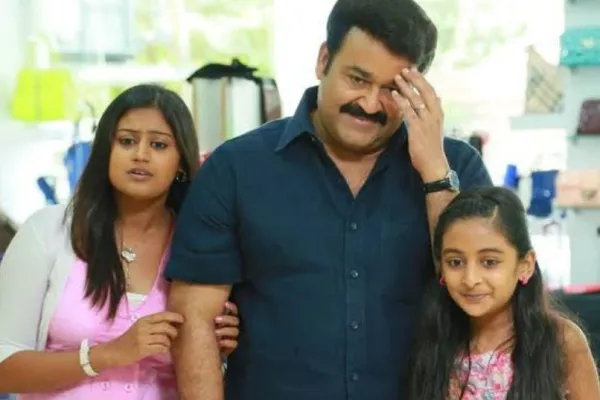
Director and main cast: Jeethu Joseph; Mohanlal, Meena, Ansiba Hassan and Esther Anil
Most popular remake: Sheep Without a Shepherd (Mandarin, 2019)
Georgekutty’s alibi may depend on remembering one very specific day, but his story refuses to stay in one place. ‘Drishyam’ was remade in Kannada as ‘Drishya’, Telugu as ‘Drushyam’, Tamil as ‘Papanasam’, Hindi as ‘Drishyam’, Sinhala as ‘Dharmayuddhaya’ and Mandarin as ‘Sheep Without a Shepherd’. On August 20, 2026, the Indonesian adaptation ‘Ayah, Aku Mau Cerita’, starring Vino G Bastian and Marsha Timothy, became the seventh released remake language. English and Korean projects have also been announced.
Ajay Devgn’s Hindi version has the strongest popular identity in India, especially after it grew into a successful franchise. Globally, however, the commercial crown belongs to Sam Quah’s Chinese version, starring Xiao Yang, Tan Zhuo and Joan Chen. It grossed about USD 199 million – a staggering second life for a contained Malayalam thriller built around a movie-loving father and the perfect cover-up.
4. Anuraga Aralithu - Seven remakes, six languages
Original: Kannada; released in 1986
Director and main cast: MS Rajashekar; Rajkumar, Madhavi and Geetha
Most popular remake: Gharana Mogudu (Telugu, 1992)
This workplace-and-marriage drama proved that an ego battle between a proud industrialist and a principled mechanic required very little translation. It became ‘Mannan’ in Tamil, ‘Gharana Mogudu’ in Telugu, ‘Laadla’ in Hindi, ‘Mal Hathai’ in Sinhala, ‘Sindura Nuhein Khela Ghara’ in Odia, ‘Jamaibabu Jindabad’ in Indian Bengali and ‘Shami Strir Juddho’ in Bangladeshi Bengali. Once again, that is seven films but six distinct languages.
Rajinikanth’s ‘Mannan’ and Sridevi-Anil Kapoor’s ‘Laadla’ remain highly recognisable, but the most consequential remake was K Raghavendra Rao’s ‘Gharana Mogudu’, starring Chiranjeevi, Nagma and Vani Viswanath. Released on April 9, 1992, it became the first Telugu film to gross more than Rs 10 crore at the ticket counters.
5. Okkadu - Eight remakes, six languages
Original: Telugu; released January 15, 2003
Director and main cast: Gunasekhar; Mahesh Babu, Bhumika Chawla and Prakash Raj
Most popular remake: Ghilli (Tamil, 2004)
A kabaddi player rescues a woman from a violent factionist, hides her in his family home and spends the rest of the film staying one move ahead of danger. That muscular premise produced eight remakes: ‘Ghilli’ in Tamil, ‘Ajay’ in Kannada, ‘Mate Aanidela Lakhe Phaguna’ in Odia, ‘Jor’ in Indian Bengali, ‘Dapot’ and ‘Bolona Kobul’ in Bangladeshi Bengali, ‘Tevar’ in Hindi and ‘Kabaddi’ in Sinhala. Three Bengali films lift the number of versions without increasing the six-language count.
The runaway winner turned out to be Dharani’s ‘Ghilli’, released on April 17, 2004. Vijay took over Mahesh Babu’s role, Trisha replaced Bhumika, and Prakash Raj returned as the villain – now armed with the immortal “Chellam” endearment. The remake became a landmark Vijay blockbuster and, two decades later, its 2024 re-release was itself a box-office sensation.
6. Poovinu Puthiya Poonthennal - Six remakes, six languages
Original: Malayalam; released September 12, 1986
Director and main cast: Fazil; Mammootty, Suresh Gopi, Nadiya Moidu and Sujitha
Most popular remake: Pasivadi Pranam (Telugu, 1987)
At the centre of Fazil’s thriller is a speech-and-hearing-impaired child who witnesses a murder and an alcoholic man who becomes his unlikely protector. The combination of danger, grief and surrogate parenthood travelled into Tamil as ‘Poovizhi Vasalile’, Telugu as ‘Pasivadi Pranam’, Kannada as ‘Aapadbandhava’, Hindi as ‘Hatya’, Bengali as ‘Khotipuron’ and Sinhala as ‘Veda Barinam Vedak Nehe’. Several versions altered the climax, demonstrating that remaking could involve more than changing the hero and reshooting the songs.
The Telugu adaptation ‘Pasivadi Pranam’, directed by A Kodandarami Reddy and starring Chiranjeevi, Vijayashanti, Raghuvaran and Sujitha, was the biggest commercial triumph. Released on July 23, 1987, it became the highest-grossing Telugu film of its time. Sujitha’s participation in multiple versions also gave this remake chain something rare: while the superstars changed, its tiny emotional centre travelled with the story.
7. Kireedam - Six remakes, six languages
Original: Malayalam; released July 7, 1989
Director and main cast: Sibi Malayil; Mohanlal, Thilakan and Parvathy Jayaram
Most popular remake: Gardish (Hindi, 1993)
Few films on this list are as emotionally devastating. Sethumadhavan wants to join the police, but one attempt to protect his father from a gangster traps him inside the violent reputation he never wanted. The tragedy was remade in Telugu as ‘Rowdyism Nasinchali’, Kannada as ‘Modada Mareyalli’, Hindi as ‘Gardish’, Bengali as the Bangladeshi film ‘Babar Adesh’, Odia as ‘Mayusaa’ and Tamil under the original title. Mohanlal’s performance earned a National Film Award Special Mention, yet the plot was sturdy enough to be rebuilt around several very different stars.
For pan-Indian recall, Priyadarshan’s ‘Gardish’, starring Jackie Shroff, Amrish Puri and Dimple Kapadia, is the strongest pick. The 2007 Tamil ‘Kireedam’, led by Ajith Kumar and Trisha, also performed well at the box office.
8. Charlie Chaplin - Six remakes, six languages
Original: Tamil; released February 15, 2002
Director and main cast: Sakthi Chidambaram; Prabhu, Prabhu Deva, Abhirami, Gayathri Raghuraman and Livingston
Most popular remake: No Entry (Hindi, 2005)
The title promised Chaplin; the plot delivered husbands, lovers, lies and enough misunderstandings to power six more comedies. The Tamil success was remade as ‘Pellam Oorelithe’ in Telugu, ‘No Entry’ in Hindi, ‘Happy Husbands’ in Malayalam, ‘Kalla Malla Sulla’ in Kannada, ‘No Entry Pudhe Dhoka Aahey’ in Marathi and ‘Kelor Kirti’ in Bengali.
Anees Bazmee’s ‘No Entry’, starring Anil Kapoor, Salman Khan, Fardeen Khan, Bipasha Basu, Lara Dutta, Esha Deol and Celina Jaitly, turned out to be the biggest version. Released on August 26, 2005, it became one of the year’s defining Hindi hits and remains the remake that most thoroughly escaped its source’s shadow.
9. Shutter - Six remakes, six languages
Original: Malayalam; premiered December 9, 2012; theatrically released February 22, 2013
Director and main cast: Joy Mathew; Lal, Sreenivasan, Vinay Forrt, Sajitha Madathil and Riya Saira
Most popular remake: Oru Naal Iravil (Tamil, 2015)
Unlike the star vehicles surrounding it, ‘Shutter’ begins with one compromising situation: a respected Gulf returnee is accidentally locked inside a shop with a sex worker. From that beautifully uncomfortable trap grew Marathi ‘Shutter’, Tamil ‘Oru Naal Iravil’, Tulu ‘Shutterdulai’, Kannada ‘Idolle Ramayana’, Telugu ‘Mana Oori Ramayanam’ and Punjabi ‘Lock’.
The most visible individual remake was Anthony’s ‘Oru Naal Iravil’, released on November 20, 2015 and headlined by Sathyaraj, Anumol and Yugi Sethu. It opened to broadly positive notices and was presented by Vijay. Prakash Raj’s separately filmed Kannada-Telugu versions were the most star-powered reinterpretation, bringing together multiple National Award winners.
10. Ramji Rao Speaking - Six remakes, six languages
Original: Malayalam; released in 1989
Director and main cast: Siddique-Lal; Sai Kumar, Mukesh, Innocent, Rekha and Vijayaraghavan
Most popular remake: Hera Pheri (Hindi, 2000)
Three broke strugglers, a misdialled telephone call and a kidnapping scheme: Siddique and Lal’s directorial debut discovered a comedy formula durable enough for Tamil ‘Arangetra Velai’, Hindi ‘Hera Pheri’, Telugu ‘Dhanalakshmi, I Love You’, Odia ‘Wrong Number’, Kannada ‘Trin Trin’ and Bengali ‘Hera Pheri’. The 2023 Punjabi film ‘Gol Gappe’ is sometimes added as a seventh, but its makers disputed that it was a remake, so it is excluded from this count.
There is no contest for the crown. Priyadarshan’s ‘Hera Pheri’, released on March 31, 2000 and starring Akshay Kumar, Suniel Shetty, Paresh Rawal and Tabu, turned Baburao, Raju and Shyam into permanent residents of Indian popular culture. The film’s afterlife in memes is so enormous that screenshots now function as punctuation online.
11. Brindavanam - Six remakes, five languages
Original: Telugu; released October 14, 2010
Director and main cast: Vamshi Paidipally; Jr NTR, Kajal Aggarwal, Samantha Ruth Prabhu, Prakash Raj and Srihari
Most popular remake: Khoka 420 (Bengali, 2013)
The set-up is deliciously filmi: a young man agrees to pose as his girlfriend’s friend’s boyfriend, enters a divided household and starts repairing everybody’s relationships while his fake romance becomes dangerously convincing. ‘Brindavanam’ was remade as ‘Love Master’ in Odia, ‘Brindavana’ in Kannada, ‘Khoka 420’ in Indian Bengali, ‘Buk Fatey To Mukh Foteyna’ in Bangladeshi Bengali, ‘Vrundavan’ in Marathi and ‘Hum Hai Jodi No 1’ in Bhojpuri.
The most commercially visible remake was Rajib Biswas’s ‘Khoka 420’, starring Dev, Subhashree Ganguly and Nusrat Jahan. Released on June 14, 2013, it became one of that year’s major Bengali releases and folded the borrowed plot into the starry Khokababu world. The premise travelled so well because it offered every industry the same irresistible toy box: romance, family warfare, comedy, action and one hero trying to keep a lie from collapsing before the interval. The film even set a new opening-day record for Bengali cinema before ‘Boss’ surpassed it two months later.
12. Pavitra Bandham - Six remakes, five languages
Original: Telugu; released October 17, 1996
Director and main cast: Muthyala Subbaiah; Venkatesh, Soundarya, SP Balasubrahmanyam, Prakash Raj and Srihari
Most popular remake: Hum Aapke Dil Mein Rehte Hain (Hindi, 1999)
A wealthy, commitment-phobic man proposes a one-year contract marriage; the woman who accepts it gradually forces him to understand that people are not trial subscriptions. The blockbuster was remade in Odia as ‘Suhaag Sindura’, Kannada as ‘Mangalyam Tantunanena’, Hindi as ‘Hum Aapke Dil Mein Rehte Hain’, Tamil as ‘Priyamaanavale’, Indian Bengali as ‘Saat Paake Bandha’ and Bangladeshi Bengali as ‘E Badhon Jabena Chhire’.
The broadest-reaching remake is Satish Kaushik’s ‘Hum Aapke Dil Mein Rehte Hain’, starring Anil Kapoor and Kajol. Released on January 22, 1999, it was a super hit, ran for 25 weeks and earned Kajol major Best Actress nominations. Vijay and Simran’s commercially successful ‘Priyamaanavale’ remains a strong Tamil favourite, but the Hindi film gave the contract-marriage story its widest national recognition.
13. Poochakkoru Mookkuthi - Six remakes, five languages
Original: Malayalam; released March 17, 1984
Director and main cast: Priyadarshan; Mohanlal, Shankar, Menaka and MG Soman
Most popular remake: Hungama (Hindi, 2003)
Priyadarshan’s directorial debut treated mistaken identities like a box of dominoes and then gleefully kicked the table. It generated ‘Hungama’ in Hindi, ‘Intlo Srimathi Veedhilo Kumari’ in Telugu, ‘Jootata’ in Kannada, ‘Bhalobeshe Bou Anbo’ in Bangladeshi Bengali, ‘Le Halua Le’ in Indian Bengali and ‘Lovely Te Lovely’ in Punjabi. Because Bengali filmmakers adapted it on both sides of the border, there are six remakes across five languages. The original itself ran for more than 100 days and helped trigger a wave of Malayalam screwball comedies.
The best-known descendant is Priyadarshan’s own ‘Hungama’, starring Akshaye Khanna, Aftab Shivdasani, Rimi Sen and Paresh Rawal. Released on August 1, 2003, it was well received initially and grew even bigger through repeat television viewing.
14. Manichitrathazhu - Four remakes, four languages
Original: Malayalam; released December 25, 1993
Director and main cast: Fazil; Shobana, Mohanlal and Suresh Gopi
Most popular remake: Bhool Bhulaiyaa (Hindi, 2007)
Fazil’s psychological horror classic was remade as ‘Apthamitra’ in Kannada, ‘Chandramukhi’ in Tamil, ‘Rajmohol’ in Bengali and ‘Bhool Bhulaiyaa’ in Hindi. All four were commercially successful – an extremely rare clean sweep – and each recalibrated the original’s balance of psychology, horror, comedy and star power. The remakes became so culturally independent that Manjulika and Chandramukhi are often discussed as if they had never shared an ancestral home.
Priyadarshan’s ‘Bhool Bhulaiyaa’ turned out to be the most popular remake. Starring Akshay Kumar, Vidya Balan, Ameesha Patel and more, it made over Rs 82 crore worldwide, and eventually became a franchise. P Vasu’s ‘Chandramukhi’, starring Rajinikanth, Jyotika, Prabhu, Vadivelu and Nayanthara, was a close second. Released on April 14, 2005, it became the year’s highest-grossing Tamil film and ran for 890 days at Chennai’s Shanthi Theatre.
15. Bodyguard - Four remakes, four languages
Original: Malayalam; released January 22, 2010
Director and main cast: Siddique; Dileep, Nayanthara and Mithra Kurian
Most popular remake: Bodyguard (Hindi, 2011)
Siddique’s romance gives its overzealous bodyguard hero an anonymous phone admirer, unaware that the woman behind the calls is the very person he has been assigned to protect. The film was remade in Tamil as ‘Kaavalan’, and under the title ‘Bodyguard’ in Hindi, Kannada and Telugu. Siddique personally directed the Tamil and Hindi editions, essentially supervising his own story’s promotion from regional hit to Salman Khan vehicle.
The Hindi ‘Bodyguard’, starring Salman Khan, Kareena Kapoor Khan and Hazel Keech, is the undisputed heavyweight. Released on Eid, August 31, 2011, it set a new Hindi-film opening-day record and became one of the year’s largest blockbusters. The Tamil version gave Vijay a successful change of pace and the Telugu remake paired Venkatesh with Trisha, but Salman’s Lovely Singh took the story furthest into the mainstream.
Honourable Mentions
Several other originals came close to this group. Tamil drama ‘Sethu’ was remade in Hindi, Kannada, Telugu and Bengali, with Salman Khan’s ‘Tere Naam’ becoming its best-known version. Hrishikesh Mukherjee’s ‘Gol Maal’ travelled into Tamil, Kannada, Malayalam and Sinhala, and Rajinikanth’s ‘Thillu Mullu’ became a classic in its own right. Mahesh Babu’s Telugu blockbuster ‘Pokiri’ produced Vijay’s Tamil ‘Pokkiri’, Salman Khan’s Hindi ‘Wanted’ and Darshan’s Kannada ‘Porki’. These films may have crossed fewer linguistic borders, but their remakes changed careers, created new star images and proved the larger point: in Indian cinema, a terrific plot rarely needs a passport.