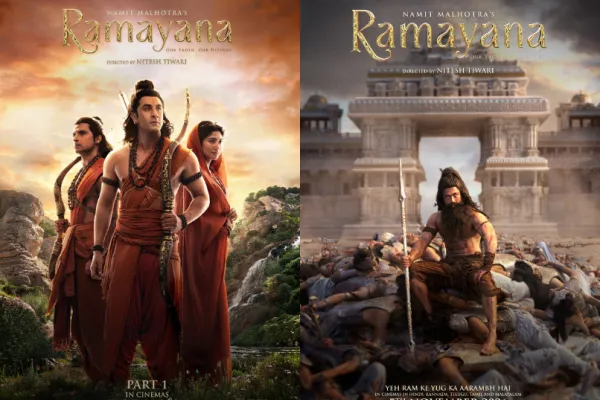



‘Ramayana’ Nears Rs 1,000 Crore India Net! But Has It Recovered Its Massive Budget?
As ‘Ramayana’ nears Rs 1,000 crore nett in India, here’s what its reported budget, theatrical earnings and streaming rights tell us about its chances of breaking even.

IST
Last Updated On
IST
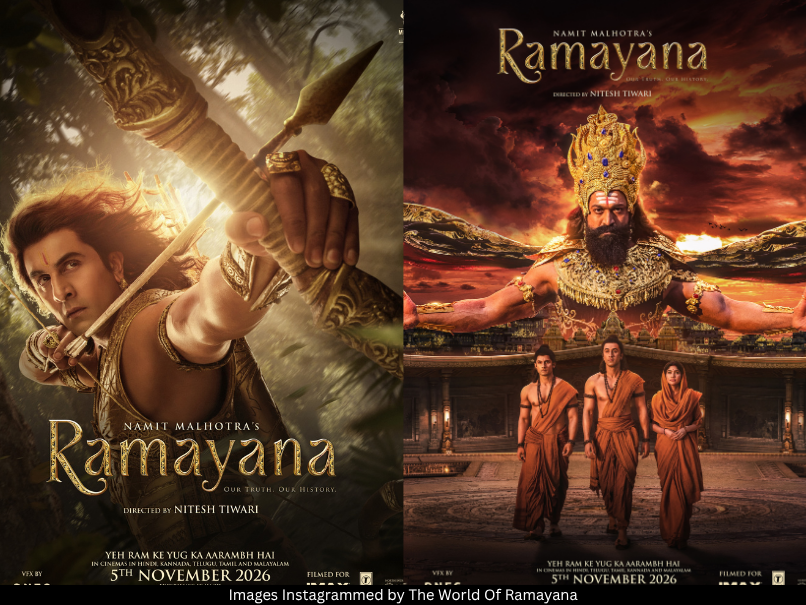
Twenty days into its theatrical run, ‘Ramayana: Part One’ is just Rs 27.05 crore short of Rs 1,000 crore nett in India. Nitesh Tiwari’s epic, starring Ranbir Kapoor as Rama, Sai Pallavi as Sita and Yash as Ravana, has already crossed that milestone in domestic gross collections. Its worldwide haul stands at Rs 1,735.15 crore. For most films, numbers of that size would end the box-office debate. For ‘Ramayana’, they’ve started a more interesting one. How much of that money actually goes back to the people who made it? And how much did the first film cost in the first place?
ALSO READ | ‘Ramayana’ At 4:50 AM, ‘Dunki’ At 5:55 AM! Indian Films With The Wildest Showtimes
The answer depends on which budget you’ve seen, which costs it includes and whether you’re judging one film or the two-part project.
How ‘Ramayana’ Got Within Reach Of Rs 1,000 Crore India Nett
In its November 25 update, Sacnilk put ‘Ramayana’ at Rs 972.95 crore India nett across all tracked languages through Tuesday, November 24, its 20th completed day. That works out to Rs 1,162.15 crore India gross. Overseas markets added Rs 573 crore gross, roughly a third of the worldwide total.
The epic opened on November 5 with Rs 64.85 crore India nett. Its biggest early surge came on the Monday after Diwali, when it earned Rs 107.50 crore nett in a single day. It crossed Rs 500 crore India nett in seven days and closed its extended, eight-day opening week at Rs 564.60 crore. Its third Sunday still brought in Rs 35.60 crore nett. After the usual Monday drop, Tuesday’s collections rose 37.8 per cent to Rs 17.50 crore, on the day the makers offered tickets starting at Rs 99.
ALSO READ | ‘Ramayana’ Hindi Cut Is 30 Minutes Longer, So Why Is A Viral Action Scene Missing?
The rollout was designed to reach well beyond Hindi-speaking audiences. The studio launched the film worldwide in Hindi, Tamil, Telugu, Kannada, Malayalam and English, with Sony Pictures handling theatrical distribution outside India and Dharma Productions leading the release in North India’s Hindi-speaking markets. The film was shot for IMAX and offered in IMAX 3D. That international push matters to the recovery question because so much of the reported haul comes from markets with their own distribution arrangements.
What Did ‘Ramayana: Part One’ Actually Cost?
The most direct public estimate came from producer Namit Malhotra. Speaking on Prakhar Gupta’s podcast in July 2025, he put the expected cost at around USD 500 million for both films together, describing it then as over Rs 4,000 crore. In November 2026, The Indian Express converted the same dollar figure to roughly Rs 4,700 crore. The larger rupee figure reflects the exchange rate used in that comparison. Co-producer Yash also said on ‘Aap Ki Adalat’ that the widely cited figure included overseas marketing for both installments. For him, publicising the investment was part of showing international audiences the scale at which Indian filmmakers could work.
The standalone estimates are less settled. B4U’s release-day coverage cited a reported Rs 1,600 crore for Part One, while The Financial Express put it at an estimated Rs 2,000 crore. Adding to the confusion, an earlier Bollywood Hungama report used Rs 1,600 crore for the two films together, excluding print and publicity, and gave a different split based on unnamed sources. The makers’ public comments establish what their combined estimate covers, but an itemised cost for Part One remains undisclosed.
Divide Rs 4,700 crore in half and you get Rs 2,350 crore. That arithmetic average would describe Part One’s cost only if both films carried exactly half the combined spending, including shared costs. Sets and digital assets built for the first film can be reused in the sequel, which is one reason the costs might fall unevenly. There’s no public basis for using the equal split to decide whether Part One has recovered its investment.
Who Gets The Money From A Cinema Ticket?
India gross is ticket revenue before applicable taxes are deducted. India nett is what remains after those taxes. From there, the cinema retains a share, and the distributor’s fees and expenses depend on the contract. A producer may sell theatrical rights for a fixed amount, take a share of receipts or use different arrangements in different territories. A producer and a distributor can therefore break even at different points on the same film.
So, the Rs 1,735.15 crore worldwide gross tells us what the film has generated in ticket sales in India and overseas. The sum ultimately credited to the producers depends on terms that are private. Subtracting a reported budget directly from worldwide gross skips over the people who share in each ticket sale and the other ways a film generates revenue.
Does ‘Ramayana’ Really Need Rs 5,000 Crore To Break Even?
That figure comes from a theatrical-only calculation. India Today reported a trade estimate based on a Rs 2,000 crore cost and a 2.5-times gross multiplier. Put another way, if 40 per cent of worldwide gross went towards recovering that assumed cost, the film would need Rs 5,000 crore in ticket sales to get there. At a 50 per cent recovery rate, the same assumed cost would require Rs 4,000 crore. The film’s actual contractual rate has not been disclosed.
Apply that example to the current box office. At an effective recovery rate of 40 to 50 per cent, Rs 1,735.15 crore in ticket sales would translate to roughly Rs 694 crore to Rs 868 crore in theatrical recovery. At 45 per cent, the figure would be about Rs 781 crore. The range illustrates how much the answer depends on the share assumed. The producers’ actual receipts remain private.
Now suppose Part One had Rs 500 crore in non-theatrical receipts available to offset that assumed Rs 2,000 crore cost. Cinemas would need to account for the remaining Rs 1,500 crore. At the illustrative 45 per cent rate, the worldwide gross required would fall to about Rs 3,333 crore. That’s how the same film can generate two very different break-even estimates. One scenario asks theatres to cover the entire cost. The other assumes licensing deals cover a quarter of it.
What Do We Know About The Streaming, TV And Music Deals?
The Financial Express, citing industry sources, reported an estimated Rs 450 crore for Part One’s digital and satellite rights through JioStar and Rs 75 crore for music rights through T-Series. The music deal reportedly covers both films, so the full Rs 525 crore cannot be assigned to Part One. The companies have not publicly confirmed those deal values, and separate reporting in The Indian Express said OTT and satellite deals were yet to be made. The amounts should be treated as reported estimates.
What’s official is the JioHotstar pay-per-view partnership in India after the exclusive theatrical window. Prime Focus Studios announced the arrangement on October 22. The announcement left the rental price, the deal value and the split of payments from viewers undisclosed. Until those terms are public, treating future rentals as extra income on top of the reported digital deal risks counting the same rights twice.
Why Namit Malhotra Is Looking Beyond Part One
Namit Malhotra has been judging the investment on a longer timescale. In an interview with BBC Asian Network’s Haroon Rashid, conducted before release and reported in November, he said he believed Part Two could compensate if Part One fell short of expectations. In a separate interview with CNN, he pointed to merchandise and a possible theme park as ways the property could make money long after the films leave cinemas. For Namit, the return on ‘Ramayana’ could take years to measure.
So, Is ‘Ramayana’ A Blockbuster?
On audience turnout and ticket sales, ‘Ramayana: Part One’ is already an exceptional theatrical performer. It is approaching Rs 1,000 crore nett in India and has pulled in Rs 573 crore gross overseas in 20 days. Whether Part One has recovered its investment remains publicly unestablished, and the profitability of the two-film project will take longer to assess. The next box-office milestone will tell us how much more audiences spent to see ‘Ramayana’. A financial verdict needs the figures on the other side of the ledger, too.