
The Movie Flopped, So They Paid Up: Indian Stars Who Compensated Distributors
From Salman Khan and Shah Rukh Khan to Rajinikanth and Pawan Kalyan, the stars and filmmakers who helped distributors recover losses after their films struggled at the box office.

IST
Last Updated On
IST
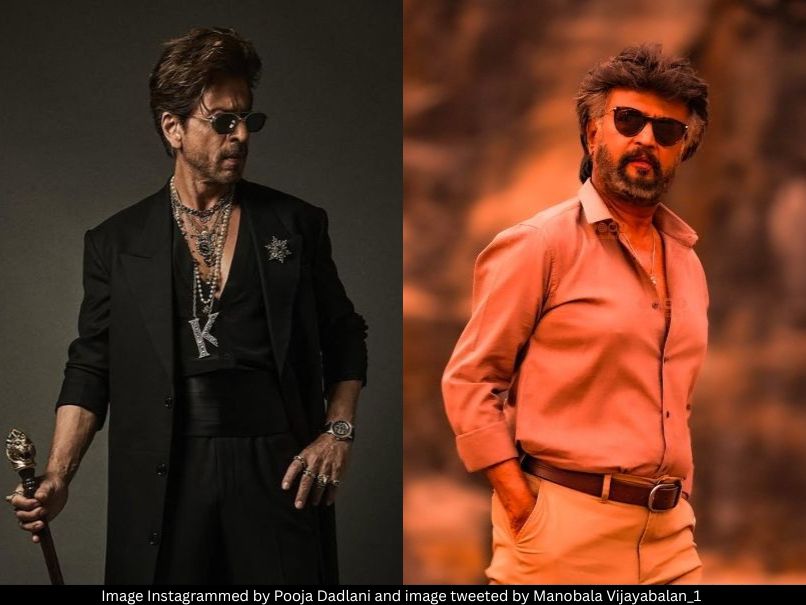
A film can fill theatres, make headlines for its collections and still leave the person who bought its distribution rights counting losses. That is the awkward arithmetic behind some of Indian cinema’s most surprising refund stories. The ticket-window gross is not the distributor’s take-home amount; what matters is how much they paid for the rights and how much of the theatrical revenue eventually came back to them. Sometimes the star or filmmaker has stepped in after the damage was done.
The responses have ranged from a cheque and a calculated refund to surrendering part of an acting fee. Here are the cases with a repayment or contribution, and the important differences between them.
1. Salman Khan - Tubelight (2017)
Salman’s Eid releases usually came with a certain box-office expectation. ‘Tubelight’, starring Salman, Sohail Khan and Zhu Zhu, reached cinemas on June 23, 2017, under Kabir Khan’s direction. Sacnilk put its worldwide gross at Rs 211.25 crore. That sounds substantial until you consider the price paid for its distribution rights.
After its run fell short of expectations, Salman’s father Salim Khan said a Rs 32.5 crore cheque had been dispatched to distributors, with Rs 1.5 crore of that amount intended for exhibitors. A Bollywood Hungama breakdown put the wider restitution at Rs 33.5 crore, including payments to territorial buyers, NH Studioz, a Gulf distributor and exhibitors. The reported totals differ slightly, but the central point does not: Salman’s camp paid a substantial sum after the film’s theatrical returns failed to justify the prices buyers had paid.
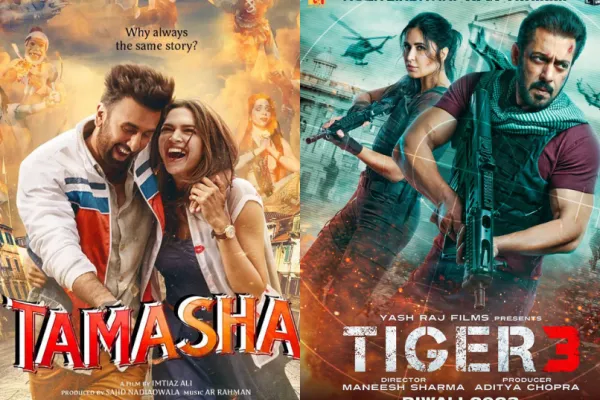
2. Shah Rukh Khan - Dilwale (2015)
If a Rs 388 crore worldwide grosser sounds like an odd candidate for this story, ‘Dilwale’ is the case that explains the whole business. Rohit Shetty’s December 2015 release reunited Shah Rukh Khan and Kajol and also starred Varun Dhawan and Kriti Sanon. Sacnilk estimated Rs 388 crore worldwide, including Rs 148.42 crore India net.
But distributors had reportedly paid high minimum guarantees for the domestic territories. Bollywood Hungama reported that their cumulative losses were roughly Rs 55-60 crore and that Shah Rukh, through his production-distribution setup, refunded close to Rs 25 crore, covering about half of what those buyers had lost. A big global gross and an unhappy local distributor can coexist; ‘Dilwale’ is the proof.
3. Shah Rukh Khan - Jab Harry Met Sejal (2017)
The question in Imtiaz Ali’s ‘Jab Harry Met Sejal’ was where Harry and Sejal would find a missing ring. After the film’s August 4, 2017, release, the trade had a much less romantic question: how would its buyers recover their money? The Shah Rukh Khan-Anushka Sharma film made Rs 111.04 crore worldwide, according to Sacnilk; its India net was Rs 64.26 crore.
NH Studioz had reportedly bought the all-India rights for Rs 80 crore. Bollywood Hungama said Shah Rukh reimbursed 15 per cent of NH Studioz’s losses and as much as 30 per cent of the losses of certain other distributors, assessing claims individually. No reliable total rupee payout was disclosed.
4. Shah Rukh Khan - Asoka (2001)
Long before these later refunds, Shah Rukh took a risk with a lavish historical drama. Directed by Santosh Sivan and starring Shah Rukh and Kareena Kapoor, ‘Asoka’ opened on October 26, 2001. Bollywood Hungama recorded Rs 24.52 crore worldwide and Rs 11.54 crore India net.
In its 2016 reporting on the ‘Dilwale’ refunds, the trade publication said Shah Rukh had also refunded individual ‘Asoka’ distributors after that film underperformed. It did not disclose a cheque amount. The same report said the rights to his later film ‘Chalte Chalte’ were sold at a lower price after Asoka’s result. That lower-priced next deal is a separate gesture; it cannot be counted as a quantified refund for ‘Asoka’.
5. Shah Rukh Khan - Paheli (2005)
An Amol Palekar fantasy about a woman and a ghost who looks like her husband was hardly a routine Shah Rukh vehicle. ‘Paheli’, with Shah Rukh and Rani Mukerji, arrived on June 24, 2005, and grossed Rs 31.90 crore worldwide by Bollywood Hungama’s estimate. Its India net stood at Rs 12.85 crore.
The publication’s retrospective account also identifies ‘Paheli’ as a film for which Shah Rukh reimbursed individual distributors, without putting a figure on the payment. It adds that buyers were given first refusal on ‘Om Shanti Om’ afterwards. That is a useful reminder that industry relationships can be repaired with future opportunities as well as money, but the actual ‘Paheli’ refund remains undisclosed.
6. Rajinikanth - Baba (2002)
The most vivid account in this story comes from a distributor who remembers the actual calculation. Rajinikanth wrote, produced and starred in Suresh Krissna’s ‘Baba’, alongside Manisha Koirala. It opened on August 15, 2002, but did not meet the enormous expectations surrounding it.
Its original-run gross is unusually difficult to pin down: a Times of India retrospective cited Rs 15 crore worldwide, while Mint cited Rs 35 crore. Treat either as a reported estimate, not a settled figure. The refund itself has firmer testimony: Telugu distributor N. V. Prasad recounted that Rajinikanth called him in, checked his accounts, paid his Rs 1.60 crore loss in full and added Rs 1 lakh. Other buyers also received relief, but a precise overall amount from Rajinikanth’s pocket cannot be established from this testimony.
7. Rajinikanth - Kuselan (2008)
‘Kuselan’ gave Rajinikanth a film-star role within a story centred on an ordinary barber played by Pasupathy; Meena also starred. The P. Vasu film released on August 1, 2008. Its buyer Pyramid Saimira said it had collected Rs 20 crore by the first week, although contemporary reporting also described falling collections and demands for repayment.
This is the rare case with a court record describing the settlement. It says Rajinikanth offered to help, and that he, director P. Vasu and others agreed to contribute specified amounts. It records a Rs 1.5 crore payment by Seven Arts Films to Pyramid Saimira for distributor compensation concerning Kuselan and its Telugu counterpart Kathanayakudu. That Rs 1.5 crore was Seven Arts’ payment, not an amount the judgment attributes personally to Rajinikanth. His own contribution is not quantified in the available record.
8. Rajinikanth - Lingaa (2014)
Rajinikanth returned to larger-than-life territory in K. S. Ravikumar’s ‘Lingaa’, with Anushka Shetty and Sonakshi Sinha. Released on December 12, 2014, the film grossed an estimated Rs 149 crore worldwide. Yet the money distributors had committed upfront left several of them facing losses.
In March 2015, The Quint reported that Rajinikanth and producer Rockline Venkatesh had contributed Rs 5 crore each to a Rs 10 crore relief fund handed to the Tamil Nadu Film Producers’ Council. There is an important later wrinkle: a mediator told The New Indian Express in June that only Rs 6.7 crore of a wider producer-side settlement had then been paid and some territories were still waiting.
9. Pawan Kalyan and Trivikram Srinivas - Agnyaathavaasi (2018)
The reunion of Pawan Kalyan and writer-director Trivikram Srinivas should have been an easy sell: they had already made ‘Jalsa’ and ‘Attarintiki Daaredi’ together. ‘Agnyaathavaasi’, co-starring Keerthy Suresh and Anu Emmanuel, opened on January 10, 2018. The Times of India put its final worldwide gross at approximately Rs 95 crore, but buyers had paid heavily for its theatrical rights, and the film left them with losses.
This is one of the strongest additions because the filmmaker himself described the payment. Trivikram said that he, Pawan and producer S. Radha Krishna together settled Rs 25 crore of distributor losses, an idea he credited to Pawan. The Rs 25 crore was their combined contribution; no reliable source establishes how much each of the three paid individually. According to subsequent reporting, some distributors still faced losses after this settlement.
10. Subhash Ghai - Trimurti (1995)
‘Trimurti’ is often casually filed under Subhash Ghai films, but the distinction matters here: Ghai produced it; Mukul S. Anand directed it. Starring Jackie Shroff, Anil Kapoor and Shah Rukh Khan, the film opened on December 22, 1995. Its first-day India net topped Rs 1 crore, but the lifetime numbers were far less celebratory: Bollywood Hungama listed Rs 8.58 crore India net and Rs 13.15 crore worldwide gross.
In a later account of distributor compensation, the publication reported that Subhash Ghai refunded almost Rs 1 crore to the film’s all-India distributors after its failure. That was a sizeable gesture in 1995 money, and it came from the producer rather than the director.
11. Sivakarthikeyan - Prince (2022)
The refund stories did not end with the previous generation of superstars. Sivakarthikeyan’s cross-cultural romantic comedy ‘Prince’, directed by Anudeep K. V. and co-starring Maria Ryaboshapka and Sathyaraj, opened on October 21, 2022. Sacnilk estimated Rs 41.13 crore worldwide, a figure that still did not settle the losses of an affected distributor.
The Times of India reported that the distributor faced a Rs 12 crore shortfall and that Sivakarthikeyan and the makers paid Rs 3 crore each. Together, the reported Rs 6 crore covered half that buyer’s loss.
When The Money Went Back Through The Producer
There are two more stories worth including with a clear qualification: the stars reportedly surrendered fees to help cushion losses, but a matching amount paid onward to distributors is not established.
Chiranjeevi and Ram Charan starred together in Koratala Siva’s ‘Acharya’, released on April 29, 2022. Sacnilk listed Rs 73.50 crore worldwide. After its failure, Chiranjeevi said that he and Ram Charan each returned 80 per cent of their remuneration to the producer. He gave no rupee total or distributor-by-distributor account.
Prabhas and Pooja Hegde’s ‘Radhe Shyam’, directed by Radha Krishna Kumar, opened on March 11, 2022. It grossed Rs 149.50 crore worldwide, according to Sacnilk. Sacnilk reported that Prabhas returned part of his remuneration to ease investor losses. A later ABP Telugu report, relaying a distributor’s account, put the sum returned to the producer at Rs 50 crore and said Prabhas wanted it used for distributors.
These refunds were not one uniform industry rule or a magical way to turn a flop into a hit. They were individual attempts to repair the relationship between the face on the poster and the people who had paid to put that poster outside theatres.